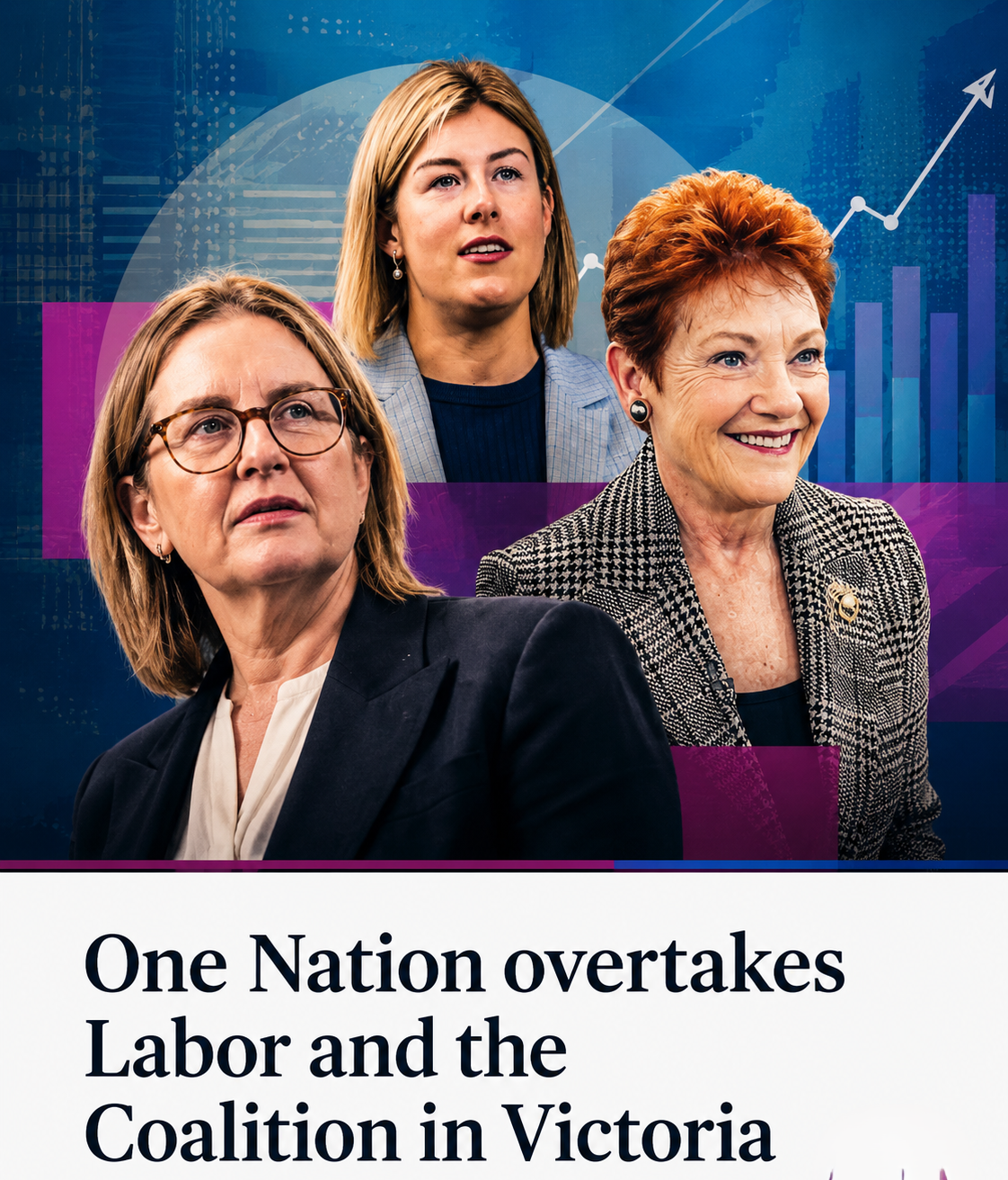
A newly published opinion poll has attracted significant political attention after indicating that One Nation has recorded its strongest level of support yet in Victoria, with the party’s reported primary vote moving ahead of both Labor and the Liberal Party under the survey’s methodology.
The poll also suggests Victorian Premier Jacinta Allan’s personal approval rating has fallen to its lowest recorded level within the same polling series. While the findings have generated considerable discussion, polling specialists emphasise that opinion surveys provide a snapshot of public sentiment at a particular point in time rather than a prediction of future election outcomes.
According to the reported survey, One Nation’s increased support reflects changing voter preferences amid continuing debate over several key policy issues. Cost-of-living pressures, housing affordability, economic management, infrastructure delivery and public sector governance have remained prominent topics in Victorian and national political discussion over recent months.
Supporters of One Nation argue that the party has benefited from growing public concern about these issues and from presenting alternative policy positions on matters including immigration, taxation and government spending. Labor and Coalition representatives, meanwhile, continue promoting their own policy platforms while seeking to regain or strengthen voter support.
Political analysts note that approval ratings for political leaders often fluctuate in response to major policy announcements, economic conditions and significant public events. Leadership ratings can recover or decline over time, making longer-term polling trends generally more informative than individual surveys viewed in isolation.
Experts also caution that Australia’s preferential voting system means election outcomes depend on more than primary vote figures alone. Preference flows, local campaigns, candidate selection and electorate-specific factors all play important roles in determining final electoral results.
Opinion polls are commonly used by political parties to monitor public attitudes and identify emerging issues that resonate with voters. However, survey results can vary depending on methodology, sample size, weighting techniques and the timing of fieldwork, meaning different polling organisations may produce different outcomes.
With future elections still some time away, all major parties are expected to continue refining their policy messages in response to voter priorities. Housing affordability, healthcare, taxation, infrastructure and broader economic management are likely to remain central themes as political debate continues across Victoria.
Although the latest poll has generated widespread interest, analysts generally recommend viewing it as one indicator of current public opinion rather than a definitive forecast. Additional polling over the coming months will provide a clearer picture of whether the reported movement represents a sustained political trend or short-term changes in voter sentiment.






