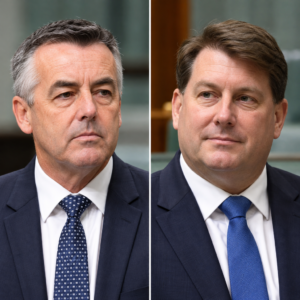
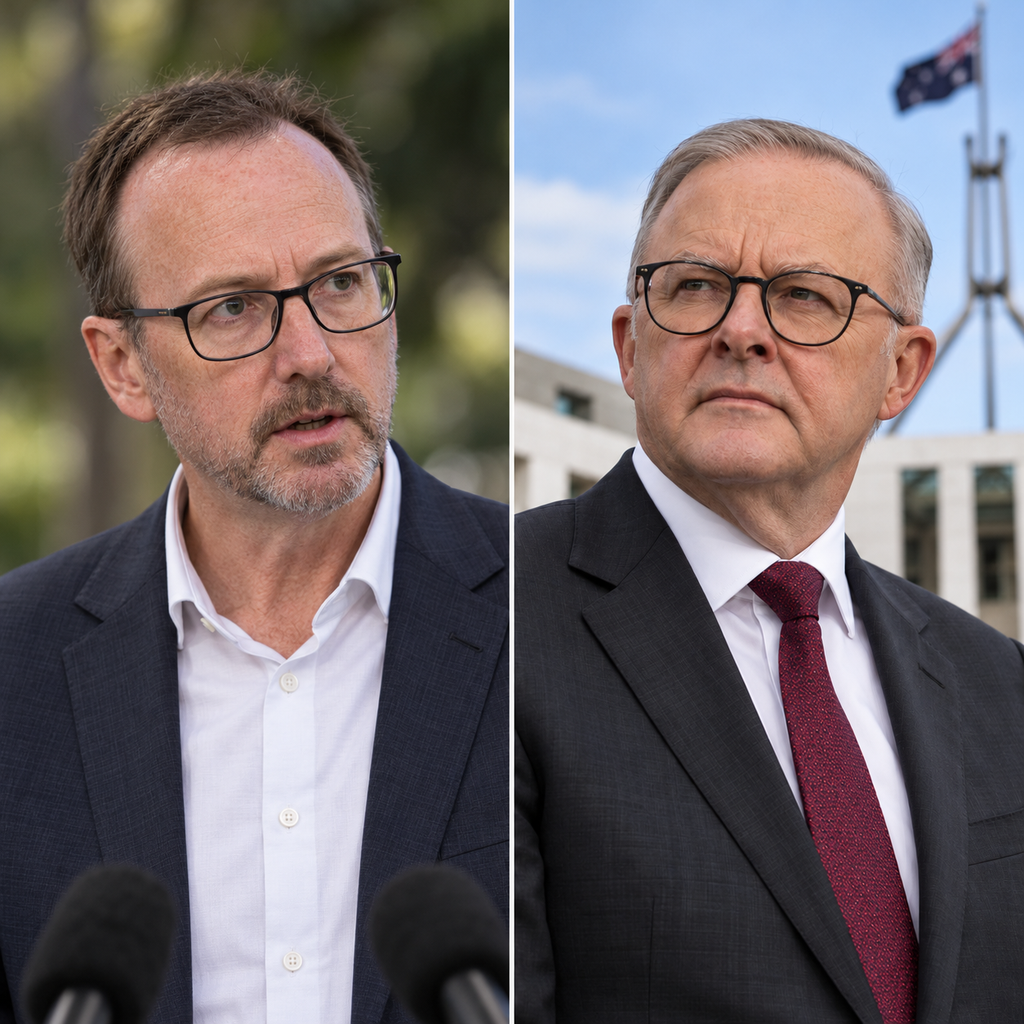
Greens leader David Shoebridge has put tax and welfare at the centre of his party’s challenge to federal Labor, proposing a change to the tax-free threshold intended to leave many Australians better off. The proposal is a political challenge, not evidence of a direct personal clash with Prime Minister Anthony Albanese.
The Greens plan would lift the personal income-tax-free threshold from $18,200 to $26,000. The party says this could deliver a tax reduction of up to $1,092 a year, or roughly $21 a week, depending on an individual’s circumstances.
The proposal also envisages equivalent increases to support payments, including JobSeeker, student and carer payments, and the Age Pension. Those increases are proposals rather than current entitlements.
According to ABC reporting, the Parliamentary Budget Office put the annual cost of the measure at about $22 billion. The Greens have pointed towards increased revenue from gas and other resource industries to cover the expense, but the full funding mix had not been formally costed in the report.
Shoebridge’s scheduled address to the National Press Club gives the policy a prominent public stage. His broader rhetoric about replacing Labor highlights the party’s ambition to compete directly for progressive and economically disaffected voters.
The advertised $21 weekly saving should not be treated as a flat payment to every worker. A threshold increase changes income-tax calculations; its impact varies with taxable income and the final legislative design.
Similarly, a welfare boost would need to pass through law and administration before recipients see an increase. No one should change financial plans on the assumption that a campaign proposal is guaranteed.
For Labor, the proposal creates pressure to explain the trade-off between targeted cost-of-living support, tax relief and revenue needs. For the Greens, the test is whether the funding proposal is credible enough for voters to trust.
This is a contest between policy agendas, with real implications for the budget. Any statement that Albanese personally rejected or attacked the package would need a verified reply before it could be included.
The central idea is straightforward to explain, although the details are more complicated. The Greens want to raise the personal income-tax-free threshold from $18,200 to $26,000. That would change the slice of income on which a taxpayer begins paying tax, rather than handing everyone a fixed amount regardless of their circumstances.
The Greens describe the maximum benefit as $1,092 annually, or $21 per week. That is a useful political figure, but readers should understand the word maximum. A person’s taxable income, tax offsets and final legislation would influence their own outcome. A proposed calculation is not a deposit that has already appeared in anyone’s bank account.
The package also proposes increasing income-support payments. That could matter to unemployed people, students, carers and pensioners, especially where rising prices place pressure on a fixed payment. These changes would operate through welfare rules rather than the income-tax calculation alone, and the interaction with eligibility requirements needs attention.
ABC reporting put the annual budget cost of the package at about $22 billion, citing the Parliamentary Budget Office. That is a substantial public commitment. The relevant debate is not merely whether households would welcome higher income, but how a government would raise enough revenue and what other programs or taxes might be affected.
The Greens have outlined a gas export tax proposal and additional resource-related revenue. The ABC reported that some of the potential revenue estimates were based on work by research groups rather than a full Parliamentary Budget Office costing of the final package. Claims that a particular tax will definitely pay the full bill would therefore be premature.
A 25 per cent gas export tax is not the same as a 25 per cent increase in every gas customer’s bill. The incidence of taxes can depend on international markets, company responses, contracts and policy design. Equally, a large forecast revenue figure cannot be treated as risk-free money without analysing potential behavioural and market consequences.
A broader question concerns federalism. Resource royalties and taxes can operate at different levels of government, and a hypothetical national revenue calculation may not translate neatly into a Commonwealth funding stream. Any final plan needs to explain which government can legally levy a charge and where the proceeds would go.
The Parliamentary Budget Office also raised concerns about the design of some payment interactions. Means-tested welfare can create abrupt changes when a recipient becomes ineligible. A top-up that disappears at a threshold may affect financial incentives differently from a gradual withdrawal. That issue should be tested rather than hidden behind a uniform $21-a-week slogan.
Shoebridge’s declaration that the Greens want to replace Labor is a statement of political ambition. It does not mean a formal governing arrangement has changed, that the Greens have defeated Labor or that Albanese personally argued with him at the National Press Club. A challenger can direct criticism at a governing party without receiving an immediate public reply.
The timing is politically significant as the Greens attempt to reposition themselves around costs and incomes. A broad-based tax and welfare proposal may appeal to voters who previously thought the party focused primarily on environmental policy. Whether it actually shifts votes is unknown and would require polling or election results, not speculation.
For workers, the practical question is the change to take-home pay. For welfare recipients, it is the net value after eligibility rules. For the budget, it is the credibility of the revenue assumptions. And for voters, it is whether any party is prepared to turn a campaign proposal into legislation with a fully documented cost.
The next useful evidence would be the detailed PBO costing, draft legislation or an updated revenue schedule. Those documents would allow independent examination of the competing claims. Until they exist, it is accurate to call this a proposal and a challenge to Labor’s economic pitch, not a delivered tax cut.
The proposed personal-tax change deserves explanation beyond the weekly headline. Australia’s income-tax system applies different marginal rates to different slices of taxable income. Lifting the tax-free threshold can lower tax for someone earning enough to benefit, but that does not mean every taxpayer will receive an identical refund or pay packet increase.
For people with very low taxable incomes, the relationship between the threshold and the advertised maximum saving may be especially important. Someone already paying little or no income tax may not gain the maximum amount from an income-tax change. The Greens therefore propose separate welfare increases for groups whose incomes depend mainly on transfer payments.
The design of the welfare measure is not simply an afterthought. Existing payments are subject to eligibility conditions and income tests. An extra amount could interact with the point at which entitlement is withdrawn, potentially affecting a recipient’s decision about additional work. ABC reporting said the PBO had flagged this interaction as a possible issue.
An annual cost of about $22 billion also needs perspective. The package would represent a significant ongoing budget commitment rather than a one-off election advertisement. A government introducing such a plan would have to account for future costs, economic conditions and whether expected tax revenues materialise year after year.
Resource taxation can attract support from those who believe the public should receive a larger return from extraction of national resources. But even supporters of that principle should ask how much a new measure would realistically collect, which firms and activities it would cover and whether revenue forecasts assume stable prices and production.
ABC reporting described differences between numbers cited from external think tanks and estimates formally prepared by the Parliamentary Budget Office. Those figures are not interchangeable. A broad calculation of potential royalty revenue under state arrangements does not automatically translate into an equivalent federal tax stream.
The distinction between policy and legislation is particularly important for personal finance. Taxpayers cannot claim a Greens proposal under current law merely because it has been announced. Pensioners cannot assume that the proposed welfare increase has been authorised. Changes require the legislative and administrative steps appropriate to the final policy.
Shoebridge’s position is politically confrontational because it challenges Labor from a different direction than the Coalition. A party may argue the government is insufficiently ambitious on redistribution without mounting a direct personal exchange with the prime minister. That is the proper frame for this story, rather than an invented parliamentary shouting match.
Voters can compare the proposals by looking at distribution: which income groups benefit, how the policy would affect incentives and how revenue would be obtained. That comparison may be more informative than the biggest advertised dollar amount. A fully costed bill would also make it easier to evaluate competing claims about fairness.
Beyond the headline, this launch is an attempt to place the Greens in the centre of economic debate. Whether that strategy works will depend on the credibility of detailed policy, the response of other parties and voter judgements. There is no evidence in this announcement that a tax reduction is already in force.
There was an earlier, documented response to the Greens leader’s stated ambition to replace Labor. On 1 October, Albanese said Shoebridge’s criticism of Labor was somewhat concerning, while indicating an interest in constructive engagement with the new Greens leadership. That response was made weeks before this tax package was presented. It is therefore relevant background to the parties’ rivalry, not proof that the prime minister has assessed or rejected the latest $21-a-week proposal. The chronology prevents a genuine political disagreement from being presented as a new face-to-face confrontation.