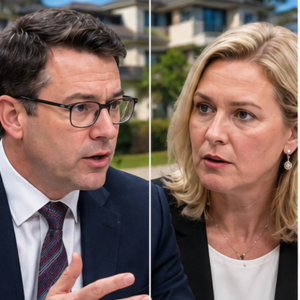
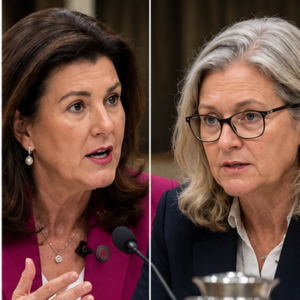
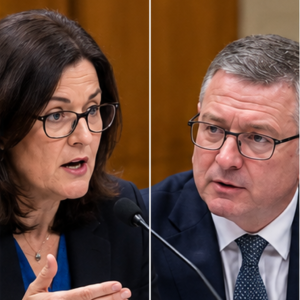
ABC executive Gavin Fang faced questioning from Liberal senator Sarah Henderson over allegations concerning a former freelance video contributor in Gaza, with the broadcaster maintaining it had not substantiated claims of active links to Hamas during his work for the organisation.
The exchange centred on Roshdi Sarraj, a freelance contributor who worked with the ABC and was killed in Gaza. Henderson pressed the broadcaster about claims made by the Israel Defense Forces, including reported material described as an identity card. The allegations are serious, but allegations by a military authority are not automatically verified findings.
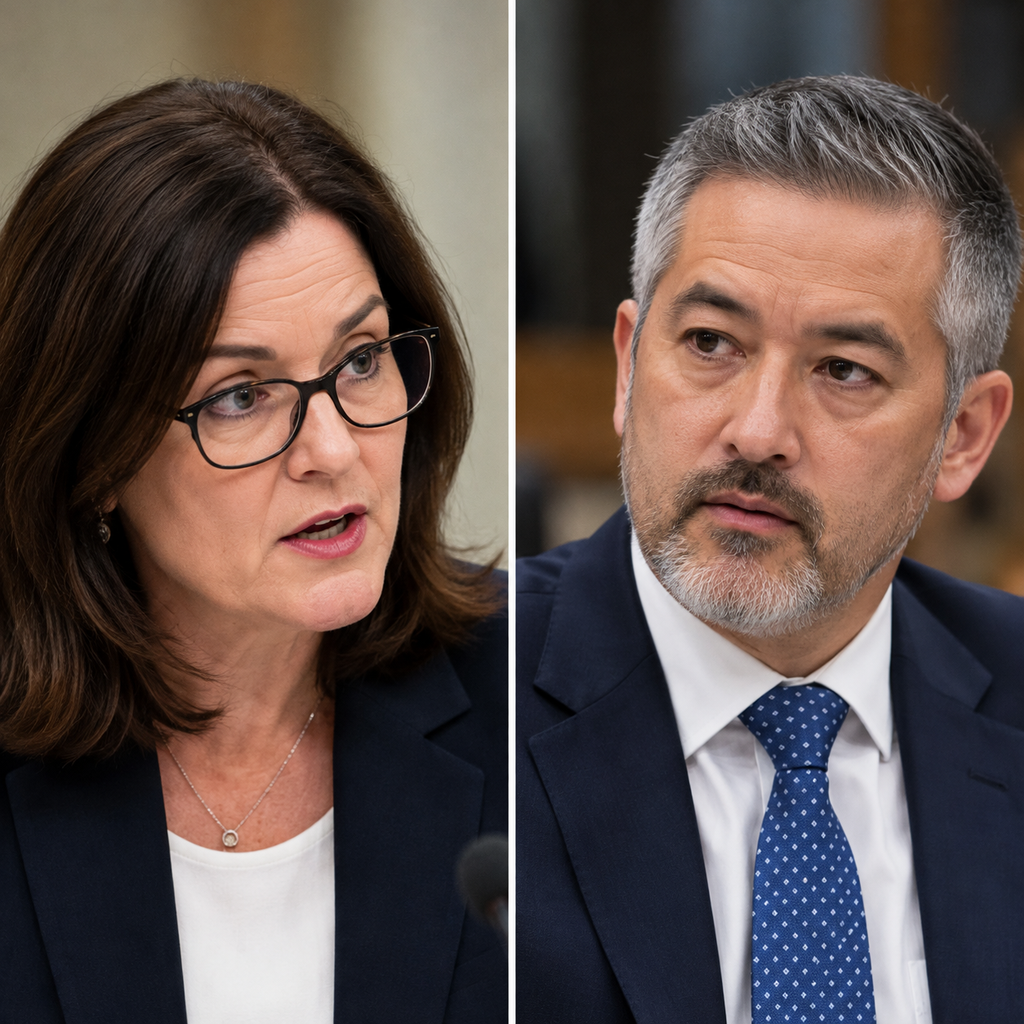
Fang told the hearing the ABC had not found evidence establishing that Sarraj had active Hamas links while he was working for it. According to reporting of the exchange, the broadcaster sought clarification from the IDF and was still assessing evidence about the contributor and his journalistic status.
Henderson criticised the broadcaster’s assessment of the material and questioned whether it had given appropriate weight to the Israeli claim. Fang’s response focused on what the ABC could independently establish, rather than adopting a conclusion based on information whose reliability and context remained contested.
This difference is central to the story. The senator was demanding answers about due diligence, source selection and the broadcaster’s editorial judgment. The executive was explaining the threshold the ABC considered necessary before reaching an adverse conclusion about a person who had worked for it.
Reporting in conflict zones depends heavily on local journalists, camera operators and freelance contributors because international staff may be unable to enter or move safely. Newsrooms have obligations to investigate credible concerns about contributors, but they also risk causing severe reputational harm if allegations are repeated as settled fact without sufficient proof.
The evidence described in public reporting does not enable an independent determination that Sarraj was a member of Hamas, that he performed work for the group while engaged by the ABC, or that the ABC knowingly used a militant operative. Those propositions require a higher standard of verification than the existence of a claim at a committee hearing.
Nor does the ABC’s statement mean every concern has been conclusively disproved. Saying a claim is unsubstantiated is different from proving its opposite. The unresolved question is what evidence has been examined, what remains unavailable and why a final determination can or cannot be made.
Senate estimates provides a forum in which elected representatives can question how publicly funded institutions deal with controversial sources. Henderson’s questioning belongs in that accountability setting. Fang’s replies are also part of the record and should be reported with equal precision rather than reduced to a suggestion that the network simply ignored the allegations.
Any later evidence or formal finding could materially change the position. Until then, the dispute centres on evidence standards and editorial oversight. The clash is not proof of the underlying allegations.
The exchanges reported from the estimates committee need to be read alongside the unusual challenges faced by journalists working in a war zone. News organisations frequently rely on local photographers, camera operators, translators and freelance reporters when access for overseas staff is limited. Those contributors often work under extraordinary physical danger and may be the only witnesses able to document a fast-moving event. Their role does not remove the need for editorial verification, but it explains why a broadcaster’s evidence-gathering decisions can be complex and why a conclusion should not be reached solely on the basis of an untested accusation.
Roshdi Sarraj was a freelance camera operator who had contributed to the ABC’s coverage and was killed in Gaza in October 2023. Questions were later raised about his possible links to Hamas after accusations attributed to the Israel Defense Forces. The broadcaster told the hearing it was examining the claims and had requested evidence from the IDF. The critical point is not whether the source of a claim is politically influential, but whether the details supplied can be tested and linked to the specific period in which Sarraj worked for the network.
Gavin Fang told the committee that allegations alone were not sufficient and that the ABC needed a broader evidentiary base. Mediaweek reported his reference to assessments by the Committee to Protect Journalists, which had not removed Sarraj from its list of journalists killed. Such a listing is relevant to his reported professional status, but it is not an all-purpose security clearance or a conclusive determination of every allegation. That listing is relevant information but does not rule out the possibility of additional evidence.
Henderson challenged what she considered an inadequate response. She was entitled to ask a taxpayer-funded broadcaster what due diligence it carried out, how contractors were vetted and what steps it took when an external body raised serious concerns. Those are operational questions that can be examined without assuming the underlying allegation is true. The public might reasonably want to know when the ABC first became aware of the claim, what documents were requested, who reviewed them and whether any policy was changed.
Fang’s reply also addressed a genuine risk of error. War-related claims frequently circulate before information can be independently checked. Images, documents and identity assertions can be incomplete, wrongly attributed or missing a reliable chain of custody. A broadcaster assessing a contributor must determine what a document really shows, whether it applies to the right person and whether it demonstrates the type of activity alleged. An assertion of affiliation is not the same as documented participation in hostilities during a particular engagement.
The history of modern conflict reporting offers another caution. A journalist may interview members of an armed group, work in territory controlled by that group or have access to government and security officials without being a combatant. Those associations are not necessarily evidence of organisational membership. Conversely, a person’s stated occupation would not automatically disprove a properly evidenced connection to an armed organisation. The distinction must be resolved by concrete evidence, not inference from location, appearance or professional contacts.
ABC editors must also consider how they identify freelancers and describe material sourced from them. Audiences expect footage to be authentic, accurately dated and placed in context. An editorial process should make it possible to trace who provided a video, where it was made, whether the editing changed its meaning and what facts were independently confirmed. Those duties exist regardless of whether the freelancer becomes the subject of public controversy after the assignment.
There is a reputational dimension to the case. Sarraj cannot answer the allegations himself, and his family and former colleagues may be affected by reporting that treats an unproven claim as fact. Those concerns do not immunise a deceased person from legitimate scrutiny. They make attribution, specificity and fair presentation all the more important. Describing him categorically as a terrorist without a supported determination would cross that boundary.
The Senate hearing did not produce a publicly verified answer to the underlying military allegation. It produced an account of what Henderson wanted explained and what Fang said the ABC had or had not established. Neither the military allegation nor the broadcaster’s own review is beyond independent scrutiny. Each claim, each response and each missing document should be assessed on its merits.
Further information could change the story. If the IDF supplies relevant evidence, the ABC could reassess its conclusions. If independent investigations corroborate or reject the claims, those findings would deserve coverage. For now, the most defensible account is a dispute over editorial evidence standards and accountability for the treatment of serious allegations. That is an important controversy on its own, without manufacturing certainty about an issue the public record does not resolve.
There is a further distinction between evidence sufficient to prompt an investigation and evidence sufficient for publication as a settled finding. The threshold for opening an internal review should be relatively responsive to credible concerns. The threshold for making a damaging public assertion about a named person must be much higher, with careful consideration of accuracy, attribution and the person’s opportunity to respond. The ABC’s handling may be judged against both duties, not just one.
Questions about a freelance contributor also require precision about the relationship. A contractor’s role, dates of assignment and level of editorial supervision may differ significantly from those of a permanent newsroom employee. A properly designed review would identify exactly what the ABC commissioned, which checks applied to that arrangement and what additional information was available before or after the person’s death. Without those details, broad statements that the organisation knowingly employed a militant are unsupported.
For Henderson, the public interest is the integrity of taxpayer-funded reporting. For Fang, the challenge is demonstrating responsible review without treating an untested allegation as a verdict. Readers can reasonably demand disclosure about the process while declining to speculate about the ultimate conclusion. Neither position requires publishing unverified personal allegations as though they had been proved.
The hearing also raises a broader question about how public broadcasters explain a decision not to adopt an outside allegation. A newsroom can publish the fact that a claim has been made, seek underlying documents, consult independent organisations and describe the information still missing. Explaining that process is more useful than asking audiences to accept an unexplained conclusion. In this case, careful transparency about the ABC’s requests for evidence and its unresolved evidentiary questions would make the broadcaster’s response easier to assess without settling the underlying allegation.