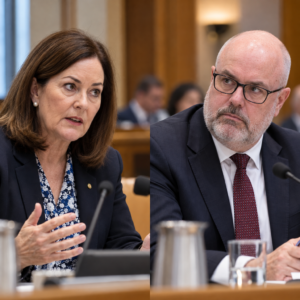
Independent senator Jacqui Lambie has called for One Nation candidate Mark Nicholson to withdraw from Victoria's election after he refused to apologise for an animated political cartoon mocking her medical condition. Nicholson, a co-founder of the studio behind the party's Please Explain series, defended the use of caricature and said he would apologise if he believed an apology was warranted.
The disagreement emerged in an ABC 7.30 interview and involves two people taking directly opposing positions. Lambie believes the cartoon and its defence show Nicholson is unfit for public office. Nicholson says his work involves making fun of figures in public life and does not believe the episode justified an apology from him.
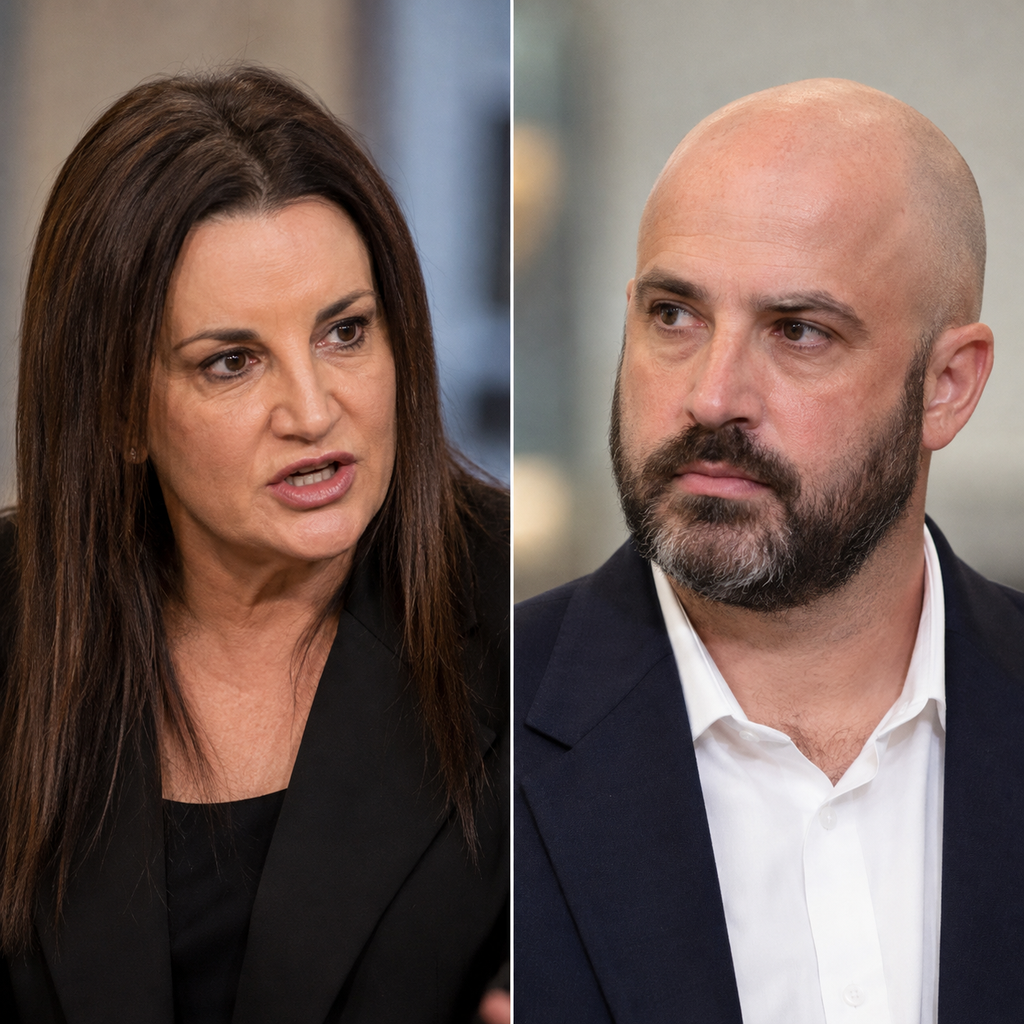
The animation featured a character representing Lambie and made a joke about a private health issue she has spoken about publicly. The medical reference became the centre of the backlash. Repeating the detail gratuitously is not necessary to explain why the senator regarded the cartoon as humiliating.
Nicholson told ABC 7.30 that people were taking political satire too seriously and defended stereotypes and caricature as part of how the cartoons operated. He also rejected criticism of a separate advertisement featuring exaggerated migrant stereotypes. Those comments are his defence of his creative choices; they should not be presented as the views of the people depicted.
Lambie argued that the animator should not be standing for election. Her demand is a political opinion about a candidate's judgment and suitability, not a court finding or decision by an electoral authority disqualifying him from running.
A crucial distinction concerns One Nation leader Pauline Hanson. Hanson publicly apologised for the particular Lambie cartoon and it was removed from the party's online platforms, according to reporting. Lambie subsequently said Hanson had not contacted her personally to apologise. It would be inaccurate to say Hanson had offered no apology at all.
Nicholson's refusal to apologise is a separate matter from Hanson's public apology. Although he works on the series and is associated with One Nation, the two should not be treated as a single person giving one response. The conflict in this story is specifically between Lambie's criticism and Nicholson's position.
The issue also has an electoral dimension. Nicholson is a One Nation candidate for the Victorian state election. Voters may consider the judgment demonstrated by political communication when deciding whether a candidate deserves office. But the existence of controversy does not determine the outcome of an election and does not automatically affect formal eligibility.
The broader Please Explain series has attracted criticism for its portrayal of various politicians and social groups. Supporters regard it as deliberately provocative political humour; critics argue that the series relies on offensive stereotypes or targets sensitive personal characteristics.
The distinction between mocking a politician's public decisions and turning a medical condition into a punchline is a central ethical issue in the Lambie dispute. People can disagree about the limits of satire without pretending a medical condition is a public-policy position or that a candidate’s refusal to apologise is a legal offence.
Lambie has also criticised what she sees as the series' stereotyping of minority communities. Nicholson has argued that caricature is intrinsic to the way the studio creates its work. The two comments reflect different judgments about the responsibilities of political communicators.
This confrontation is distinct from the dispute between Lidia Thorpe and Hanson over an older animated scene showing a fictional bus running over Thorpe. The incidents concern different images and different complainants, even though they involve the same cartoon franchise.
The 7.30 interview adds important detail about the personalities behind the controversy. Nicholson is not simply a bystander commenting on a video made by somebody else. He is a co-founder of Stepmates Studios, which produces One Nation's animated Please Explain content, and he is seeking election to Victoria's upper house for the party. That dual role places his public statements within both a creative industry context and an electoral contest. The judgment exercised by somebody producing satire may be evaluated differently once that person asks voters for a seat in parliament.
Nicholson’s answer to Lambie’s criticism was not a general denial that the episode existed. He defended the studio’s right to caricature powerful people and argued that public figures must expect to be parodied. When asked whether he would apologise, he did not do so, saying he would apologise if he believed there was something worthy of an apology. The relevant fact is his refusal to apologise personally; it is not correct to imply that everyone associated with the party adopted the same response.
Lambie's response was direct. She criticised the creator’s maturity and said his attitude was incompatible with the responsibilities of elected office. She also questioned the judgment behind using an intimate medical issue as the subject of political humour. Her position should not be rewritten as a formal finding that Nicholson is legally ineligible to run. She is making a political argument to voters about character, sensitivity and the standards they should expect of candidates.
The distinction between Hanson's public apology and Lambie’s complaint about the absence of a personal apology is similarly important. Reporting confirms that Hanson initially defended the video, later acknowledged she had not seen it and publicly apologised for how it had been done. The episode was removed. Lambie told the ABC that Hanson had not contacted her directly. Someone can offer a public apology without satisfying the person affected. Both propositions can be true; neither erases the other.
The medical aspect requires restraint. Lambie had previously discussed the condition in the Senate, but the fact that someone has disclosed a personal health matter does not mean the detail must be repeatedly displayed for public amusement in a news report. The editorial issue can be explained without reproducing the precise anatomical wording from the cartoon. That approach preserves the factual reason for the criticism while avoiding unnecessary repetition of a joke the target says was humiliating.
Nicholson framed the broader series as political satire designed to challenge public figures. It is not unusual for political cartoons to use distortion and exaggeration. The disagreement is about what subjects should be chosen, not whether cartoons as an art form exist. Lambie distinguishes criticism of policy or public behaviour from mockery of a medical problem; Nicholson stresses that anyone occupying public life may be subject to caricature. These are contrasting ethical positions that audiences can judge independently of the party labels involved.
The ABC also examined other content made by the studio, including an AI-generated election advertisement using stereotypes concerning crime and migration. Nicholson defended its creative approach and suggested critics had taken the portrayals too seriously. Those comments are relevant to understanding his public defence of the studio's methods. They do not prove that every member of One Nation endorses every depiction, or that all people belonging to the communities portrayed agree on its meaning.
Artificial intelligence introduces another complication. A short advertisement can be produced inexpensively and distributed rapidly, using synthetic characters who do not correspond to identifiable real people. Such material may be plainly fictional to some viewers but confusing to others. The journalistic obligation is to identify it as synthetic or animated and to avoid using fabricated scenes as though they were documentation of real crimes, real conversations or real encounters involving politicians.
The role of voters is separate from any platform decision to remove material. A party or studio can delete a video and still face questions about why it was authorised. A candidate can continue running after criticism and ask voters to evaluate their response. An opponent can call for that candidate to withdraw without having power to make it happen. The public debate should therefore report requests for resignation or withdrawal as political demands, not as completed electoral events.
Nicholson’s comments may also be interpreted in the setting of One Nation's appeal to audiences frustrated with conventional political language. Provocation can attract attention and generate online sharing. That commercial or electoral incentive does not establish intent to cause harm. It does, however, form part of a legitimate discussion about whether political campaigning should have limits beyond those strictly enforced by law or social media platforms.
For Lambie, a health-related cartoon is a personal matter as well as a symbol of what she regards as increasingly divisive politics. For Nicholson, it is an example of the studio’s approach to ridicule and commentary. The two do not need to agree for the news to be reported fairly. The strongest evidence is the ABC interview in which each was able to state a position and respond to criticism without a journalist inventing a dramatic exchange.
The next electoral step belongs to Nicholson and One Nation, and eventually to Victorian voters. No court or electoral authority determination against his candidacy has been identified in the reporting reviewed. The dispute may influence public discussion, but the reporting cannot predict how a constituency will vote. Whether viewers admire or dislike the cartoon, they can assess the record: a disputed animation, a public apology by Hanson, Lambie’s demand that Nicholson not enter parliament and Nicholson’s refusal to apologise himself.
The unresolved question is whether Nicholson's defence will satisfy voters and whether the party’s public apology changes the wider debate. The confirmed facts are the disputed cartoon, its removal, Hanson’s public apology, Lambie’s criticism and Nicholson’s refusal to apologise personally.