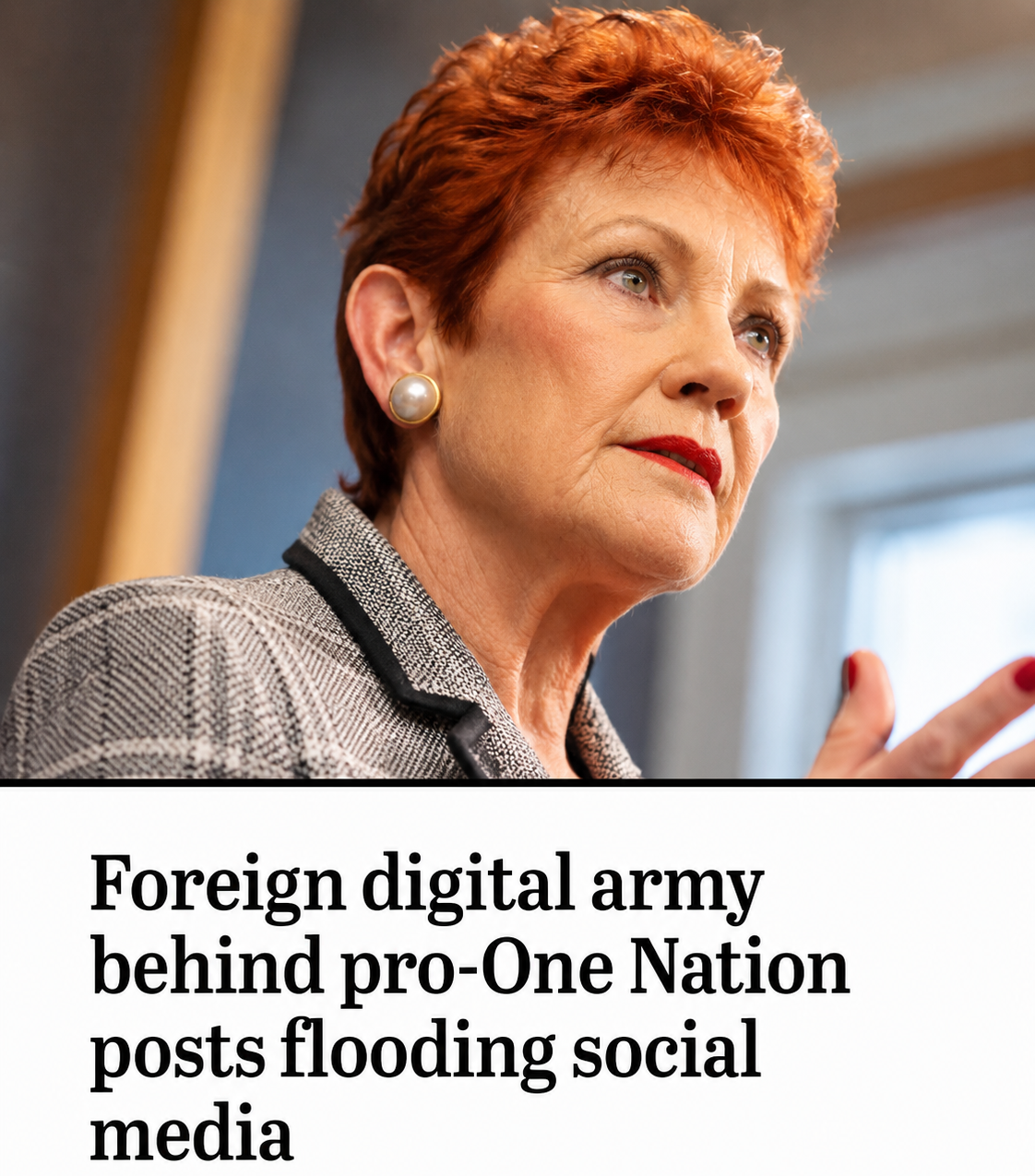
An investigation has examined claims that a network of paid overseas social media influencers has been producing and distributing content supporting One Nation to Australian audiences, raising fresh questions about transparency in online political campaigning.
According to reporting, numerous videos and social media posts promoting One Nation have been traced to content creators based outside Australia. Researchers involved in the investigation say the material was designed to reach Australian users through major social media platforms, potentially expanding the party’s online visibility during a period of heightened political interest.
The investigation alleges that some overseas creators were paid to publish political content favourable to One Nation. It also suggests that coordinated posting patterns helped increase the visibility of similar messages across multiple accounts. However, the report does not conclude that the activity directly changed election outcomes or voter behaviour, and the broader impact remains difficult to measure.
Political communication specialists note that online campaigns increasingly rely on international creators, advertising networks and digital marketing firms that can reach audiences across national borders. While such activity may be lawful depending on the circumstances and applicable electoral laws, experts say transparency about sponsored political content remains an important public policy issue.
Researchers who study online misinformation and influence campaigns argue that social media recommendation systems can rapidly amplify highly engaging political content regardless of where it originates. They say this creates challenges for voters seeking to distinguish between grassroots political discussion, commercial promotion and coordinated influence operations.
At the time of reporting, One Nation had not acknowledged involvement in any coordinated overseas influencer campaign as described in the investigation. The findings published by the newspaper remain subject to public scrutiny, and no official authority has made findings that establish unlawful conduct in relation to the reported activity.
Australia has strengthened a range of electoral transparency rules in recent years, including requirements applying to political advertising and foreign influence. Nevertheless, policymakers, regulators and technology companies continue to debate whether existing safeguards are sufficient to address rapidly evolving forms of digital political communication.
The issue also reflects a broader international trend. Around the world, political parties, advocacy groups and campaign organisations increasingly use online creators, targeted advertising and algorithm-driven platforms to communicate with voters. As these strategies evolve, questions surrounding disclosure, authenticity and accountability are likely to remain central to public debate.
Further examination of the reported activity may come from researchers, regulators or parliamentary bodies if additional evidence emerges. For now, the investigation contributes to an ongoing discussion about how political messaging is created, distributed and disclosed in Australia’s digital environment.






