The Victorian Coalition has put the Melbourne Wholesale Market at the centre of its economic pitch, promising to sell the government-owned facility at Epping if it wins office. It believes a sale could raise about $600 million, while Labor warns that handing the market to a private owner could drive up the price of fresh food.
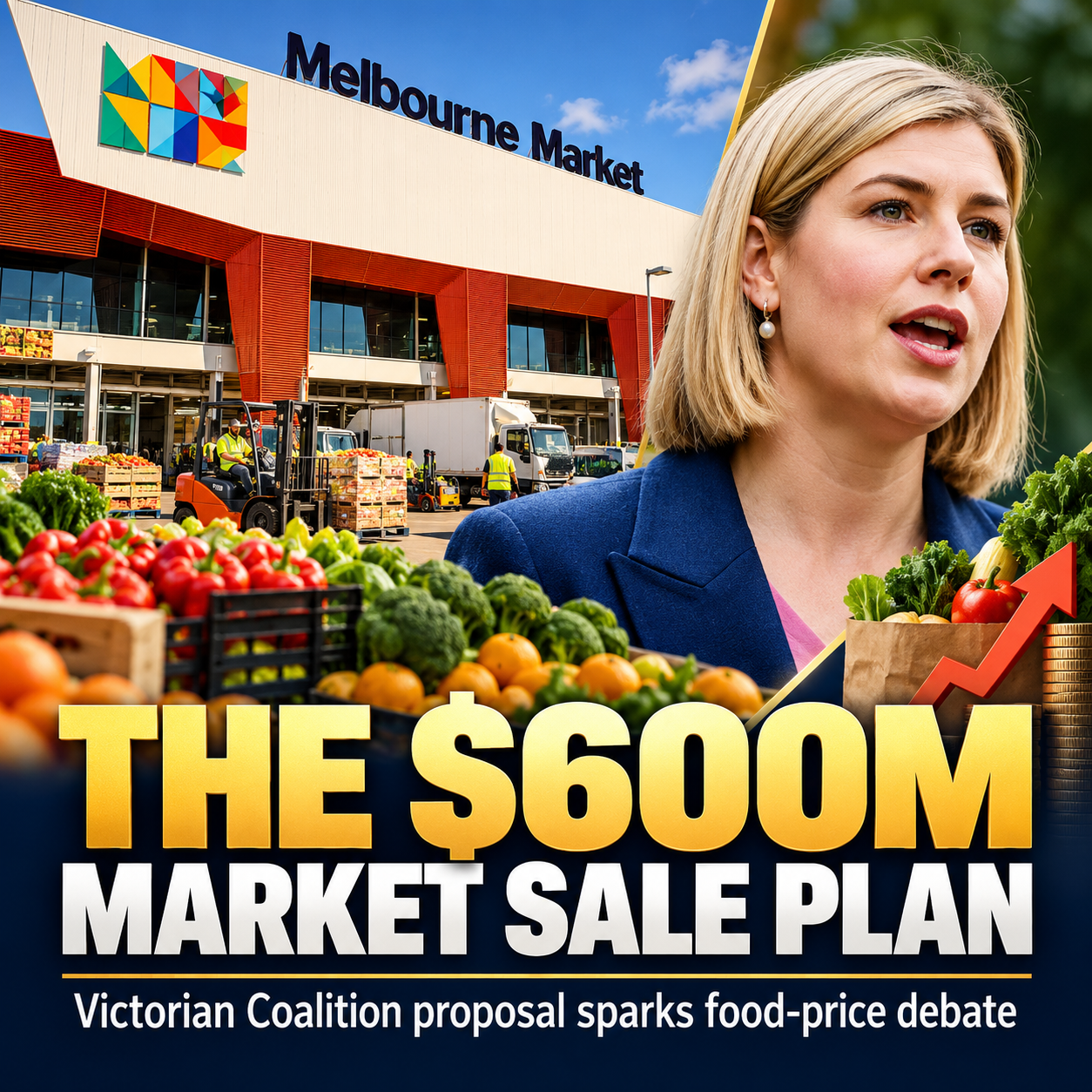
The proposal would affect one of the state’s most important produce distribution hubs, a sprawling complex in Melbourne’s north used by growers, wholesalers and businesses that supply retailers and restaurants. The market is not a typical shopping destination for consumers. Its significance lies in the enormous quantity of fruit, vegetables and flowers moving through the site before reaching shop shelves and commercial kitchens.
The Coalition argues that government should not be responsible for operating such a facility. Shadow agriculture minister Emma Kealy has advocated a change in ownership that would give industry a greater role, and the opposition has tied the estimated sale proceeds to its broader plan to address Victoria’s public debt.
The $600 million estimate is central to that argument because selling an asset offers a potentially large injection of funds. But the amount is an estimate, and a future government would still need to determine how the sale would work, who could purchase the market and what protections would apply to traders and existing tenants.
Labor has taken the opposite position. Agriculture Minister Michaela Settle has warned that privatisation could increase costs for growers, stallholders and retailers, with higher charges ultimately reaching households buying fresh food. That is a political warning about what could happen under new ownership, rather than evidence that grocery prices have already changed because of the proposal.
The Melbourne Wholesale Market occupies an unusually important position because its customers include businesses rather than households. Independent greengrocers, restaurants, aged-care food providers, florists and manufacturers buy produce that has been assembled and traded through a shared logistics centre. A grower in regional Victoria may deliver a load that is divided among many smaller buyers; a retailer can buy from several wholesalers at one location. The arrangement can reduce the time and distance involved in moving perishable goods. If access to that hub became more costly or complicated, traders would need to decide whether to absorb the increase or try to recover it from their own customers.
According to the ABC’s reporting, the market has about 3,000 tenants and occupies a site of approximately 67 hectares. The figures help explain why the proposed change is not comparable to selling a vacant government building. Thousands of individual businesses make decisions based on the market’s location, opening arrangements and ongoing viability. Their workers and customers are linked to those decisions too. Any future transaction would have to account for leases, loading and storage arrangements, maintenance responsibilities, security and infrastructure used by an industry rather than a single commercial tenant.
Market rents have already been contentious. An extended industrial dispute between traders and the market authority ended with an agreement, but the history of disagreement has made operators sensitive to costs. The Coalition says the government-owned authority has failed to deliver a surplus and estimates the operation loses roughly $10 million annually. Those are arguments made in support of the proposed sale. A new private owner could seek efficiency, but it might also expect returns that have to be funded through rent or other fees. A useful judgement about the proposal therefore depends on financial detail not contained in the headline sale estimate.
The market sits on a large site beside the Hume Freeway and handles the practical work of moving produce in and out of Melbourne. Transport access, refrigeration, storage, loading facilities and reliable operating hours are all important to traders. Costs at this stage of the supply chain can influence the businesses that later sell produce to the public.
Some stallholders have cautiously welcomed the prospect of different management, after disputes over rents and operating arrangements. Others want certainty about their leases, fees and access to the site. For them, the name on the ownership documents matters less than the conditions under which they can continue trading.
Fresh State, which represents produce wholesalers, has indicated cautious interest in industry involvement rather than an unrestricted sale to the highest bidder. Its position introduces an important distinction between privatisation and industry ownership. Traders who help run their own infrastructure may have different incentives from a property investor seeking a return on an asset. Even an industry-backed model would still need governance rules, financing and ways to resolve disputes among operators of very different sizes. Support for considering an ownership change should not be mistaken for a blanket endorsement of any sale structure.
The consequences for food prices are also more complicated than a direct link between ownership and the checkout. A supermarket or independent retailer pays for produce, freight, storage, wages, electricity, packaging and waste. Weather and crop conditions affect supply before food reaches a wholesale market. Competition determines how far a business can pass on costs. The Australian Competition and Consumer Commission’s supermarket inquiry examined the relationship between farmgate, wholesale and retail prices as well as the effects of competition. It underscores why one link in the supply chain matters without being the sole explanation for grocery inflation.
For growers, predictability can matter more than a short-lived saving. Fruit and vegetables are perishable and often harvested to meet orders or expected demand. Delays at a market can reduce quality and increase waste. A producer who has paid for labour, refrigeration and transport may have little negotiating power once produce has arrived and must be sold. Reliable infrastructure therefore has a financial value that does not appear simply as profit or loss in the market operator’s accounts. The stronger the market’s role in moving large volumes quickly, the greater the importance of maintaining those services under any owner.
A private buyer might promise efficiency, new investment or a more responsive relationship with tenants. A new owner might also seek commercial returns through charges and rents. Public ownership provides a different set of incentives, including government influence over infrastructure that serves a broad industry. The result for traders would depend heavily on the terms of any sale.
The market has a wider role in Victoria’s food system. Fresh produce passes through several businesses before it reaches consumers, and the cost of each step affects the chain. A market sale would not automatically change supermarket prices, just as continued public ownership would not guarantee lower costs. The details of leases, pricing and investment would determine the practical consequences.
Selling a public asset also raises a budgeting question. A one-off receipt can reduce borrowing or fund expenditure, but it does not by itself create a recurring revenue stream. A government that sells infrastructure may give up future control, revenue opportunities and the ability to direct investment. Conversely, retaining an asset can require taxpayers to fund repairs or operating losses. Those competing costs should be compared over the life of the facility, not measured solely by the estimated cheque a sale might deliver. Victoria’s public debt is the political backdrop to the promise, but it is not evidence that privatisation will necessarily improve the market.
Independent retailers may be particularly sensitive to the outcome. Large chains can purchase produce through multiple channels and often have sophisticated distribution networks. Smaller greengrocers and hospitality venues may rely more heavily on local wholesalers for choice, flexible quantities and short-notice deliveries. Any change in market fees could affect their margins and bargaining power differently from a large buyer. The question is therefore not only whether shoppers pay more for tomatoes or lettuce. It is whether smaller businesses remain able to compete and offer consumers alternatives in an already concentrated grocery sector.
If the Coalition wins office, the design of the sale would determine the hard questions: whether wholesalers could obtain a stake, how existing leaseholders would be protected, which services would be guaranteed and who would regulate future fees. Labor’s pledge to retain ownership offers a different risk profile but still leaves the authority with an obligation to operate efficiently. Neither outcome settles the wider pressures on food bills, from energy and transport to competition and extreme weather. It does make the market’s future a meaningful election issue for workers, traders, farmers and households that may never have visited Epping.
The Coalition’s proposal gives voters a clear choice about government ownership and the use of public assets. It also raises questions that would require answers if the opposition formed government: whether tenants could remain on existing terms, how fees would be regulated, and how future maintenance and investment would be funded.
For producers and traders at Epping, those questions are immediate business concerns. For households watching grocery bills, the dispute is another example of how decisions about infrastructure far from the supermarket checkout can become part of a political argument about the cost of living.






