Australians already struggling with mortgage repayments and household bills face a fresh warning from the Reserve Bank, with deputy governor Andrew Hauser saying the outlook for inflation has deteriorated sharply. His assessment has sharpened attention on the bank’s next interest-rate decision, although no further increase has been announced.
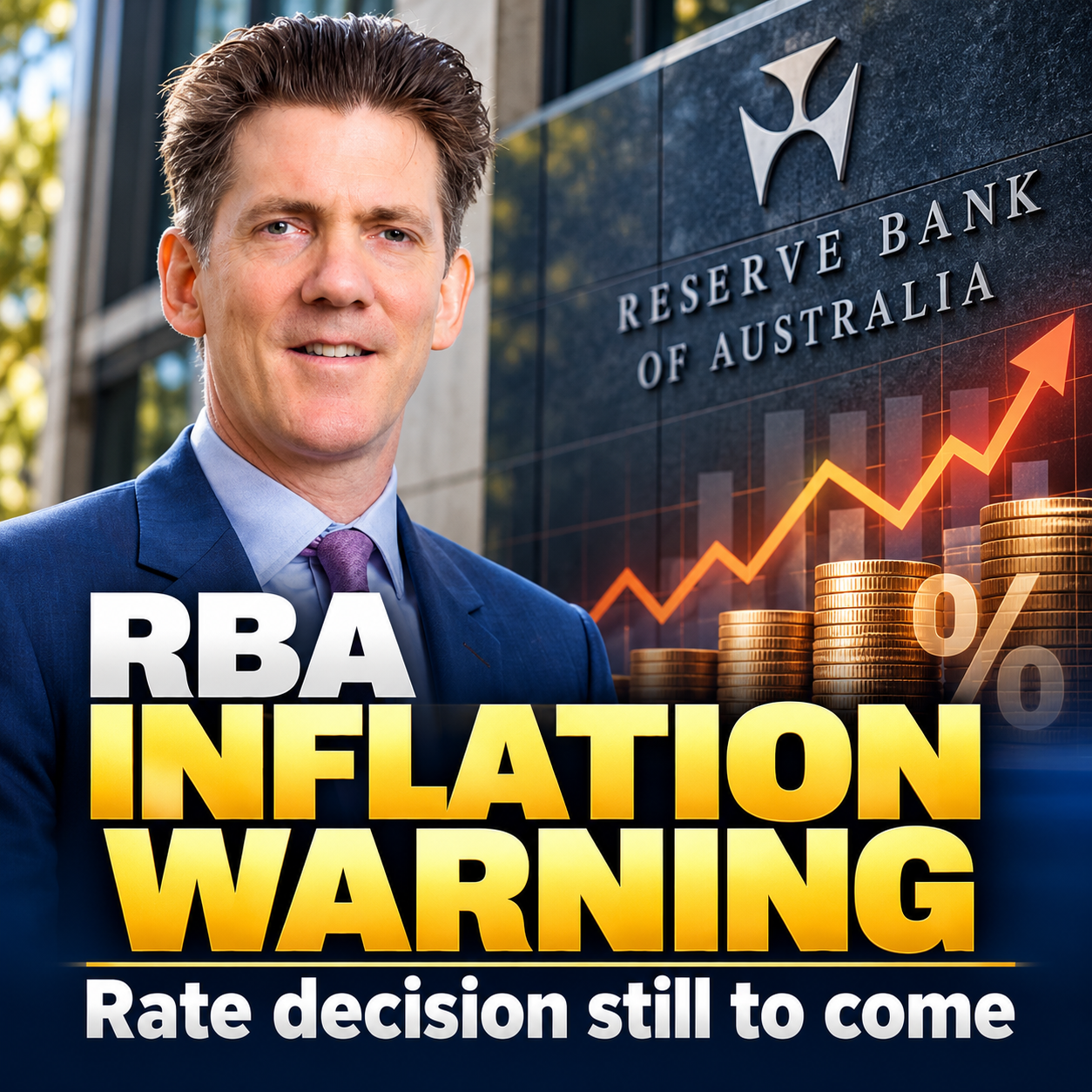
Speaking at an investment conference in Sydney, Hauser said the inflation outlook looked “materially worse” than in the RBA’s earlier forecasts. He pointed to higher global oil prices, persistent domestic cost pressures and unusually strong investment in technology infrastructure as factors making the outlook more difficult for policymakers.
The warning comes at an uncomfortable point for borrowers. The RBA has been using higher interest rates to slow spending and bring inflation under control. Households with variable-rate mortgages have already felt the effect of tighter monetary policy, while renters and small businesses face their own pressures from the cost of money and the price of everyday essentials.
Hauser described an economy sending conflicting signals. Consumer spending is subdued, the labour market has eased and housing is under pressure. At the same time, global demand remains resilient in parts of Asia, and the expansion of Australian data centres is adding to business investment. Those forces make it difficult for a single interest-rate setting to relieve every pressure at once.
Energy is one of the clearest sources of concern. Hauser said oil prices were roughly a third above the assumptions built into the RBA’s earlier projections, reflecting developments in the Middle East. Higher oil costs can affect fuel bills directly and feed into freight, transport and the costs businesses face when moving products across the country.
Even a small change in the interest rate charged on a large home loan can alter a household budget. On an illustrative $600,000 principal-and-interest mortgage over 25 years, a rise from 6.0 to 6.25 per cent would increase the repayment from roughly $3,866 to $3,958 a month. Those figures are an example, not a prediction of the next RBA move or a quotation from any particular lender. The actual effect would vary with the loan balance, remaining term, product, and whether the bank passed through a cash-rate change in full. For families already spending most of their incomes on essential bills, the size of that margin matters.
Borrowers also face a choice that is easy to overlook in discussions about the central bank: the RBA sets the cash rate, but commercial lenders decide the interest rates available on individual loans. Banks price mortgages according to funding costs, competition, customer circumstances and the features of the product. Someone paying a higher rate than comparable borrowers might obtain a better offer without waiting for monetary policy to change. ASIC’s Moneysmart service encourages customers to compare products and calculate both the savings and any switching costs. A low advertised rate is not necessarily the cheapest deal once fees and conditions are included.
Refinancing is not free of complications. Switching lenders can involve discharge fees, application costs, a new property valuation or lender’s mortgage insurance depending on a borrower’s position. A fixed-rate customer may face break costs if the contract is ended early. A household that extends the loan term to lower monthly payments may end up paying more interest over the life of the debt. Those differences are important because an interest-rate headline can encourage a rushed decision at precisely the moment a family is feeling financially pressured.
Those price pressures matter particularly in regional Australia. A business relying on long-distance deliveries may have fewer alternatives when diesel and freight charges rise. Families who need a car to get to work, school or medical appointments have little flexibility to avoid higher petrol costs. The RBA cannot bring global oil prices down, but it must consider whether an external shock could become entrenched in prices across the economy.
Hauser also highlighted domestic capacity constraints, including services in which costs have remained stubbornly high. When employers and businesses are operating close to their limits, increases in demand can translate into higher prices rather than a larger supply of goods or services. Policymakers are watching whether inflationary pressure spreads beyond the products initially affected by global disruptions.
For borrowers already unable to meet repayments, financial hardship assistance is a separate avenue. ASIC says lenders have hardship teams that can consider arrangements such as temporarily reduced payments or changes to loan terms. Seeking help does not itself erase the debt, and the right option depends on the situation. But waiting until several repayments have been missed can narrow the choices available. The relevance of the RBA’s warning is therefore not merely the next announcement from the bank: it is the difficulty of keeping mortgage, insurance, council rates and energy bills manageable while economic conditions shift.
Renters are affected through different channels. Landlords may cite borrowing and maintenance costs when deciding whether to raise rents, although vacancy rates, local supply and tenancy rules all influence what they can charge. Tenants cannot simply refinance their accommodation the way a homeowner can refinance a loan. A rent increase can also arrive at the same time as higher power bills or expensive groceries. Consequently, the RBA’s inflation problem is felt well beyond people whose home loan interest rate adjusts with every policy decision. The pressures spread through housing, retail spending and household savings.
Small businesses often operate with a mixture of variable-rate loans, overdrafts, equipment finance and supplier credit. A café might face more expensive food deliveries and electricity alongside higher interest on the finance used to buy an espresso machine. A regional transport operator may be exposed directly to diesel costs. A builder can find that projects are delayed because customers cannot finance a renovation. Those different mechanisms explain why the RBA worries about both inflation and a slowing economy: measures that take heat out of spending can also depress activity in sectors already under strain.
The bank is not ignoring the damage that additional rate rises could cause. A higher cash rate can flow through to repayments on variable-rate home loans, leaving borrowers with less income for groceries, utilities and other expenses. More expensive finance can also cause businesses to delay investment or hiring. Those effects may reduce inflation, but they carry real costs for households and workers.
That is why Hauser framed the decision as difficult rather than inevitable. The RBA’s monetary policy board must weigh the risk of letting inflation remain too high against the risk of weakening an economy already showing signs of strain. Financial markets may debate the probability of a rate rise, but trading expectations are not an official bank decision.
The oil-price component is especially awkward for monetary policy. A rise in global energy prices can make consumers poorer by forcing them to spend more on fuel, while also lifting the prices of goods transported by road. Raising domestic interest rates cannot directly increase the global supply of oil. The bank’s concern is whether businesses repeatedly pass on higher input costs and whether price-setting behaviour becomes more persistent. That distinction is central to the argument about how forcefully the RBA should respond. Too little action risks entrenched inflation; too much risks unnecessary stress on employment and household finances.
There is another link between technology investment and inflation. A data-centre construction boom can increase demand for electricians, specialised equipment, grid connections and building materials, even as households reduce discretionary spending. It means one sector may be spending heavily at the same time another is contracting. Hauser’s remarks describe an economy in which rising investment and softer private consumption are not mutually exclusive. The board has to consider the combined effect without assuming that a slow retail sector means every part of the economy has spare capacity. For households considering a move, the difference between an economic forecast and a confirmed rate decision is important. A budget can be stress-tested against several possible repayments without assuming that any one outcome is certain.
The RBA’s formal target is to keep inflation between two and three per cent on average. Achieving that goal depends not only on the latest price figures but also on whether households and businesses believe price growth will ease. Expectations can influence wage negotiations, budgets, investment and the prices companies set for customers.
For borrowers, the immediate implication is an uncertain interest-rate outlook rather than a confirmed repayment increase. The actual cost of any future move would depend on each lender’s pricing and an individual loan’s balance and terms. Hauser’s remarks show how closely the bank is watching the inflation risks even as it acknowledges the pressure already falling on Australian households.






