Independent federal MP Helen Haines has lost both legs following a vehicle attack outside her Wangaratta electorate office, her husband has confirmed, as her family faces a devastating change in her health and future. The member for Indi is being treated at Melbourne’s Alfred Hospital after sustaining catastrophic injuries in the collision.
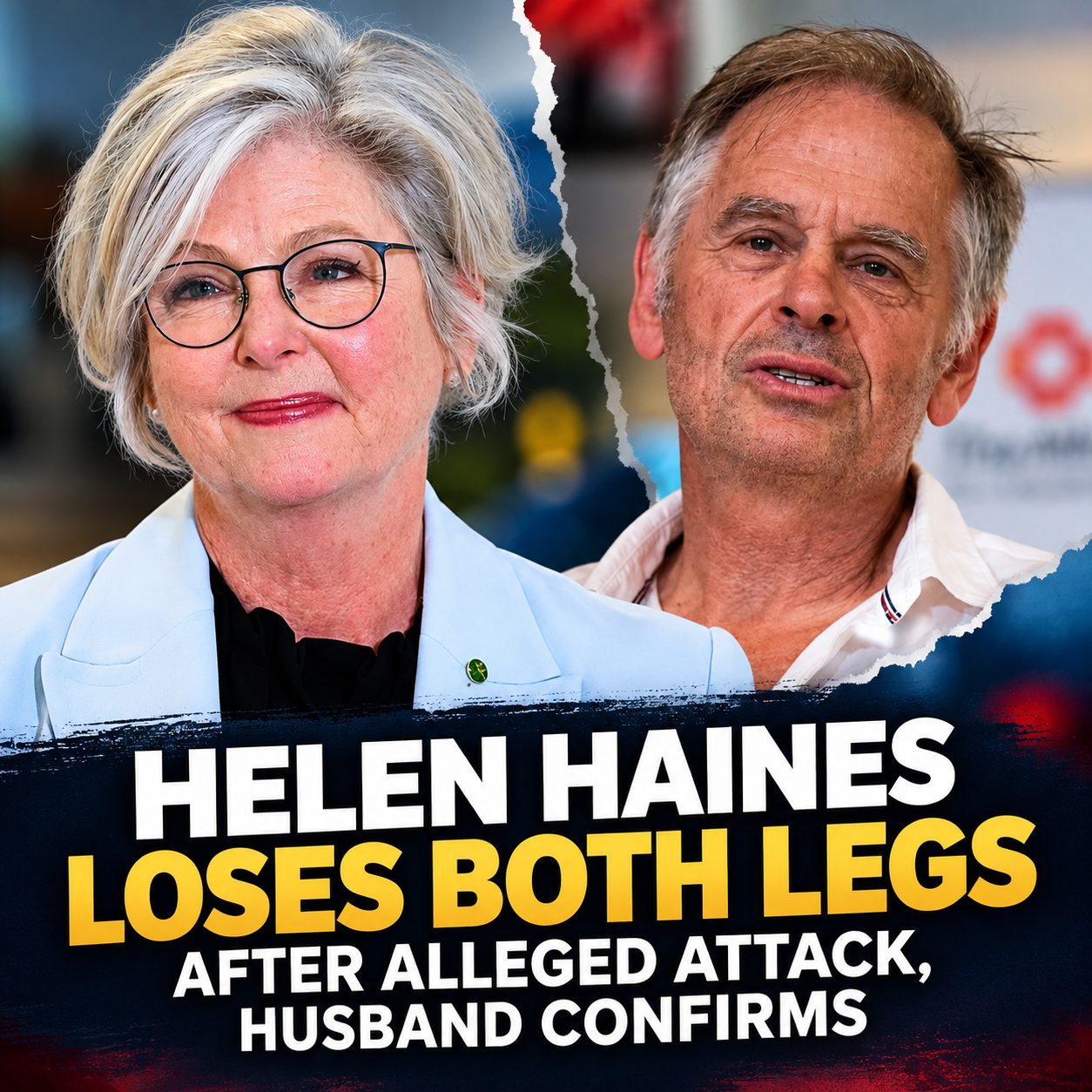
Phil Haines said surgeons had amputated his wife’s left leg following the attack and had fought to save her right leg. Despite their efforts, the second amputation also became necessary. Speaking publicly about her condition, he said Helen was alive and described her as stable, although she faced a difficult recovery. The Alfred Hospital has separately said the independent MP remains in a critical condition and has not described her as stable. Her family has thanked medical staff and Australians sending messages of support.
For the people of north-east Victoria, the news is especially confronting. Haines is a familiar figure in the regional electorate she represents, where an MP’s work extends well beyond speeches in Canberra. People visit electorate offices for help with government services, problems with agencies and issues affecting their communities. The office in Wangaratta was meant to be one of those places of direct contact between a local representative and the public.
Police allege a man drove a vehicle at Haines near that office, causing her serious injuries. Brendan Nugent, a man from the Wangaratta region, has appeared in court facing multiple charges connected with the incident, including an allegation involving harm to a Commonwealth public official. He has not been convicted. Police and prosecutors will put their case through the courts, where the allegations can be tested.
Details emerging from court proceedings and witness accounts have added to public shock, but Haines’ family has kept its focus on her condition. Phil Haines has described a woman who is still fighting, supported by relatives and medical staff. As people across the country debate the circumstances of the attack, her family’s immediate reality is the hospital ward, surgery and an uncertain recovery.
In regional Australia, the aftermath of a serious injury rarely ends when a patient leaves intensive care. Rehabilitation may involve a team of surgeons, physiotherapists, occupational therapists, rehabilitation physicians and prosthetic specialists. Recovery plans can change as a person’s medical condition develops, and the physical recovery is only one part of learning how to live and work differently. None of those decisions has been announced for Haines. Her treatment is a private medical matter, and her husband’s account makes clear that the family’s attention is on getting her through the immediate crisis rather than drawing up a timetable for politics.
For other Australians facing life-changing disability, the financial and practical questions can be formidable. Wheelchairs, prosthetic limbs, home modifications, transport, equipment and personal support each sit within different parts of the health and disability system. Hospital treatment, rehabilitation, private insurance and disability services do not necessarily cover the same expenses. A person can discover that returning home involves alterations to entrances, bathrooms or vehicles, as well as planning for work and family commitments. Those realities explain why rehabilitation is often described as a long process rather than a single operation or a fixed period of recovery.
The National Disability Insurance Scheme assesses access against individual eligibility requirements, including residency, age and the effects of a permanent impairment on everyday life. It is not an automatic payment attached to a diagnosis or an injury. Mainstream health services, private cover and other systems may also have responsibilities. Services Australia separately assesses Disability Support Pension claims against medical and non-medical rules, including income and assets. These schemes are useful context for the country’s wider conversation about disability, not a statement about which assistance Haines will seek or receive. There has been no public announcement about her personal support arrangements.
The incident has also placed renewed pressure on authorities to consider the safety of elected representatives and the staff who work with them. Federal MPs regularly attend community events, meet strangers, answer complaints and receive visitors at public offices. That accessibility is a defining part of Australia’s political culture, particularly in regional seats where residents expect to speak to their member directly.
The potential consequences of losing that contact are substantial. Electorate staff help people navigate pension issues, immigration matters, grants and federal services, often when a person has struggled to find a resolution elsewhere. Security measures that make those offices harder to reach could leave constituents with fewer opportunities to seek help. Equally, staff and representatives must be able to do their jobs without fearing for their safety.
In smaller towns, specialist treatment can require repeated travel to capital-city hospitals. The trip may be difficult for a recovering patient and expensive for family members arranging accommodation, parking, time away from work and childcare. Transport becomes particularly significant for people who cannot drive or rely on others to reach appointments. The difficulty is not confined to remote areas: even a well-connected regional centre can be far from the specialist equipment and clinicians needed for complex rehabilitation. Policy debates about regional health services therefore have a practical relevance beyond hospital waiting lists. They affect whether follow-up care is possible without extraordinary effort from a family.
The same pressure falls on employers and colleagues when someone who holds a demanding public role becomes seriously ill. Constituents still need assistance with government agencies, parliamentary offices must handle correspondence and electorate staff require reliable arrangements for urgent local matters. Those jobs can continue without speculation about a politician’s eventual return. What cannot be planned for the public is the individual’s recovery. Haines is a member of the federal parliament, but she is also a patient entitled to treatment without being asked to provide daily answers about her fitness for work.
Conversations about personal security have likewise moved beyond the dramatic image of an attack. Public-facing workers encounter anger about government programs, benefit decisions and policies they do not personally control. Electorate offices are among the places where frustrations about social security, housing, immigration or administrative delays first reach an elected representative. Better security may involve training, physical design, communication systems and faster responses when threats are made. There are trade-offs: a reception desk behind permanent barriers might help staff feel safer while making a public service more difficult for people with disabilities or limited English to use.
National leaders have condemned the attack and spoken about the need for civility in public life. Governor-General Sam Mostyn, who knows Haines personally, joined her husband as the family’s ordeal became a matter of national concern. The public response has been one of sympathy for Haines and her loved ones, together with alarm that a working MP could suffer such injuries outside her own office.
Haines’ career reflects the strong community focus of the independent movement in regional Australia. She followed Cathy McGowan as the member for Indi and built her position on relationships with local voters. Her colleagues and constituents are confronting the possibility that a person central to their community’s public life will require an extended period of medical care and rehabilitation.
Political leaders are also being asked to consider the ways online arguments translate into the treatment of real people. A hostile message, a confrontation at a community meeting and an alleged physical attack are different things; none should be casually equated with another. But the culture surrounding public disagreement can influence the risks people encounter while doing representative work. The response from colleagues across political lines reflects concern that the office of a member of parliament should remain accessible without becoming an unsafe workplace. The court case will address the allegations against the accused man, while governments may separately consider what practical protections are needed.
One of the most difficult parts of the family’s position is that public interest and personal privacy now sit so close together. Australians understandably want to know how a prominent representative is recovering. That interest does not establish a public entitlement to treatment details, prosthetic choices or medical forecasts. The updates Phil Haines has chosen to give are substantial, and the hospital’s statement that she remains critical gives a sober account of the seriousness of the injuries. The family can also choose not to answer further questions. Such boundaries matter for other patients whose medical experiences attract widespread attention after a sudden and traumatic event.
Her family has not outlined when she might return to public duties. Questions about the operation of her electorate office and representation of constituents will need to be handled with sensitivity to her condition and the practical demands on her staff. There is no public basis for suggesting that she has made a decision about her parliamentary future.
For Haines’ family, the loss of both legs is not an abstract political issue. It means a period of major medical treatment and profound adjustments beyond the hospital. For her constituents, it is a reminder of the personal connection behind public office. Across the country, Australians are hoping that a woman known for representing her community can recover with the support and privacy she needs.






