Aaron Woods has reopened a long-running feud with Billy Slater, saying he could not care less about reports that the Queensland State of Origin coach had stopped speaking to his Triple M Sydney programme. The former NSW prop had called Slater a ‘grub’ in an earlier dispute. In his later radio appearance, he again refused to back away from the insult.
Woods’ renewed comments came after reports that Slater was avoiding the breakfast show featuring Woods, Beau Ryan and Cat Lynch. On air, the team imagined what might happen if they invited the Maroons coach into the studio. Woods joked about the prospect before making clear that a refusal would not bother him.
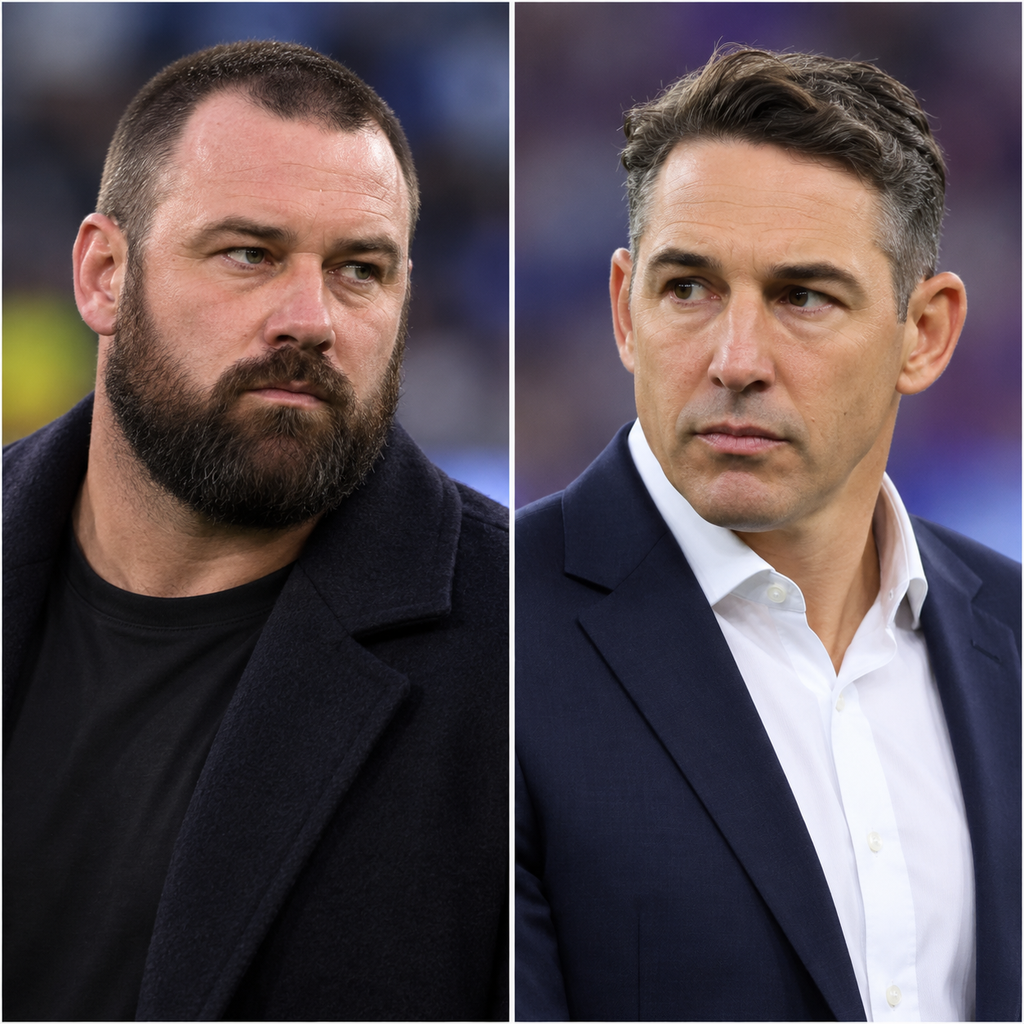
The disagreement began when Woods referred to an incident involving Wests Tigers forward John Skandalis during Slater’s playing career. Woods criticised Slater’s conduct and used the personal label that has since followed the pair whenever the argument resurfaces.
Slater answered that criticism at the time. He argued that having a large platform in sport and the media came with responsibility, and questioned whether personal insults were appropriate from people whose opinions reached a wide audience. His criticism was direct and clearly aimed at Woods.
The earlier argument also included a serious misstep. While discussing the pressures of public criticism, Slater referred to the late former Queensland coach Paul Green. He subsequently apologised to Green’s family and acknowledged that linking Green’s death to the stress of coaching or media attention had been inaccurate and inappropriate.
That apology remains an important part of the history. It does not erase Slater’s original disagreement with Woods, but it shows the care needed when a sporting argument touches on someone’s mental health and death. The circumstances of Green’s death should not be reduced to an explanation offered during a media dispute.
The subject later shifted from an old on-field incident to whether Slater wanted to appear on the same radio programme as the man who had insulted him. The renewed discussion unfolded ahead of another State of Origin series, when interviews with the Queensland coach were particularly valuable to rugby league broadcasters.
Lynch raised the hypothetical prospect of seating Slater next to Woods in the Triple M studio. Woods made a joke about the gathering before saying the coach’s apparent reluctance would have no effect on him. He also suggested Slater could ‘have a cry’, keeping the provocative tone of the earlier disagreement alive.
The radio conversation also exposed a limit to the so-called blacklist story. The hosts discussed whether anyone had actually tried to book Slater. Without a confirmed request being refused, a report about a possible interview ban remains different from evidence that the coach rejected a particular invitation.
For sports radio, access to high-profile players and coaches can help attract listeners. Interviews before Origin matches draw attention because they offer fans insight into selections, tactics and preparation. That makes a possible refusal newsworthy, but it does not prove that the programme lost an interview, advertising revenue or a sponsorship deal because of the feud.
There is an ordinary commercial reason broadcasters want the Queensland coach on air during Origin season. A recognised guest can bring a different perspective to a programme, encourage listeners to tune in and help set up discussion for the day’s sporting news. A station’s audience can matter to advertisers, but the value of any single interview depends on ratings, scheduling, contracts and the broader market. The reports supplied no figure for revenue lost by Triple M and did not confirm that a formal booking was declined.
Broadcast personalities also trade on their reputations. Former players such as Woods can attract audiences precisely because they know how the game feels from the field and are prepared to say what they think. Coaches such as Slater may choose a more guarded style because their comments can be interpreted as speaking for a team. That difference creates lively radio, but it can also mean that an old personal insult becomes an obstacle to a straightforward football interview.
The wider business of media includes questions of editorial independence and fairness. The Australian Press Council’s published principles, which apply to participating publications, distinguish factual statements from opinion and call for fairness when someone is criticised. A radio argument does not automatically fall under that body’s jurisdiction, and there has been no reported finding against Woods or Slater over this exchange. The broader point is that audiences benefit when an insult, a rumour about access and a confirmed refusal are described as three separate things.
For players approaching retirement, media work and public appearances can become important parts of their next career. The Rugby League Players Association administers support for players moving on from professional football, including a retirement account and transition services. Not every player becomes a presenter, but the pathway from the field into commentary helps explain why former footballers’ reputations continue to matter long after they stop playing. Woods’ comments were part of that public life; Slater’s objection was to the way a personal label was used within it.
The players’ association has built a formal transition system for footballers leaving the professional game. Its Past Player and Transition Program includes career coaching, education grants, an employment network and financial education, alongside counselling and medical referrals. The aim is to help people move into a working life that can be very different from the structured schedules and income of first-grade rugby league.
A retirement account negotiated through the collective bargaining agreement is one part of that support. Contributions are invested for eligible players and a benefit can be paid when they leave the professional game. Separate arrangements include a hardship fund and discretionary medical support for qualifying past players. The exact amount any former player might receive depends on eligibility and the relevant rules. Nothing about Woods’ radio comments reveals the balance of his own account or suggests he has drawn on any of these funds.
The link to broadcasting is straightforward. Former players have experience that audiences value, and media can offer a career after football. However, a place on a programme does not give a commentator the same responsibilities as an active coach. Woods is paid to discuss the game and entertain listeners, while Slater’s comments are more closely tied to his leadership of a representative side. Those different roles can help explain why the same personal insult is heard differently by each man.
Origin broadcasting also has commercial incentives that extend beyond a single interview. Radio stations sell advertising around programmes, negotiate talent arrangements and compete for audiences during major sporting events. Hosts with recognisable sporting careers can become central to a show’s identity, and exclusive access to a coach may be attractive to listeners. But those incentives do not establish that a station lost money if a coach did not appear. In this case, the on-air discussion itself raised whether an invitation had even been made.
The RLPA’s list of player benefits provides context for how professional athletes plan beyond a brief peak earning period. The negotiated share of competition revenue supports insurance, wellbeing services, retirement funds and the transition programme, as well as the salary cap. Not every retired player chooses media work, and the economic reality of television or radio varies widely. What a broadcaster pays an individual former player is not disclosed by the existence of a support programme.
There is another reason the Woods–Slater dispute resonates. Rugby league audiences often prize frankness, especially from people who played in fierce State of Origin contests. Yet the criticism of a football action and the characterisation of an opponent’s personality are not the same thing. Woods has a right to hold an opinion about Slater’s playing days; Slater has a right to challenge the way that opinion was expressed.
The tension between entertainment and responsibility is likely to remain whenever former players move behind microphones. A provocative remark may generate discussion and attention, but it can also affect relationships that make future interviews possible. The radio exchange illustrates that trade-off without confirming a formal blacklist, a damaged contract or any measurable financial penalty for either side.
The dispute also reflects the unusual relationship between former players who now work as broadcasters and coaches who are still part of the game. A former footballer can offer frank criticism from experience. A coach can question whether that criticism has become needlessly personal. Both positions are familiar in rugby league, where strong language and state rivalry are part of the culture.
Woods appeared comfortable with that confrontation. His response suggested he was not seeking a truce or a formal apology. Slater’s earlier comments, however, had made clear that he considered the insult a misuse of a public platform rather than harmless football banter.
The two men did not exchange fresh replies to one another in the same radio interview. Slater’s response belonged to the original controversy, while Woods’ latest words came when the earlier feud was brought up again. The distinction matters because the disagreement has unfolded over time, not in one escalating conversation.
Meanwhile, Slater had other priorities as Queensland prepared for the Origin opener. Squad selection, player availability and the looming series meant he was already at the centre of rugby league coverage. The radio quarrel became a sideshow, albeit one that continued to attract attention from supporters in both states.
The argument turns on something more enduring than a guest booking. Woods believes he is entitled to speak bluntly about a former rival. Slater has argued that personal attacks from broadcasters carry responsibilities their speakers should not ignore.
Whether or not the two men eventually share a studio, Woods’ latest comments showed that the feud was far from forgotten. The insult was old; the refusal to retract it was new.






