One Nation leader Pauline Hanson has apologised for a cartoon targeting independent senator Jacqui Lambie’s medical condition, reversing the tone of her initial defence of the video as political satire.
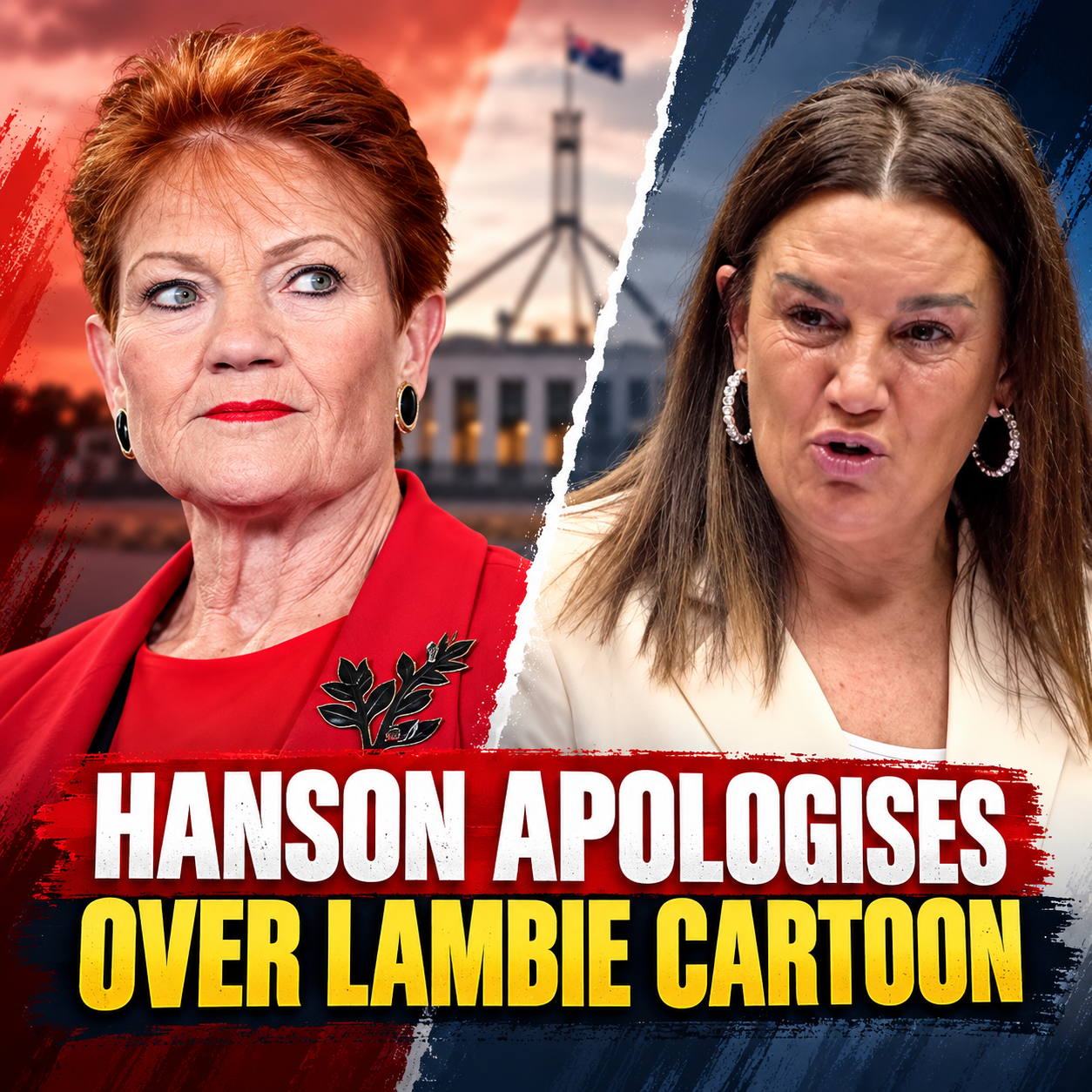
The apology on Tuesday, 20 October, marks a significant new development in a controversy that began when the latest instalment of One Nation’s Please Explain series used a deeply personal health issue as material for a joke.
Ms Hanson said she had spoken to the cartoon’s creator and asked for the relevant episode to be changed. She also acknowledged a need to pay closer attention to material published under her name in future.
For readers who followed the dispute on Monday, the distinction is important: this is not merely another round of condemnation. The One Nation leader has publicly apologised and committed to an amendment after initially telling Ms Lambie to move on from the controversy.
From defence to apology
The original video drew criticism because it referenced a vaginal prolapse that Ms Lambie had disclosed publicly while speaking about her health and treatment. Ms Lambie had discussed the condition in parliament and its connection to injuries from her time in the Australian Defence Force.
Her decision to discuss that experience became central to the argument. Critics said a public disclosure intended to inform and encourage other women should not make an individual a fair target for ridicule about a medical condition.
On Monday, Ms Hanson defended the cartoon’s satirical nature, suggesting the controversy had drawn attention to women’s health and that Ms Lambie ought not take the joke personally. The remarks brought more criticism from political figures across party lines.
By Tuesday afternoon, the One Nation leader had changed her public position. According to ABC reporting, she accepted that the episode had not been handled tastefully, offered an apology and said its creator had been asked to alter it. She also said future videos would receive closer scrutiny.
That change in position is the news. An apology does not erase the previous remarks or mean the entire video has already disappeared from every platform. The confirmed development is that Ms Hanson said a change had been requested. Its eventual publication status should be checked separately.
Why Lambie’s disclosure matters
Jacqui Lambie is known for her blunt political style. In this instance, however, the criticism was not about a parliamentary vote or a policy choice. The cartoon used a medical condition as its subject.
Ms Lambie has argued that discussing an intimate health problem publicly was intended to support other women, not to invite personal humiliation. Pelvic health can be a difficult subject to discuss, and campaigners say mockery risks increasing embarrassment around conditions for which people may need treatment or advice.
There is a legitimate place for strong satire in political life. Cartoons frequently exaggerate public behaviour, challenge powerful figures and ridicule arguments. But the existence of a satirical format does not settle whether particular content is appropriate, especially when it shifts from political action to an individual’s medical circumstances.
The distinction is not an attempt to place political leaders beyond criticism. It is a question about the target of the criticism and the standards politicians choose for their public campaigns.
Condemnation across political lines
Politicians from outside Ms Lambie’s political circle also criticised the cartoon. Prime Minister Anthony Albanese publicly acknowledged her decision to discuss her condition, while Liberal figures including Andrew Hastie questioned the judgement involved in the video.
The breadth of criticism was notable because the parties involved disagree sharply on many other questions. In this case, the dispute centred on whether a highly personal medical issue should be used in a political attack.
Ms Hanson’s apology now gives One Nation an opportunity to explain what editorial oversight will apply to its video series. A promise to look more closely at future material is one thing; how that commitment operates in practice will be judged by subsequent episodes.
The One Nation cartoons are widely recognisable political messaging. As with any communication that uses a party leader’s name or image, viewers may reasonably associate the finished work with that leader even where production and publication are managed by a creative team.
Why health disclosures should not become political weapons
Ms Lambie’s earlier decision to speak about a private medical condition was part of a public conversation about treatment and veterans’ health. Choosing to discuss an experience in parliament does not mean a politician loses every claim to dignity when opponents respond. Public figures routinely accept scrutiny of their policy positions and statements, but audiences can reasonably distinguish a political critique from humour aimed at illness or treatment. That distinction helps explain why criticism of the cartoon came from politicians who disagree with one another on many other issues.
This is not an argument that political satire should disappear. Cartoonists may use exaggeration and discomfort to challenge a party or public position. The issue is the target and purpose of the material. When a medical detail becomes the main punchline, the political policy question may be eclipsed. Readers should assess the controversy in those terms rather than reducing it to a contest between people who support or oppose satire in general.
What political publishers can learn from the reversal
Senator Hanson has said she did not inspect the material before its release and has now sought changes. Those statements give the public a clearer account of how she says publication occurred, but they do not establish every internal step taken by the production team. Nor has the amended episode itself been verified as published within the material available for this article. An apology, a request to edit and an actual completed edit are separate developments.
A political series bearing a party leader’s identity can reach audiences that never see later explanations. That creates a practical editorial question: who reviews scripts, animation and social-media cut-downs before release, especially when they mention health or other personal matters? Clear sign-off is not a guarantee of good judgement, but it makes responsibility more traceable. The same question applies to campaign advertising, interviews and posts created by outside contractors acting for political organisations.
What the online debate misses
Social-media controversy often rewards the most provocative interpretation. In this dispute, one side can cite the original defence of the cartoon while another cites the subsequent apology, each leaving out the change in sequence. A complete account must include both. On Monday, Hanson defended the video as satire; on Tuesday, she apologised and said she had asked the creator to amend it. Those are not interchangeable positions and should not be presented as simultaneous statements.
For voters, the more consequential measure may be whether leaders apply a consistent standard to their own publications. That is a question of public accountability rather than a prediction about electoral support. There are no verified figures here showing how the episode affected One Nation’s vote, membership or finances. It would also be wrong to assume that everyone who found the cartoon objectionable agrees with Senator Lambie on broader questions of online speech and regulation.
Political accountability beyond a single apology
The episode touches on the broader economics of political communication. Short animated videos, social feeds and shareable clips allow political parties to bypass traditional editors, but they also place the burden of factual checking and basic judgement on the publisher. Material can be copied and redistributed long after an original post has been edited. A correction is therefore most useful when the audience can see what changed and understand why.
For this story the next verification points are straightforward: whether One Nation publishes the amended video; whether Senator Lambie comments on the apology; and whether Hanson sets out any concrete change in review procedures. None of those outcomes can be presumed. Until they happen, the defensible conclusion is limited: criticism was followed by a public apology and a promise of changes, while the wider argument about the limits of political satire remains unresolved.
A wider test for political debate
Australia’s politics is hardly free of insults or heated language. Leaders often defend provocative comments as humour, plain speaking or legitimate criticism. The Hanson–Lambie episode has exposed a difficult boundary between satirising a public figure’s actions and turning an individual’s health into entertainment.
Public figures can expect scrutiny. They can also legitimately argue that their health disclosures should be discussed accurately and respectfully. Those positions are not mutually exclusive.
The events of 20 October should be reported with their chronology intact: the cartoon was criticised, Ms Hanson first defended it, and she then apologised and said changes would be made. Compressing that sequence into a claim that she had always opposed the cartoon, or that she personally created every detail of it, would misrepresent what is established.
For Ms Lambie, the subject remains the treatment of women who publicly discuss medical conditions. For Ms Hanson, the immediate question is whether her apology and promised oversight will be reflected in One Nation’s next decisions.
The latest turn shows how quickly a political argument can move from defence to damage control once public pressure grows. Whether the apology closes the argument remains to be seen.






