A NSW police watchdog has begun examining how officers handled a major Sydney protest, including allegations about force used to disperse crowds and make arrests. The Law Enforcement Conduct Commission's Operation Makalu has generated extraordinary public interest and a large volume of evidence. Its inquiry is now testing both the conduct of police and the difficult conditions they say they faced. No final finding of misconduct has been made.
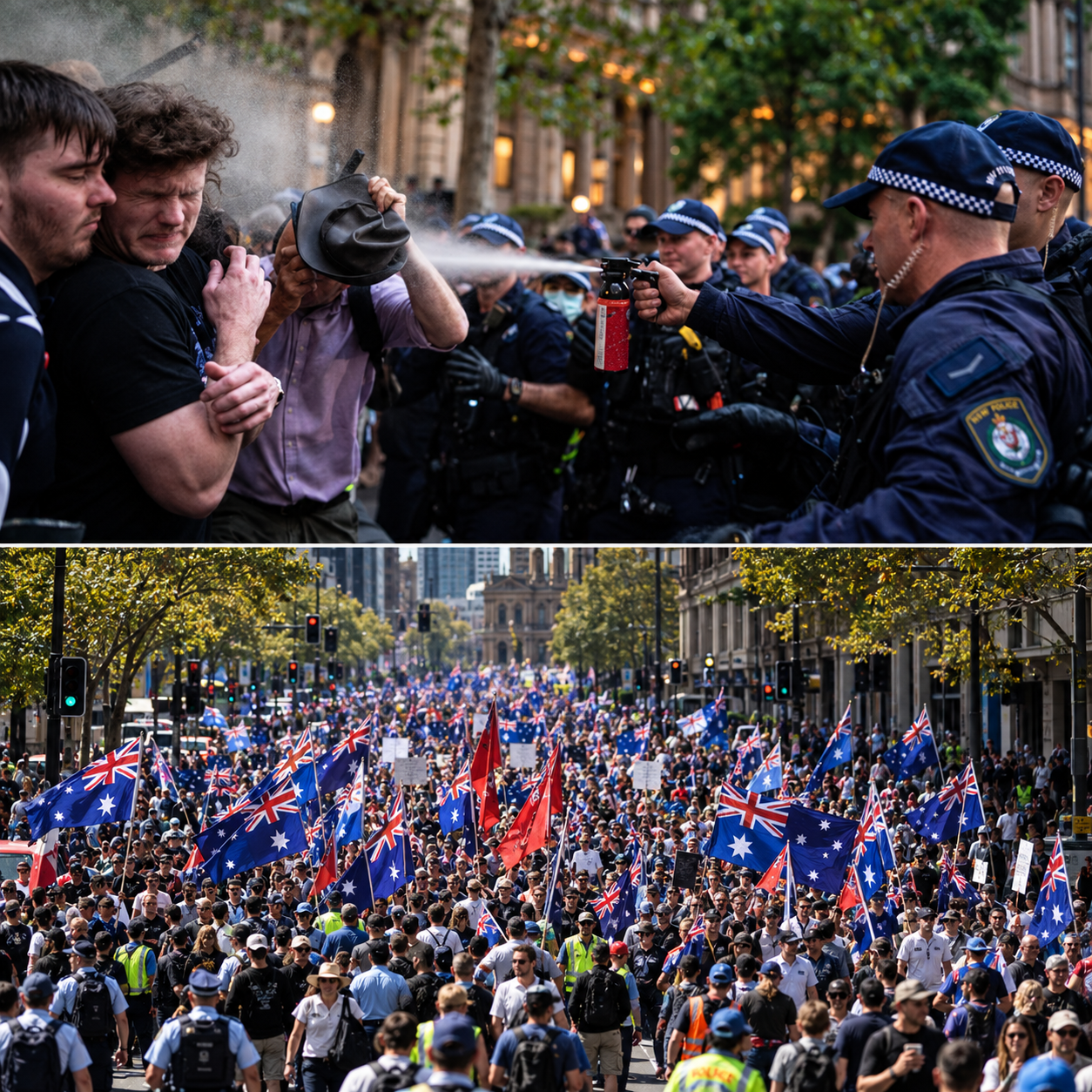
The investigation concerns the NSW Police operation around Sydney Town Hall during a protest against a visit by Israeli president Isaac Herzog. The event occurred amid heightened security concerns in the city and restrictions on demonstrations in the central business district. Protesters challenged the police response and alleged excessive force. Police leaders defended officers, pointing to a volatile crowd and the responsibility to prevent serious disorder. Those sharply different accounts are why independent examination matters.
The LECC has described its investigation as the largest by complaint numbers that the commission has received. Earlier official figures recorded more than 800 complaints, including 556 made directly to the watchdog and 267 to the police force. At the opening, the commission also referred to a register of about 400 complaints used in its examination. These are not interchangeable figures: the larger total describes complaints received through specified channels, while the register reflects an aspect of how the watchdog has organised the material for scrutiny.
Investigators have had to sort through testimony, police documentation and extensive video. The commission previously reported reviewing more than 450 items submitted through its evidence portal, more than 1,000 hours of CCTV and body-worn camera material. The opening proceedings also discussed a review of more than 1,000 clips. Those figures describe different collections and methods of counting. They should not be combined or simplified into a single supposed tally of proven incidents.
Counsel assisting the commission outlined themes to be examined, including police planning, the use of oleoresin capsicum spray, arrest powers, documentation and officers' use of force. The inquiry will consider possible misconduct and opportunities to improve protest policing. This is a wider task than deciding whether one dramatic image circulating online tells the full story. Investigators must consider the circumstances of particular interactions, what officers knew at the time and whether actions complied with relevant laws and operational requirements.
The public opening did not mean every witness would immediately testify in an open room. The commission's published plan provides for a period of private examinations, expected to run for several weeks, followed by public examinations of senior commissioned officers. The watchdog will later provide further information about public hearing arrangements. That staged approach reflects the need to gather evidence while managing fairness and procedural concerns.
The inquiry was delayed before it began. Procedural issues led to formal submissions and a decision by the commission's chief commissioner about the balance of public and private hearings. The LECC has published an explanation of that decision. Delays in an inquiry do not establish that police or complainants were right or wrong, but they underline how complex the process can become when testimony, publicity and the interests of individual officers all intersect.
Among the matters outlined by counsel were claims involving pushing and shoving of protesters during dispersal, officers moving rapidly towards people and force used during arrests. The commission's opening also referred to evidence that some officers reportedly boasted about force. These are matters to be tested in the investigation; they are not judicial findings and should not be reported as if every allegation has already been proven. Independent evidence, context and responses will determine what can ultimately be concluded.
Importantly, the public account of the opening did not describe police conduct as uniformly improper. Counsel pointed to material showing officers exercising restraint, apologising for confusion and showing care towards elderly members of the public. There was also evidence of protesters appearing to throw objects or provoke police. A fair inquiry has to consider those elements alongside allegations of excessive force. A photograph of a single encounter cannot establish how the whole operation was conducted.
The event's security context also matters. The protest was held during a sensitive visit and following a serious terror attack at Bondi. Police had restrictions in place affecting central Sydney. Organisers planned a rally at Town Hall, a location inside the area covered by a public assembly restriction, and declined an alternative location proposed by police. Authorities also made declarations affecting access and crowd management. The legal status of the gathering, however, does not give officers unlimited authority to use force against individuals.
Police said they were responding to an angry and aggressive crowd; organisers argued the event was intended as a peaceful protest. According to reporting, police estimated that about 6,000 people gathered. Both the size of the crowd and the possibility of confrontations presented operational challenges. The commission is expected to examine how officers prepared for those challenges and whether the response in particular situations was necessary and proportionate.
That proportionality question goes to the heart of public confidence. Officers are expected to manage risk, maintain safety and enforce lawful directions. People attending demonstrations are also entitled to expect that police powers will be exercised within the law. The fact that a gathering is politically contentious does not reduce the importance of clear documentation, defensible decisions and accountability. Nor does scrutiny of police automatically mean that every officer involved acted improperly.
The use of pepper spray is one example of why detailed evidence is required. Video may show when spray was deployed, but an assessment must also consider the perceived threat, lawful purpose, warnings, proximity of other people and subsequent reporting. Similar questions arise around physical contact and arrest. Did an officer have sufficient grounds? Was the degree of force necessary? Were records accurate? Those are questions for evidence and legal standards, not for guesses based on a headline.
For protest organisers and participants, the inquiry provides a formal way to have complaints examined. For police officers, it provides an opportunity for actions to be assessed in their full operational context, with procedural protections. Both are central to the legitimacy of the process. If public confidence depends only on one side's preferred video clips, it will be difficult to distinguish genuine wrongdoing from force that was lawful in a dangerous setting.
The commission has said it sought to work cooperatively with NSW Police and to obtain relevant material. NSW Police have acknowledged the hearings and indicated they are awaiting the commission's findings. The inquiry is not a substitute for the courts, nor should its opening be described as a conviction, disciplinary penalty or completed investigation. The final report will follow the evidence-gathering process and is expected to be tabled in parliament.
One purpose of this work is institutional learning. The LECC's announced scope includes identifying improvements in the policing of future protests, whether through planning, training, policy or documentation. Any recommendation would need to be assessed once it is actually made. It is too early to assert that specific new rules will follow, or that the commission has already ordered disciplinary action against any named officer.
Debate around the protest has extended beyond the actions of individual officers to broader questions about the right to demonstrate in the city, security during sensitive events and how restrictions are enforced. Those policy issues may continue even if particular complaints are resolved. They also make accurate descriptions especially important: an allegation of excessive force is not the same as a proven finding, and a police defence of an operation is not by itself proof that every action was lawful.
Australians will have to wait for the commission's detailed findings to know which allegations are sustained, which are not and what changes may be recommended. For now, the significance of Operation Makalu lies in the process itself: a large and contested police operation is being examined against evidence, law and professional standards rather than being settled by partisan assertion. That is the accountability test the public opening has begun.
The practical stakes reach well beyond the immediate participants. A clear, credible account of what happened can guide police training, help organisers understand their legal obligations and give the wider community confidence that disputed uses of power will not be ignored. Equally, a fair investigation should recognise instances where officers acted with restraint under pressure. The public interest is served neither by automatically condemning police nor by dismissing hundreds of complaints in advance. It is served by allowing the watchdog to test the evidence and explain its conclusions when the process is complete.






