The family of a 21-year-old woman found dead in a Carlton apartment building says it had raised concerns about her safety weeks before her death, as Victoria Police continue a homicide investigation. Relatives have identified the woman as Jayda Allen Bonner. Their account has placed questions about earlier requests for help alongside the urgent police task of establishing exactly how she died.
Police were called to an apartment on Cardigan Street in inner Melbourne shortly before 2am on Saturday, 10 October, where they found a woman's body. A 60-year-old man was later arrested and interviewed near the scene, but was released. No charges had been laid over the death at the time of the Sunday report. These details are essential because an investigation into a suspected homicide is not the same as a criminal finding against a particular person.
Jayda's family wants the public to understand who she was, not only the circumstances in which her name entered the news. Her aunt, Kellie Carter-Bell, described her to ABC News as a generous young woman who cared for others. The family gave permission for the ABC to publish images of Jayda, a Yagera woman with family ties to Queensland. This article is accompanied by a symbolic image rather than a simulated photograph of Jayda or the apartment.
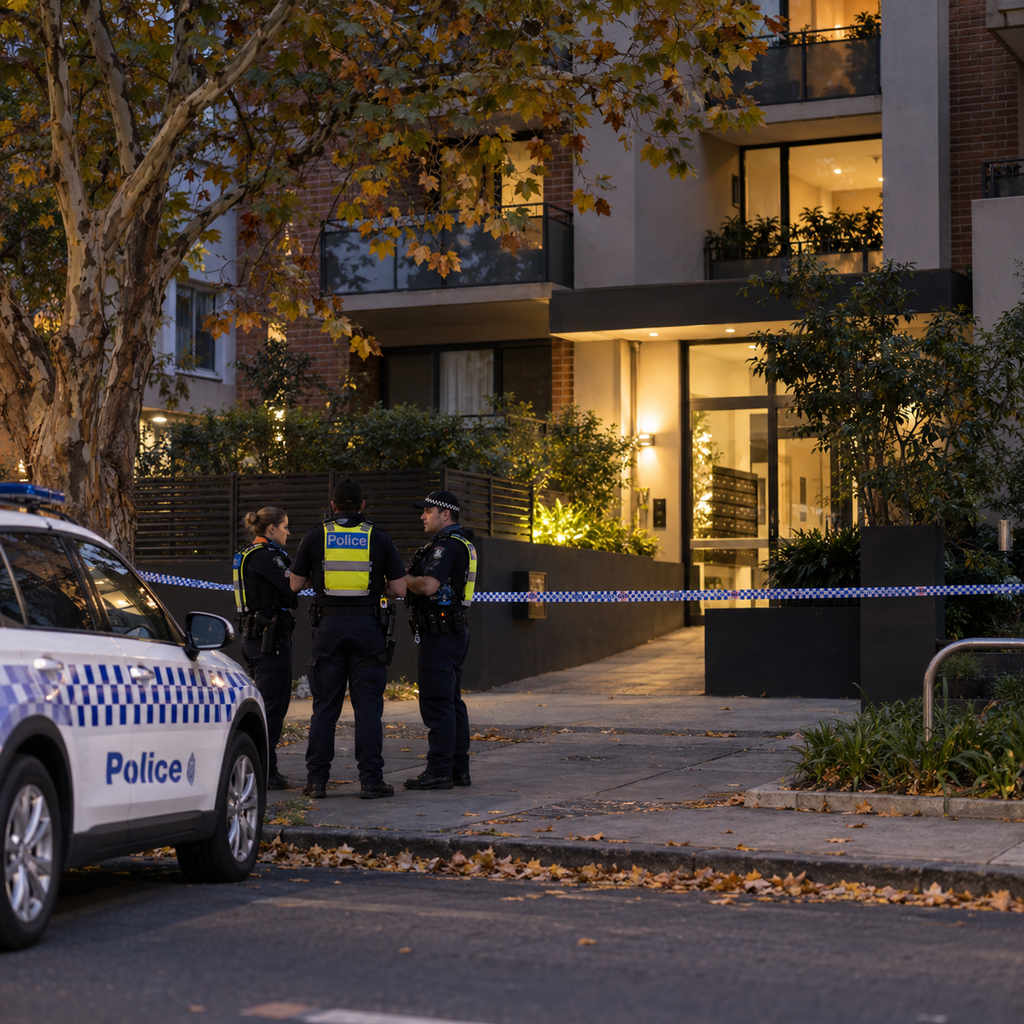
Police said officers were called to the Carlton property in the early hours of Saturday and established a crime scene. Homicide detectives took carriage of the inquiry and forensic investigators were seen removing evidence from the apartment complex. Police have not publicly announced a final cause of death, a motive or a person charged with the killing.
The time and location explain where the formal investigation began; they do not tell the public what happened before officers arrived. Any assertion about an argument, a relationship, a weapon or a sequence of events inside the apartment would go beyond the confirmed record unless police or a court later established it. That distinction remains important even where the circumstances are deeply concerning.
The 60-year-old man who was arrested was interviewed and released, according to police. Release after questioning means the investigation did not result in an announced charge against him at that point. It would be wrong to imply that the arrest established involvement in Jayda's death, or to circulate an identity and accusation unsupported by official information.
Homicide detectives investigating a death must determine what evidence can withstand scrutiny. That process can take time, and its early stages often produce questions rather than answers. The absence of an immediate charge is neither proof that no offence occurred nor proof that a particular person was responsible. The public description should stay with the status police have actually reported.
Ms Carter-Bell told ABC News that family members had been worried about Jayda's welfare and had approached police for help before the death. She said relatives sought assistance around six weeks earlier. This is an allegation about how the family says its concerns were handled; it has not been established by an independent review or answered in detail by Victoria Police.
The aunt's account nevertheless matters because it speaks to the experience of relatives who believed a young woman's safety was at risk and now face the shock of her death. Her statements should be faithfully attributed rather than turned into an editorial verdict that a specific action or failure by a public agency caused the tragedy. Causation has not been established.
The family has said it is devastated and wants people to know the person they have lost. They have also raised broader concerns about whether requests from relatives are heard and how agencies respond when someone is believed to be vulnerable. Those are questions worthy of scrutiny, but answering them fairly requires records, timelines and the perspective of relevant agencies, not only an emotionally compelling account.
According to the ABC, Victoria Police said it could not comment on the family's allegations while the homicide investigation was under way. That is not confirmation that the account is inaccurate, nor an admission that it is correct. It means a public response to that aspect of the story was not available at the time of reporting.
The young woman's identity also deserves accurate and respectful treatment. ABC News noted an Aboriginal and Torres Strait Islander cultural warning because it published the name and images of a deceased Indigenous person with family permission. Her family's decision to speak publicly does not remove the duty to avoid sensational detail, invented imagery or intrusive speculation about her private life.
There are two different questions in this story. The first is what happened in the Carlton apartment and whether police will establish that a criminal offence led to Jayda's death. The second is whether concerns reportedly raised beforehand received an appropriate response. Those inquiries may overlap in the future, but one cannot currently be used as proof of the other.
For public accountability, the second question would require clear information about when concerns were raised, what was reported, which powers or procedures were available to police at that point and what action, if any, was taken. The Sunday reporting did not provide a complete official chronology. It would be unfair to fill those gaps with assumptions, even when the family's account warrants careful attention.
The possibility that people who are worried about a loved one may struggle to obtain assistance raises wider issues of access, trust and communication. Not every concern gives authorities the same legal power to intervene, and there can be limits on sharing information with family members. None of those general points establishes what should have happened in Jayda's case; that would require the detailed circumstances to be known.
Victoria has a separate system of assistance for people affected by serious crime and for families dealing with a suspected homicide. The state's Victims of Crime Helpline explains legal processes and can connect people with counselling, practical assistance and information about possible financial support. Its existence does not determine whether a crime was committed in this particular case, nor whether Jayda's relatives have sought the service. It does help explain the support framework available while an investigation continues and no court finding has been made.
Family members may also describe an experience using emotionally direct language after an immense loss. Reporting should convey the substance of what they say without editing their experience into a more definitive allegation than their evidence supports. The strongest version of an accountability story is one that makes uncertainty visible and keeps the questions open until the relevant institutions answer them.
A homicide investigation can legitimately restrict what police publicly disclose about witnesses and evidence. That practical need can coexist with public interest in the family's earlier contact with authorities. An appropriate future update could address both without jeopardising the integrity of potential proceedings. For now, the public is not in a position to determine whether institutional conduct contributed to the death.
Jayda's aunt described a caring and generous woman, and relatives chose to share their memories with the public. That is a reminder that the story is about more than a scene attended by police. Jayda was 21, part of a family and community, and her death leaves people seeking both answers and ways to remember her life.
The Victims Assistance Program may help eligible people communicate with police, prepare for court and manage disruption to work or daily life, according to Victorian Government guidance. Such practical assistance is distinct from compensation decided under a formal scheme and from any potential prosecution. In a case where relatives have publicly questioned earlier efforts to obtain help, clear information about where support can be accessed is relevant, but it cannot be used as a substitute for examining the family's account on its own evidence.
The fact that she was a Yagera woman should be reported accurately where relevant, with respect for the family and cultural conventions around deceased Indigenous people. It should not be used as a cue for unsupported claims about her circumstances. Equally, photographs of unrelated young women or AI-generated faces should not be presented as her portrait.
Coverage of suspected homicide is particularly susceptible to speculation when police have not charged anyone. Neighbours, social-media commentators and anonymous posts may offer theories, but those theories can harm grieving relatives and individuals who have not been accused of an offence. The responsible course is to report confirmed developments and acknowledge clearly what remains unknown.
At the moment, the verified public record includes a young woman found dead, a homicide investigation, the family identification, an arrest followed by release without charge and the family's account of earlier concerns. It does not include a proven cause of death, a charged suspect or a completed review of the family's claims about police assistance.
Police continue to seek an account of what happened in the Carlton building. If a person is charged, that will begin a distinct legal stage in which allegations remain to be tested in court. If officials respond in more detail to the family's concerns, those statements should be presented beside the original account and examined on their merits.
A further accountability question concerns what can be released at different stages. Investigators may be unable to discuss witness statements or forensic results while enquiries are active, while family members may want an explanation of how earlier reports were recorded and handled. Neither need be resolved through public speculation about a person arrested and released without charge. A later official chronology, if provided, would let those questions be examined against documented decisions rather than forcing readers to choose between incomplete accounts.
Until those developments occur, the most accurate headline is not one assigning guilt or announcing a preventable outcome. It is that Jayda Allen Bonner's family has raised serious safety concerns after her death and that detectives are investigating. The distinction gives relatives room to be heard without replacing evidence with certainty.
Jayda's family has endured an immense loss. Accurate coverage cannot provide the answers they are seeking, but it can avoid adding confusion or unfair suspicion while authorities establish the facts. The central unresolved issues concern both the death itself and the reported attempts to obtain help beforehand; neither should be prematurely declared settled.