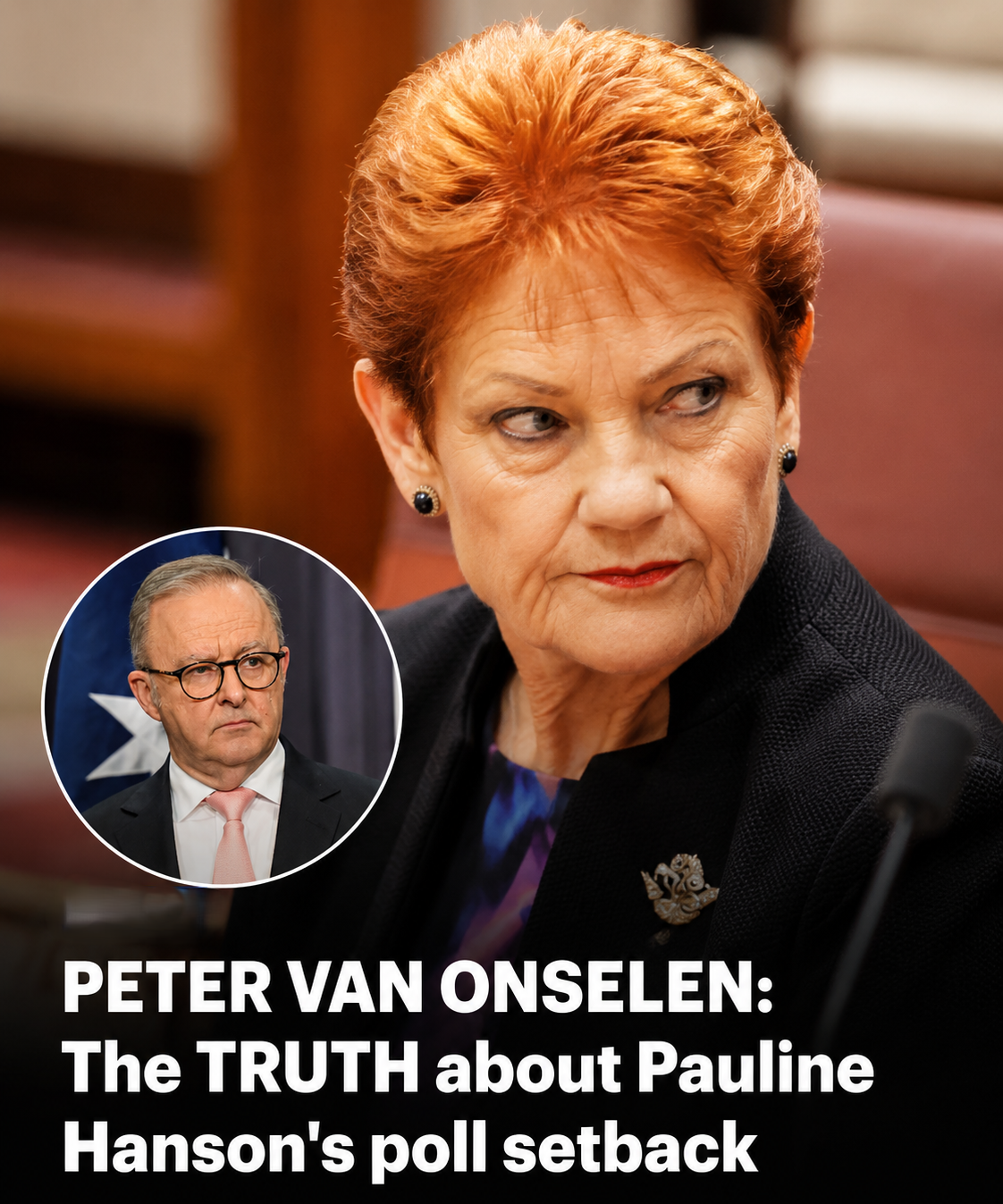
Discussion surrounding Australia’s latest opinion polls has continued after political commentator Peter van Onselen argued that some reactions to One Nation’s recent polling movement reveal a broader disconnect between parts of the political establishment and sections of the electorate.
The commentary follows several recent surveys that have shown some variation in One Nation’s support, prompting renewed debate about how individual polls should be interpreted and what they may indicate about Australia’s evolving political landscape.
In the opinion article, Peter van Onselen argued that some political and media reactions to One Nation’s latest polling reflected what he described as an “elitist” and “arrogant” attitude. According to the commentary, celebrating short-term declines in support may overlook the broader trend that the party continues to attract substantially more support than it did in previous election cycles. The article represents the author’s analysis rather than an established factual finding.
Recent polling has produced differing results across survey organisations. Some polls have suggested One Nation’s support eased after reaching earlier highs, while others continue to place the party well above its historical federal election vote. Political analysts note that differences between polls are common because methodologies, sample sizes and fieldwork dates vary between polling companies.
Election specialists generally recommend focusing on polling trends over time rather than individual surveys. A single poll provides only a snapshot of public opinion at the time respondents were interviewed and may change as political events, policy announcements and economic conditions evolve.
The discussion also highlights the increasing fragmentation of Australia’s political landscape. Minor parties and independents have attracted a larger share of the vote in recent elections, making shifts of only a few percentage points potentially significant when preferences are distributed and seats are contested.
Supporters of One Nation argue that issues such as housing affordability, migration, cost-of-living pressures and government spending continue to resonate with many voters. Critics, however, contend that support for minor parties can fluctuate quickly and that sustained electoral success ultimately depends on candidate quality, local campaigning and policy credibility.
Political observers also caution against treating commentary pieces as predictions of election outcomes. Opinion columns are intended to interpret current events and stimulate debate, while election results ultimately depend on voter behaviour at the ballot box rather than polling alone.
With Parliament continuing to debate taxation, housing, migration and economic policy, polling is expected to remain closely watched by all major parties. Future surveys will provide additional insight into whether recent movements represent a temporary fluctuation or part of a longer-term shift in Australia’s political landscape.






