Fresh allegations surrounding Victoria’s Big Build infrastructure program have intensified political pressure on the Allan Government, with renewed calls for an independent royal commission into alleged corruption and organised crime within the construction sector.
The latest debate follows new media reports alleging that criminal figures continued to exert influence over parts of Victoria’s major infrastructure projects despite previous warnings and investigations. While the allegations remain under investigation, they have prompted another round of questions about oversight, accountability and governance within one of Australia’s largest public infrastructure programs.
Recent reporting has focused on allegations that organised crime figures and individuals linked to outlaw motorcycle gangs were able to influence aspects of construction projects through the Construction, Forestry and Maritime Employees Union (CFMEU). Reports have alleged that unlawful practices, including extortion, intimidation, bribery and inflated labour costs, may have increased the overall cost of some government-funded infrastructure projects.
Those allegations have prompted opposition parties, independent MPs and several former integrity officials to renew calls for a royal commission. Supporters of such an inquiry argue that only a broad judicial investigation would have sufficient powers to examine relationships between contractors, unions, organised crime groups and public agencies while restoring confidence in the management of major infrastructure spending.
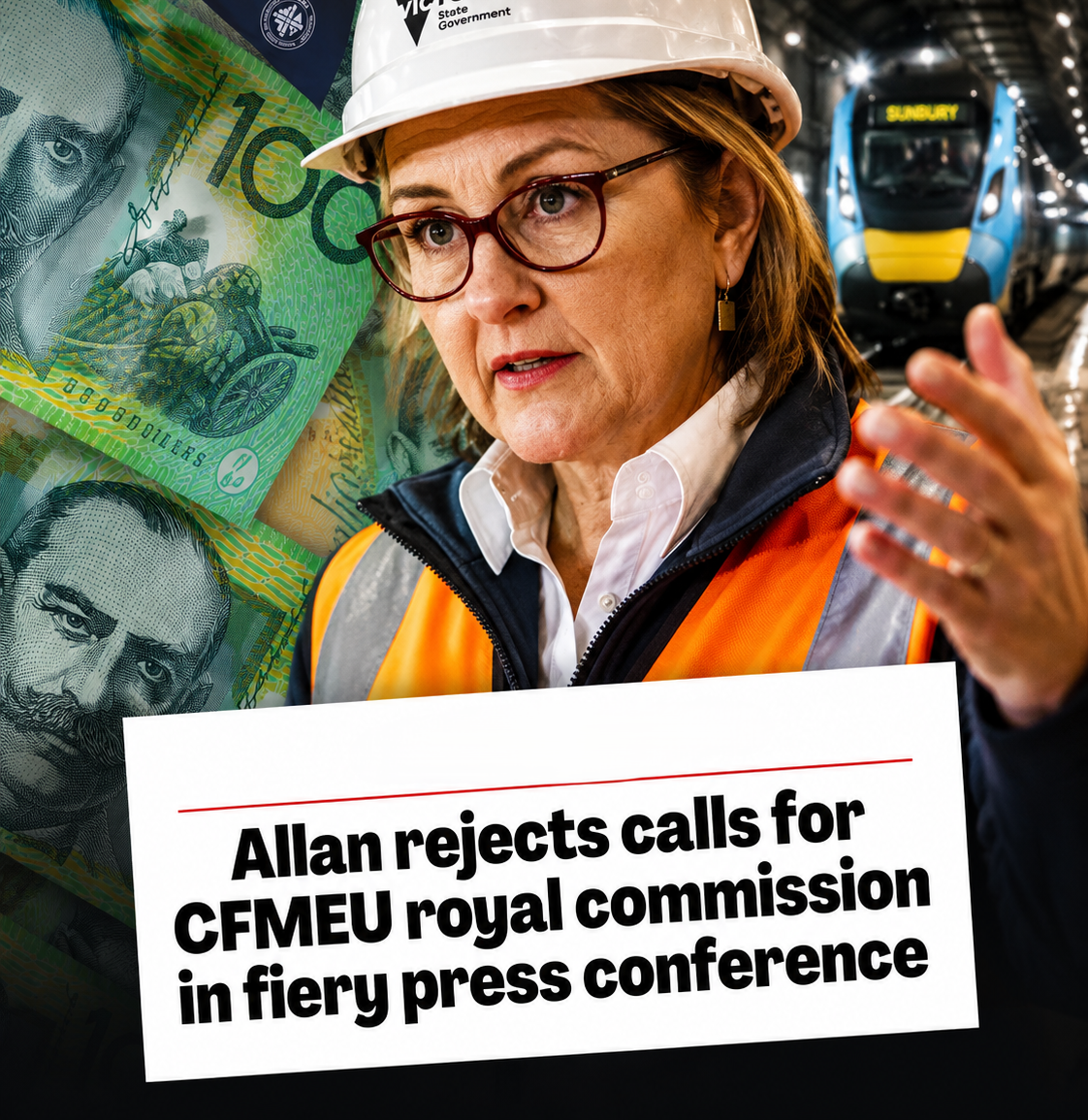
Premier Jacinta Allan has continued to reject those calls. She argues that any evidence of criminal conduct should be referred directly to Victoria Police and other law enforcement agencies rather than waiting for a lengthy public inquiry. The Premier has also pointed to actions already taken by authorities, including criminal charges laid by Taskforce Hawk and the cancellation of labour hire licences, as evidence that enforcement measures are already underway.
The government also disputes claims that corruption has cost Victorian taxpayers A$15 billion. While that estimate has been widely cited by critics, the Premier has repeatedly said the figure has not been independently verified and should not be treated as an established financial loss. Previous statements from the government have described the estimate as untested while acknowledging that the allegations themselves are serious and require investigation where evidence exists.
Opposition representatives maintain that the government’s response has been inadequate. They argue that because many of the projects were delivered while current senior ministers held infrastructure responsibilities, an independent inquiry is needed to determine whether warning signs were missed and whether stronger oversight mechanisms should have been introduced earlier. Some critics have also questioned whether existing integrity agencies possess sufficient investigative powers to fully examine complex financial relationships surrounding major projects.
Integrity experts have similarly argued that a royal commission could provide broader investigative authority than existing criminal investigations by examining governance, procurement practices and institutional culture alongside alleged criminal behaviour. Others, however, caution that royal commissions can require years to complete and may not deliver immediate operational improvements while police investigations are already active.
The Big Build remains one of the largest public infrastructure programs ever undertaken in Victoria, encompassing rail, road and tunnel projects designed to improve transport capacity across the state. Regardless of the political debate, construction continues across multiple projects while investigations into alleged misconduct proceed separately through law enforcement and regulatory agencies.
As further information emerges, discussion is expected to remain focused on two distinct questions: whether criminal conduct occurred on particular projects, and whether Victoria’s oversight systems are sufficient to prevent similar allegations arising in future. Those issues are likely to remain central to political debate as investigations and parliamentary scrutiny continue.






