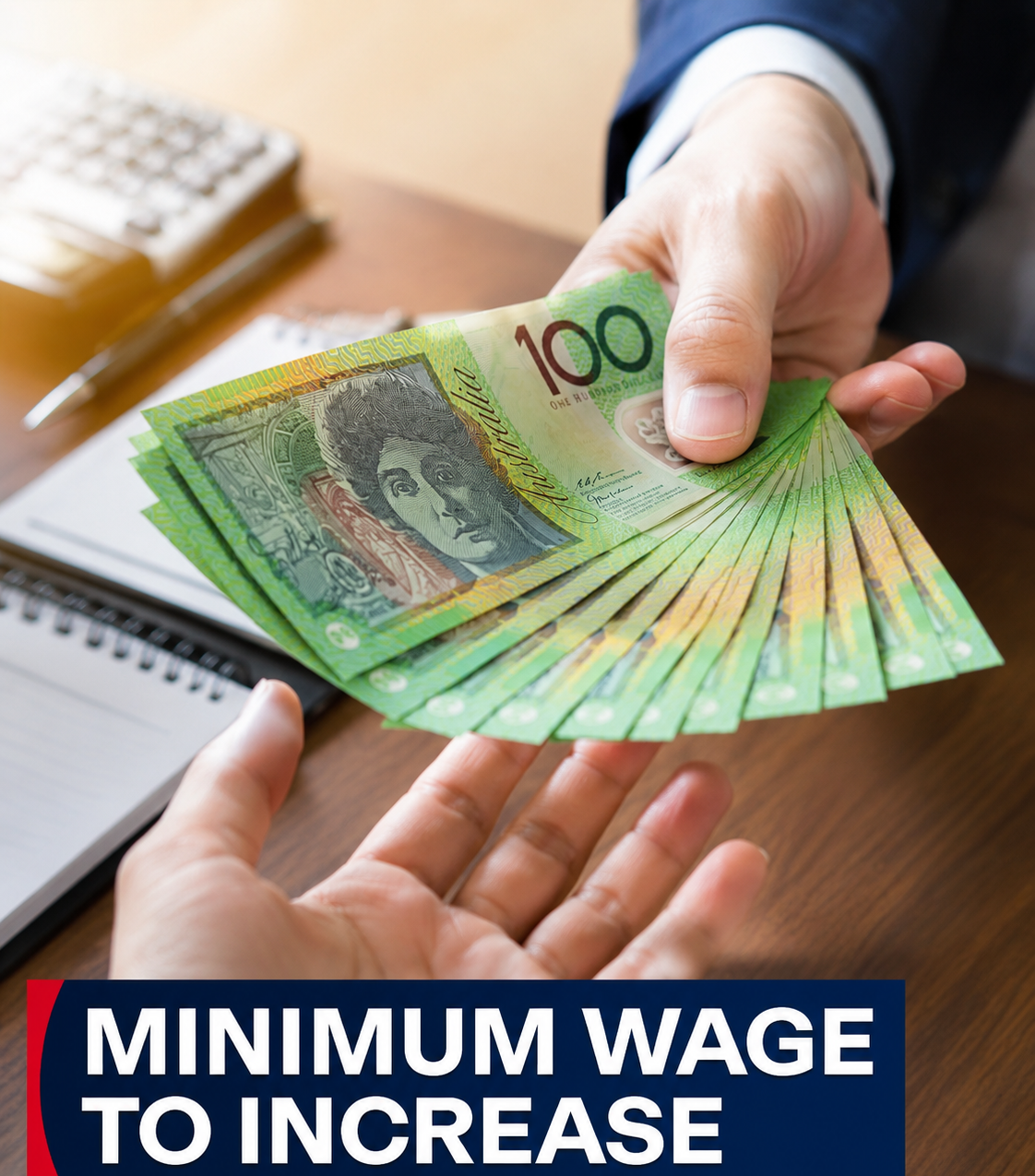
Millions of Australian workers are set to receive higher pay from 1 July after the Fair Work Commission completed its annual wage review, delivering increases to both the National Minimum Wage and minimum award wages.
The decision affects one of the largest groups of employees covered by Australia’s workplace relations system and arrives as households continue facing pressure from housing costs, inflation and broader cost-of-living challenges.
From the first full pay period beginning on or after 1 July 2026, the National Minimum Wage will increase to A$1,004.90 per week, or A$26.44 per hour based on a standard 38-hour working week. In addition, minimum pay rates contained in modern awards will increase by 4.75 per cent, affecting approximately 2.7 to 2.8 million employees across Australia.
The Fair Work Commission said it sought to balance several competing considerations, including inflation, productivity, employment growth, business conditions and the living standards of low-paid workers. The Commission concluded that an increase was appropriate to help protect the purchasing power of employees while maintaining the long-term sustainability of the labour market.
The Albanese Government welcomed the outcome, describing it as another step toward restoring real wage growth after several years in which many workers experienced declining purchasing power because wages failed to keep pace with inflation. Union organisations similarly argued that the increase would provide meaningful relief for lower-paid employees facing ongoing pressure from higher household expenses.
Employer organisations expressed a different view. Business groups warned that higher labour costs would add further pressure to many small and medium-sized businesses already dealing with increased operating expenses. Some employer representatives argued that sectors with narrow profit margins could find it more difficult to absorb higher wage bills without increasing prices, reducing hours or delaying new hiring decisions.
Economists remain divided over the broader economic impact. Some believe stronger wage growth will support household spending and improve living standards without significantly increasing inflation. Others caution that sustained wage increases, particularly if accompanied by rising business costs, could contribute to inflationary pressure and influence future interest-rate decisions if productivity growth does not keep pace.
The annual wage review distinguishes between two separate measures. The National Minimum Wage applies to employees who are not covered by a modern award or enterprise agreement, while the majority of affected workers receive their pay under Australia’s award system, which establishes minimum rates for specific industries and occupations. As a result, many workers will receive the 4.75 per cent award increase rather than the higher adjustment applied to the National Minimum Wage itself.
For employees, the increase is expected to provide additional income at a time when household budgets remain under pressure. For businesses, however, the decision means reviewing payroll systems, budgeting and pricing strategies before the new rates take effect. Many employers will also need to ensure enterprise agreements and payroll software correctly reflect the updated award rates from the first applicable pay period in July.
The Fair Work Commission conducts this review every year as part of Australia’s workplace relations framework. Its objective is to maintain a fair minimum safety net while considering the needs of workers, employers and the broader economy. The 2026 decision reflects continuing efforts to balance improving living standards with maintaining employment and business competitiveness in a changing economic environment.
As the new financial year begins, the wage increase represents one of several nationwide changes affecting Australian households. While the immediate benefit will vary depending on each employee’s award, occupation and hours worked, millions of workers are expected to see higher earnings in their first eligible pay cycle after 1 July.






