The Coalition has outlined an eight-point energy plan that would dismantle several major elements of Australia’s current climate and electricity policy if it wins government, setting up a clear argument with Labor over affordability, reliability, emissions and the future shape of the power system.
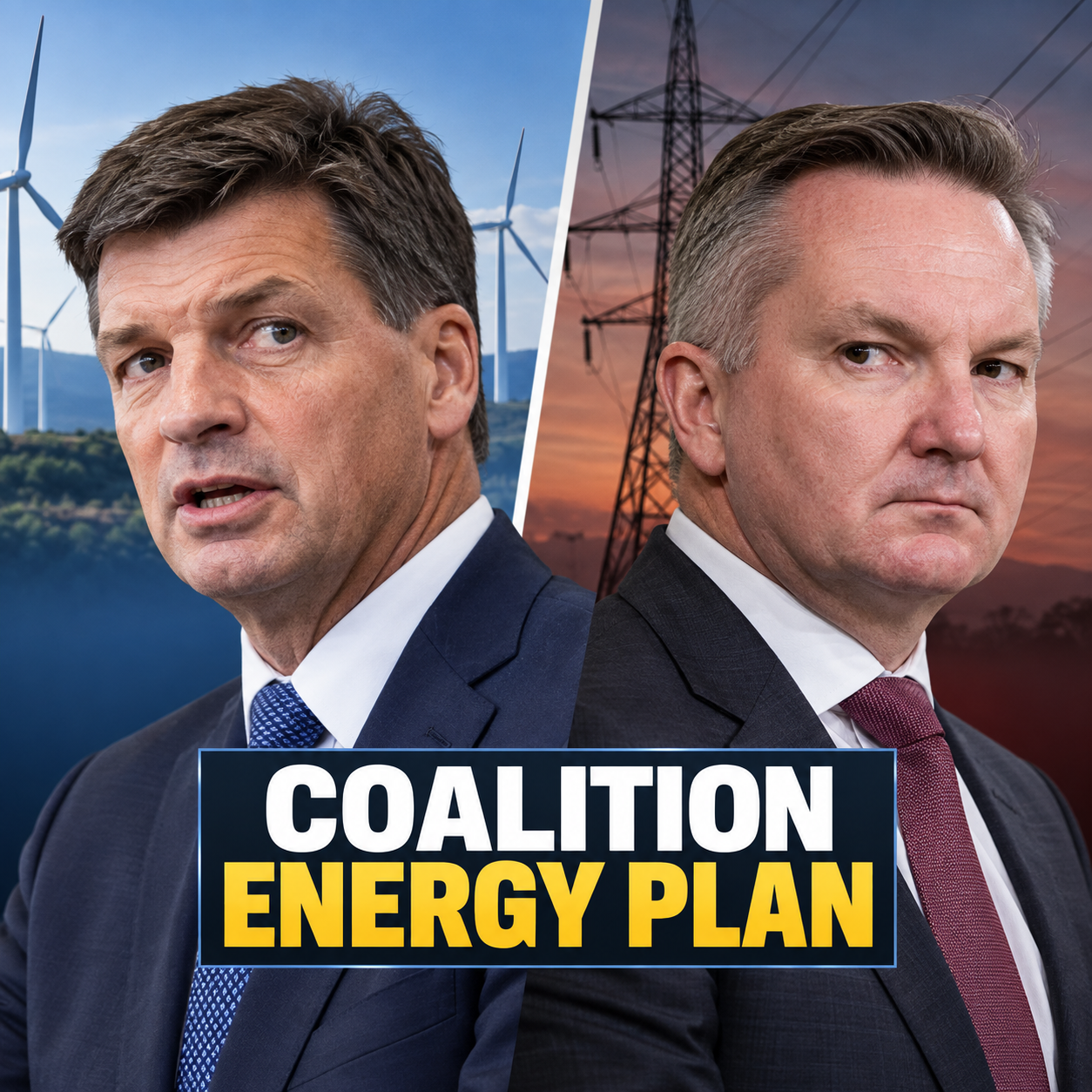
The package includes a promise to repeal the Climate Change Act 2022, remove the safeguard mechanism for large industrial emitters, abolish the New Vehicle Efficiency Standard, revoke four of Australia’s six declared offshore wind zones and seek to remove federal prohibitions on nuclear power.
It is an opposition policy, not a change to current law. The existing climate, vehicle, industrial-emissions and offshore-wind frameworks remain in force unless a future government changes them through the legal processes required for each measure.
That qualification matters because the Coalition could not implement every element simply by winning an election. Some changes would require legislation to pass both houses of federal parliament, while nuclear power is also restricted under state laws in several jurisdictions.
What the Coalition says it would change
The first major target is the Climate Change Act, which legislates Australia’s commitment to reach net zero emissions by 2050 and establishes the national emissions-reduction framework. The Coalition says it would introduce legislation to repeal the act and move away from what it describes as a policy structure that places emissions targets ahead of energy affordability and reliability.
The second major target is the safeguard mechanism, which applies to large industrial facilities and requires them to reduce net emissions over time or use approved credits. The Coalition argues the system increases costs for Australian industry and risks making local manufacturers less competitive. Labor says the mechanism is an important part of reducing emissions from the industrial sector while allowing firms flexibility in how they meet their obligations.
The Coalition also wants to repeal the New Vehicle Efficiency Standard. The standard sets fleet-wide efficiency targets for new vehicles supplied to Australia, creating an incentive for manufacturers to sell more fuel-efficient and electric models. The opposition argues the rules distort consumer choice and increase costs. The government says they reduce fuel use and give Australians access to cleaner, more efficient vehicles already sold in other markets.
Another highly visible part of the package is the plan to revoke four declared offshore wind zones: the Hunter, Illawarra, Southern Ocean and Bunbury regions. That would leave the Gippsland zone in Victoria and the Bass Strait zone in Tasmania as the remaining declared offshore-wind areas under the Coalition’s stated plan.
Australia’s offshore wind industry is still in an early development stage. There are no operating offshore wind farms and no projects under construction, although developers have received licences to conduct feasibility work, environmental studies and community consultation in declared areas.
The Coalition says that slow progress is evidence the program has not delivered as promised and argues communities have not been given enough control over large projects near their coasts. Labor says offshore wind remains a longer-term option in areas with strong wind resources and can help diversify the electricity mix as coal plants retire.
The opposition package also proposes a renewable-energy code of conduct that would require developers to demonstrate what the Coalition calls a social licence from the communities in which they operate. The precise legal design of that requirement would need further detail, including how community consent would be measured and how it would interact with existing state planning and environmental laws.
Two other elements would change the way government money and regulation are used. The Coalition says federal energy funding for states and territories should be conditional on prioritising affordability and reliability, and it wants the Australian Energy Regulator to give those objectives greater weight.
Those proposals are intended to shift policy emphasis away from technology-specific transition targets and toward what the Coalition describes as an “energy abundance” approach that allows coal, gas, renewables and potentially nuclear power to compete.
Nuclear is the clearest legal hurdle
The nuclear element is politically significant but also illustrates the limits on what a government can do by executive decision alone. Federal law currently prohibits certain nuclear power facilities. Repealing those prohibitions would require legislation through parliament.
Even if a future Coalition government controlled the House of Representatives, it would still need enough votes in the Senate. ABC reporting notes that the Coalition could not remove the federal nuclear prohibition under the current parliamentary balance without Labor or the Greens changing position, unless a future election substantially altered the Senate.
State law is another barrier. Several states have their own nuclear restrictions, so lifting the federal ban would not automatically create a uniform national legal pathway for nuclear generation.
The Coalition has also changed the financing model from the nuclear proposal taken to the previous federal election. Its current plan does not propose that the Commonwealth directly fund and part-own a fleet of nuclear plants. Instead, it argues nuclear should be legally available and able to compete for support under technology-neutral mechanisms, including a redesigned Capacity Investment Scheme.
The opposition says new sources of firm generation could become increasingly important as electricity demand grows, including from artificial-intelligence data centres and other energy-intensive industries. It argues that a system with more dispatchable coal, gas and potentially nuclear power would be less exposed to periods of low renewable output.
Labor rejects that argument and says delaying renewable investment while extending coal generation would increase costs and expose households to global fuel-price shocks. Energy Minister Chris Bowen has said the Coalition’s approach would weaken energy security and leave consumers paying more.
The cost argument is contested because different technologies carry different combinations of capital cost, fuel cost, construction time, network requirements and reliability characteristics. CSIRO analysis has continued to find new wind and solar combined with supporting infrastructure among the lowest-cost options for new electricity generation, while the Coalition argues system-level costs and reliability need greater weight in policy decisions.
Neither side can reduce the national electricity system to a single technology price. Renewable generation requires transmission, storage, firming and grid management. Coal and gas face fuel, maintenance and emissions costs. Nuclear has very high upfront capital requirements and long construction timelines but can provide steady low-emissions generation once operating.
What would change quickly and what would not
If the Coalition formed government, some administrative decisions could be made faster than legislative repeals. A government can change program priorities, funding directions and regulatory instructions within the limits of existing law. It could also reconsider future offshore-wind processes and alter Commonwealth policy positions.
But repealing the Climate Change Act, removing statutory elements of the safeguard mechanism, abolishing the vehicle standard and lifting the federal nuclear ban would depend on parliament. The Senate would therefore be central to the actual scope of any policy reversal.
Projects that already hold licences or approvals could also raise transition and compensation questions. Revoking a declared area is different from cancelling every private investment or legal right connected to that area. The details would depend on licence conditions, legislation and any decisions already made when a future government took office.
That means the eight-point plan should be read as a statement of direction rather than a list of changes that would all take effect on the first day of a new government.
The package also represents a significant political break from parts of the Coalition’s previous climate position. The party under former prime minister Scott Morrison committed Australia to net zero by 2050, while the current opposition is proposing to repeal the federal legislation that embeds that target.
Coalition figures argue circumstances have changed as power prices, industrial energy costs and concerns about the pace of the transition have become more prominent. Labor says the policy shift creates uncertainty for investors and risks delaying infrastructure needed as ageing coal generators close.
Offshore wind shows how those competing arguments play out in a specific sector. Supporters see a large future source of renewable power near major demand centres. Critics point to high development costs, community resistance, environmental concerns and the absence of a project under construction despite several years of policy work.
The nuclear debate has a similar long time horizon. Even if legal bans were removed, Australia would still need regulatory systems, financing, site selection, construction capability, workforce development and community acceptance before a commercial reactor could operate.
For households, none of those policy arguments produces an immediate change to today’s electricity bill. The effect would come over time through investment decisions, generation retirements, network costs, fuel prices and the mix of projects that actually get built.
For industry, the safeguard mechanism and energy prices are more immediate questions. Large facilities face emissions obligations under the current framework, while energy-intensive businesses also care about gas and electricity prices. The Coalition says removing carbon constraints would reduce pressure on industry; Labor argues investment certainty and cleaner energy are increasingly important to long-term competitiveness.
The policy divide is therefore broader than renewables versus fossil fuels. It is about how much government should direct the transition, which costs should be prioritised, how fast emissions should fall and what technologies should be legally and financially available.
Voters do not need to assume that every promise in the plan would become law automatically. The practical sequence would be election, legislation where required, Senate negotiations, possible state-law changes, regulatory decisions and then investment responses from energy companies.
The current system remains unchanged in the meantime. Australia still has legislated emissions targets, the safeguard mechanism, the vehicle-efficiency standard, declared offshore-wind zones and federal nuclear prohibitions.
The Coalition’s announcement matters because it sets out what it would try to reverse. Labor’s response matters because it frames the alternative: continue the transition framework while arguing that renewable generation, storage and transmission will ultimately provide lower-cost and more secure power.
The next stage of the debate will be less about slogans and more about implementation. The key questions are which measures can pass parliament, what happens to existing projects and investments, how each side calculates system costs, and how quickly replacement policies could affect the electricity market.