Australians joining the Defence Force from October will face a longer post-service obligation, with new recruits required to remain available for possible call-up for 10 years after leaving the military instead of the current five.
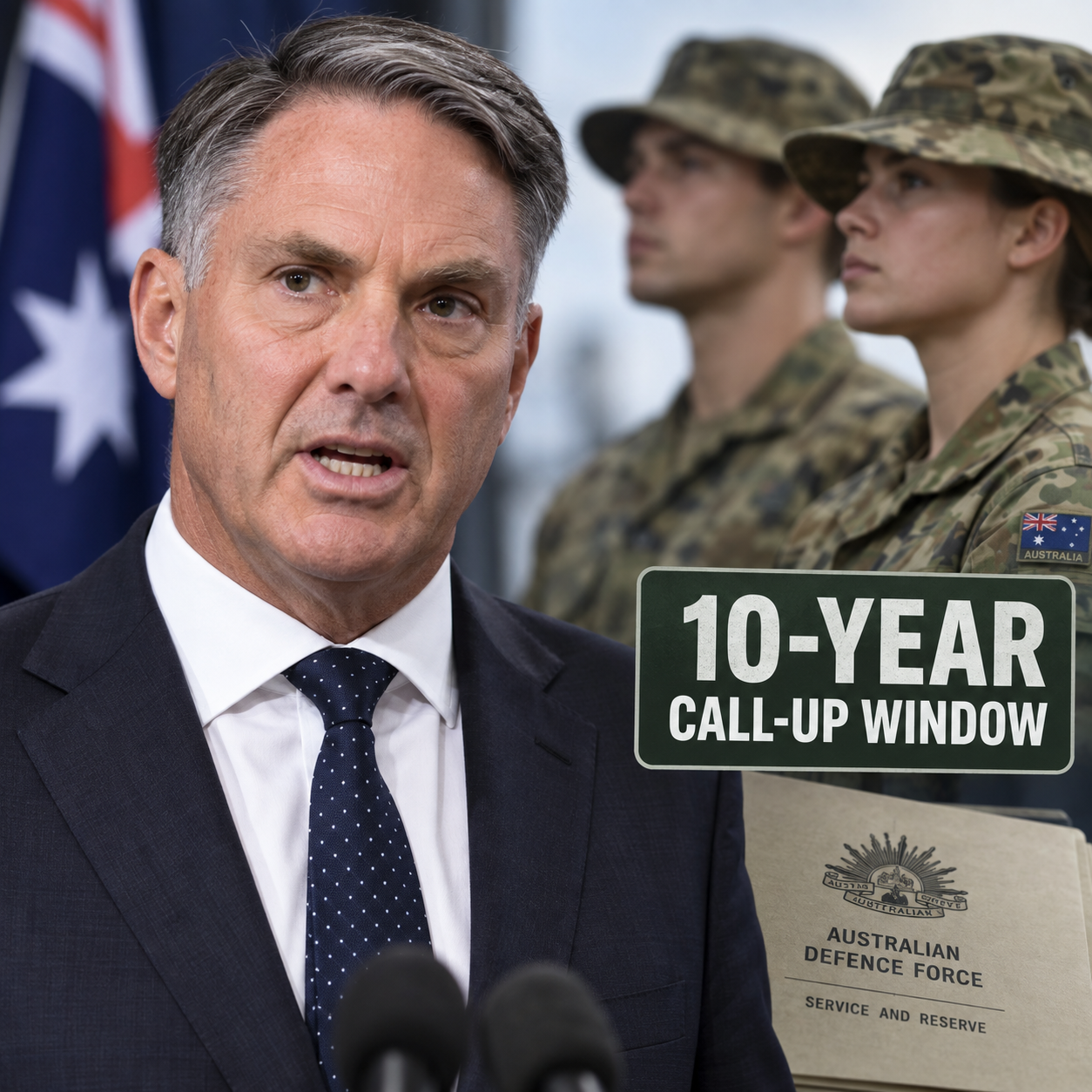
The change applies to people who enlist from October 1 and is intended to expand the pool of former personnel the Australian Defence Force could call on in a serious national crisis. Existing members can choose to opt into the longer period.
The policy does not mean former members will train continuously for a decade, remain on active duty or be automatically deployed after they leave full-time service. The requirement places them in service category two, an unpaid contingency reserve with no routine training or service obligations unless they are formally called out.
That distinction is important because a “10-year call-up window” can sound like an additional decade of ordinary military service. In practice, it is a period in which a former member remains on Defence’s books as someone who may be required to return if the legal conditions for a call-out are met.
The ADF has had a post-service commitment for new entrants since 2016. The current five-year arrangement was introduced to preserve access to trained former personnel after they leave the permanent force. The new policy doubles that period for future recruits.
Defence says the change follows recommendations from the 2024 Strategic Review of the Australian Defence Force Reserves, which concluded the military could make better use of former personnel and warned that the contingency reserve available for call-out was too small.
The review estimated that extending the post-service period could increase the contingent reserve to close to 20,000 people within five years. That does not mean 20,000 people would be mobilised. It means Defence would have a larger pool of former members who could potentially be recalled if required.
As of March 2024, the ADF Reserve included 41,717 people across different categories, including 9,406 in the unpaid service category two. The reserve is not one uniform workforce: some reservists train and serve regularly, while others sit in a contingency category with few or no day-to-day obligations.
The policy is part of a broader effort to increase Defence personnel numbers at a time when Australia is trying to expand military capacity, retain specialised skills and prepare for a more demanding strategic environment.
Defence Minister Richard Marles has pointed to recent recruitment improvements and a permanent ADF headcount of more than 64,000, which Defence says is a 25-year high. The government has argued that growing and retaining the workforce is central to delivering its defence plans.
Recruitment alone, however, is only part of the personnel challenge. Training military members is expensive and time-consuming, particularly in specialist occupations. When someone leaves the permanent force, Defence loses not only a staff member but also the training and experience invested in that person.
The 2024 reserve review highlighted the cost of creating trained military capability and argued that former personnel represent a resource that can be used more effectively. Extending the call-up window is one way to preserve that connection for longer.
For recruits, the practical consequence is that leaving full-time service will no longer end their formal relationship with Defence after five years. Unless they are at retirement age or otherwise outside the relevant arrangements, a person who entered under the new rules could remain liable for call-out for a decade.
That can matter to families and employers even though the probability of a call-out is low. Former ADF members may build civilian careers, start businesses, move overseas or take on family responsibilities after leaving. A longer contingency obligation means that connection to Defence lasts through a larger part of that transition.
At the same time, the absence of routine training obligations limits the everyday burden. Service category two members do not have to attend regular reserve nights, maintain a set number of training days or stay continuously qualified in their previous military role simply because they are in the contingency reserve.
That creates a trade-off. Defence gains access to a larger list of people with previous military experience, but not all of those people will retain current qualifications or the same level of readiness they had when they left.
Experts have noted that some military skills degrade if they are not practised. A former infantry soldier, technician, intelligence specialist or health professional may retain valuable knowledge, but the amount of retraining required before effective service could vary widely depending on how long they have been away and what job they previously performed.
For that reason, a bigger contingency reserve should not be treated as equivalent to a larger active reserve. It increases the potential pool of people Defence can draw from, but the usable capability depends on skills, health, current qualifications, location and the circumstances of any call-out.
The ADF’s only formal reserve call-out in recent history occurred during the Black Summer bushfires in January 2020. That mobilisation was used to support civil authorities during a national emergency rather than for overseas combat.
The existence of that precedent shows the reserve can be used for major domestic crises as well as defence contingencies. It also shows why the legal ability to call on former members can matter even when Australia is not at war.
The new arrangement does not itself change the legal threshold or process for a call-out. It expands the number of years in which a former member remains within the category that could be activated under existing Defence arrangements.
From a workforce-planning perspective, the change reflects a broader idea that military service should be viewed less as a sharp divide between “in” and “out” and more as a continuum. A person may serve full-time, move into an active reserve category, later shift into a contingency category and potentially return if circumstances require.
That model can make it easier for Defence to draw on experienced people rather than recruiting and training everyone from scratch. It may also create more flexible pathways for personnel who want to leave permanent service without permanently closing the door on future military work.
For some former members, that flexibility may be attractive. Defence has indicated there are people who think the existing five-year window is too short and who want an easier route back after longer periods away.
For others, the longer obligation may be viewed as an additional condition attached to enlistment. New recruits will need to understand that the commitment associated with joining the ADF extends beyond their final day of full-time service.
That makes clear communication important. Recruitment material and service agreements need to distinguish between active reserve duties and contingency liability so applicants understand what they are agreeing to.
The policy also raises questions for employers of veterans. In the unlikely event of a call-out, civilian workplaces may have employees required to return to military service. The effect would depend on the scale, duration and legal form of any mobilisation.
Defence’s challenge is to turn the larger pool into meaningful resilience rather than simply a bigger number on a personnel chart. That means maintaining accurate contact details, knowing what skills former members possess, understanding how current those skills are and having systems that can move people back into useful roles efficiently.
The 2024 review itself warned that the reserve system lacked a coherent design and that its role was not always clearly defined. Extending the post-service commitment addresses one part of that problem by increasing the pool available for contingency use, but it does not by itself resolve how reserves should be structured, trained or integrated with the permanent force.
For future recruits, the immediate rule is nevertheless clear. Anyone entering from October 1 will face a 10-year post-service commitment after leaving the ADF, while current members are not automatically forced into the longer period and can opt in.
The measure is therefore best understood as a workforce-resilience policy, not an announcement of mobilisation. It increases Defence’s legal access to experienced former personnel if Australia faces a crisis, while leaving those people with no routine service or training obligation during the contingency period.
Whether the policy ultimately provides the capability Defence wants will depend on what happens after those names remain on the books: how effectively skills are tracked, how quickly former members could be refreshed and retrained, and whether the wider reserve system is redesigned to make better use of them.