The federal government’s plan to remove the extra private health insurance rebate available to Australians aged 65 and over has become a sharp test of how Canberra balances budget savings, aged-care funding and the cost of health cover for older households.
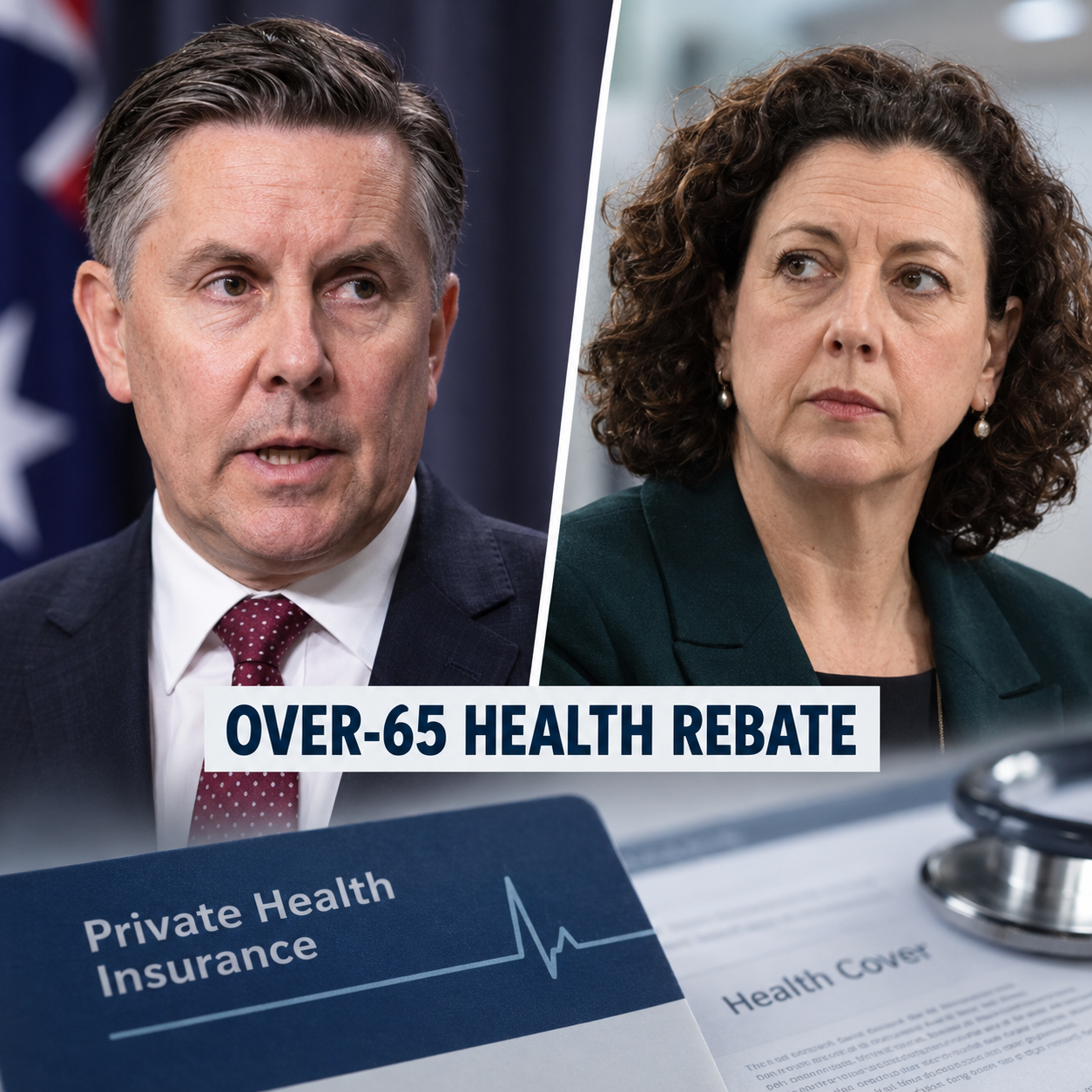
The proposed change is contained in the Private Health Insurance Amendment (Modernising the Private Health Insurance Rebate) Bill 2026. It would end the higher age-based rebate currently available to eligible policyholders aged 65 to 69 and 70 and over, so the rebate would instead be calculated in the same way as it is for people under 65, based on income.
The measure is not yet law. The bill is still before parliament, and the government needs enough support to pass it. The Coalition has said it will oppose the change in the Senate, leaving the Greens and other crossbenchers important to the bill’s prospects.
For older Australians who hold private health insurance, the practical issue is straightforward: if the legislation passes, many would receive a smaller government contribution toward their premiums from 1 April 2027.
Under the rebate settings applying from April 2026 to March 2027, eligible people in the base income tier receive a rebate of 24.118 per cent if they are under 65, 28.139 per cent if they are aged 65 to 69, and 32.158 per cent if they are 70 or older. The bill would remove that age-based uplift.
The Parliamentary Library says the government expects the proposal to affect about 3.2 million people aged 65 and over who have taxable incomes below the rebate cut-off. Health Minister Mark Butler has said the average increased premium for affected older Australians is expected to be around $250 a year, although the amount would vary with income, age and the price of the policy.
The government estimates the measure will save about $3 billion over four years. It says those savings will be redirected into aged care and argues the change will make the private health rebate fairer between generations by basing assistance on income rather than age.
That argument is now facing pressure from opponents who say the distribution of the savings matters as much as the total amount.
Parliamentary Budget Office analysis commissioned by independent MP Monique Ryan and released in September found about $1.6 billion of the forecast savings would come from age pensioners. The analysis has intensified criticism from consumer groups, parts of the health sector, state governments and political opponents who say low- and fixed-income retirees could be among those least able to absorb higher premiums.
Ryan has argued that removing the age-based uplift could lead some older policyholders to downgrade their cover or leave private insurance altogether. Her concern is that even a relatively small change in premiums can matter for retirees whose incomes are largely fixed and whose health needs tend to increase with age.
The government does not dispute that the proposal would raise costs for affected policyholders. Its case is that the overall impact on insurance participation would be limited and that the budget savings can be used where demand is also rising rapidly: aged care.
Government modelling cited in parliamentary material estimates there could be about 44,000 fewer insured people aged 65 and over by 2028-29 than there would have been if the higher rebate stayed in place. That is about 0.4 per cent fewer insured older people than otherwise expected.
Supporters of the change point to research suggesting the effect on private insurance participation and public hospital demand may be modest. Health economists have argued that the age-based uplift is an expensive way to encourage private cover and that many older Australians are likely to retain insurance even with a lower rebate because they value choice of provider, shorter waits for some elective procedures and continuity of cover.
Opponents say those average effects can obscure the impact on particular households. Industry modelling has produced examples showing that some older Australians with more expensive policies could face larger annual increases once the rebate change is combined with ordinary premium increases.
That distinction matters because the government’s policy does not reduce premiums themselves. It reduces the subsidy that helps eligible older people pay those premiums. The amount an individual ultimately pays would therefore depend on the policy they hold, their income tier, their age and whatever premium increases insurers apply.
The debate also extends beyond household budgets to the relationship between the private and public health systems.
Several states and health-sector groups have warned that if enough older people drop or downgrade private cover, more demand could shift to public hospitals. That concern is particularly sensitive because older Australians use hospital services at higher rates than younger people and public systems are already managing long elective-surgery queues and emergency-department pressure in many jurisdictions.
Government and independent modelling cited in the debate suggests the number of people leaving private cover may be relatively small. Critics respond that even a modest shift can matter when hospital systems are already operating under pressure, especially if those leaving private insurance are people with higher health needs.
The policy therefore turns on two different questions. One is whether the age-based rebate is the most efficient way to support private insurance. The other is whether removing it creates costs elsewhere in the health system that reduce the value of the budget saving.
Butler has framed the measure as a difficult allocation decision. The government says it needs to find savings to fund aged-care reforms and that maintaining a larger private-health subsidy for older people is harder to justify when the rebate is already means tested.
Critics reject the idea that private health support and aged care should be treated as competing priorities. Consumer advocates such as the Council on the Ageing have argued that older Australians should not be forced into a choice between paying more for their own health cover and funding improvements to aged care.
There is also a question of how the reform interacts with the original purpose of the age uplift. Older Australians generally make greater use of health services, and the higher rebate has been intended in part to encourage them to stay in private cover at a stage of life when premiums can feel harder to justify against retirement incomes.
The government’s position is that income is a better measure of need than age. Under the proposed system, a 70-year-old and a 50-year-old on the same taxable income would receive the same rebate percentage. Supporters describe that as a simpler and more equitable structure.
Opponents say age still matters because retirees cannot necessarily increase their income in response to higher costs and because their expected health spending is different from that of younger policyholders.
The Senate inquiry into the bill gives those arguments another forum. It is due to report in October, and stakeholders have been making submissions on affordability, hospital demand, regional impacts and the effect on people with lower incomes.
Until parliament acts, nothing changes for current policyholders. The higher age-based rebate remains in place, and the proposed new rules are scheduled to begin only from 1 April 2027 if the legislation passes.
That timing is important for consumers who may be worried by headline estimates. There is no requirement to cancel, downgrade or change cover now because the reform has not been enacted.
If the bill passes, insurers would apply the new rebate settings to affected policies and households would see the difference through the premium-reduction mechanism or their tax treatment, depending on how they receive the rebate.
The final political outcome will depend on whether the government can persuade enough senators that the aged-care funding and intergenerational-equity arguments outweigh concerns about pensioners and the public hospital system.
What is already clear is that the dispute is no longer simply about a technical adjustment to an insurance subsidy. The PBO breakdown has focused attention on who supplies the savings, while the government is asking parliament to consider where those savings will be spent.
For older Australians, the issue is likely to remain highly practical: how much more will their own policy cost, and will the support removed from private health produce enough benefit elsewhere in the care system to justify that extra expense?
Another complication is that the rebate already sits inside a broader set of private-health incentives, including income-based rebate tiers and the Medicare Levy Surcharge for some higher-income people without appropriate hospital cover. Changing one element can alter household calculations without changing the rest of that system. The government has not proposed abolishing the general rebate; it is proposing to remove the additional percentage linked specifically to being 65 or older.
That is why the debate cannot be reduced to a claim that private health support is disappearing. It is a narrower reform with a concentrated effect on older policyholders. Parliament will ultimately decide whether that concentration is an acceptable way to finance savings or whether exemptions, amendments or a different design are needed before the measure can proceed.