The official opening of the newly redeveloped Anzac Hall at the Australian War Memorial has generated widespread political discussion after Senator Ralph Babet walked out during the Welcome to Country, with the ceremony later becoming the focus of broader debate about national traditions and public commemorations.
The event marked the completion of a major redevelopment of the Australian War Memorial in Canberra. Senior government figures, military representatives, veterans and invited guests attended the ceremony, which celebrated the expanded facilities designed to preserve Australia’s military history and honour those who served.
During the opening program, Senator Ralph Babet left the ceremony while a Welcome to Country was being delivered. Afterwards, he published a statement explaining his decision, arguing that the ceremony did not reflect what he believed should have been the focus of an event honouring Australian service personnel. He later described the occasion as symbolic of broader concerns he holds about the direction of national public institutions.
The discussion widened after it emerged that Australia’s national anthem was not included in the official opening program. Opposition Leader Angus Taylor questioned that decision, arguing that such a significant national event would ordinarily be expected to include the anthem, particularly given the attendance of serving military personnel, veterans and senior national leaders.
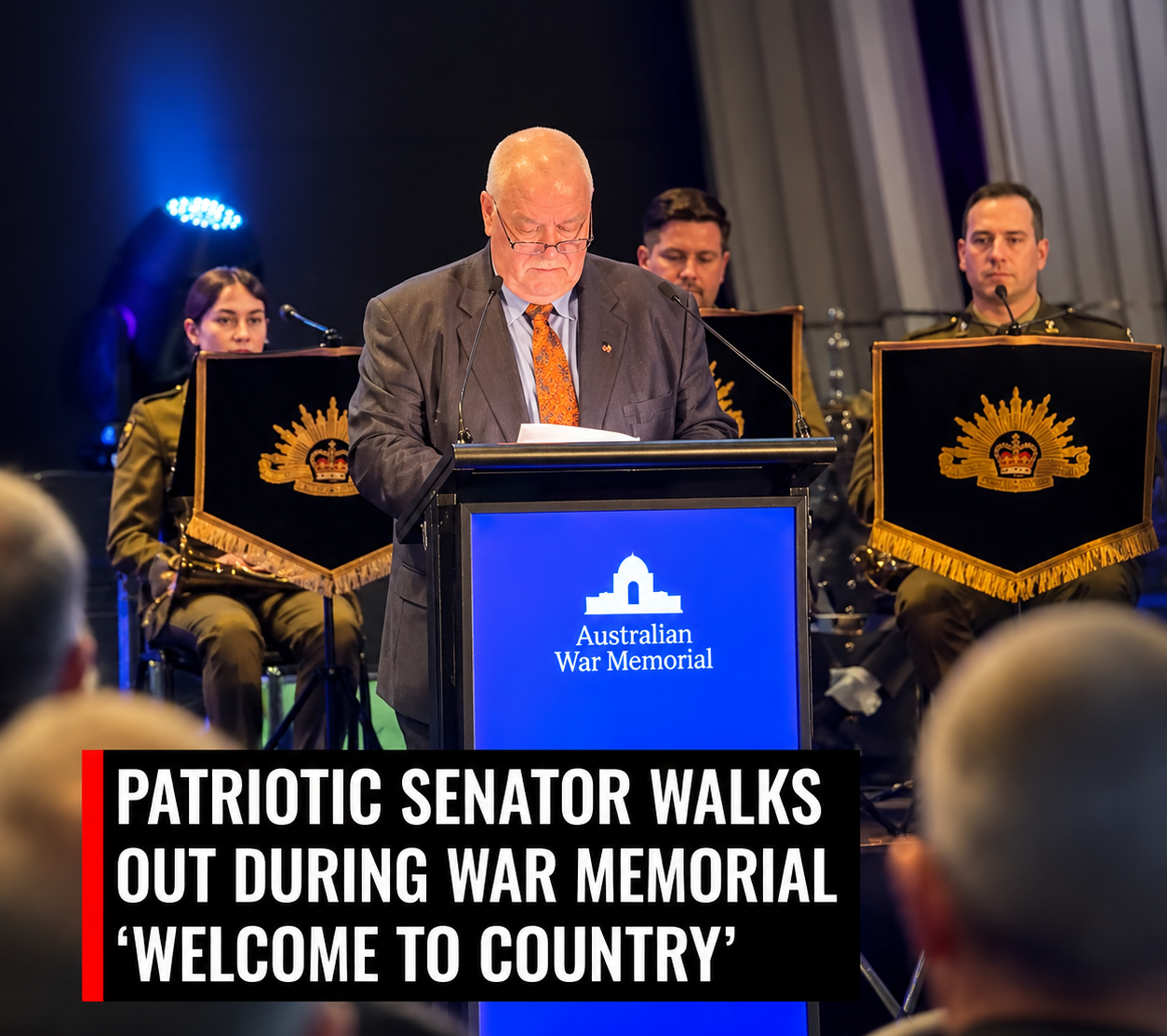
The Australian War Memorial responded by explaining that the omission was intentional rather than an oversight. According to a spokesperson, the Australian National Anthem is performed every evening during the Memorial’s Last Post Ceremony. For the official opening, organisers instead scheduled a Welcome to Country, speeches, musical performances, curator-led presentations and a ceremonial lowering of the Australian flag accompanied by the military bugle call “Retreat.”
The differing responses illustrate a broader national conversation that has continued in recent years regarding ceremonial traditions at public events. Supporters of Welcome to Country ceremonies describe them as an important acknowledgement of Aboriginal and Torres Strait Islander peoples and part of contemporary Australian civic practice. Others argue that national commemorative events should place greater emphasis on shared national symbols such as the Australian flag and national anthem.
Political figures from different parties have expressed varying opinions on where that balance should be drawn. While some believe existing ceremonial practices appropriately reflect modern Australia, others have called for changes to ensure traditional national symbols receive greater prominence during significant public occasions. The debate has become increasingly visible during national commemorations, parliamentary events and other official ceremonies.
Veterans’ organisations and community members have also expressed a range of views. Some attendees indicated they had expected the national anthem to be played during the ceremony, while others focused on the significance of the redevelopment itself and its role in preserving Australia’s military history for future generations. The differing reactions highlight that public opinion on ceremonial protocols remains diverse rather than uniform.
The redevelopment of the Australian War Memorial represents one of the largest investments made in the institution in recent decades. The expanded facilities are intended to provide additional exhibition space, improve visitor experiences and recognise the service of more recent generations of Australian Defence Force personnel. Despite the political discussion surrounding the opening ceremony, the redevelopment itself has generally been recognised as a major national infrastructure project.
As debate continues, the opening ceremony has become part of a wider discussion about how Australia commemorates military service while reflecting its contemporary national identity. The differing responses from politicians, organisers and members of the public demonstrate that questions surrounding national symbols and ceremonial traditions remain an active part of Australia’s public conversation.






