Australia’s conservative political landscape continues to evolve as Opposition Leader Angus Taylor seeks to rebuild Coalition support while responding to the growing popularity of One Nation across several recent opinion polls.
Speaking during a wide-ranging interview, Taylor argued that One Nation should not be regarded as a governing alternative, even as he acknowledged the party has attracted many voters who are dissatisfied with the major political parties. His comments come at a time when the Coalition is facing renewed pressure to regain support from conservative voters concerned about housing affordability, migration and the rising cost of living.
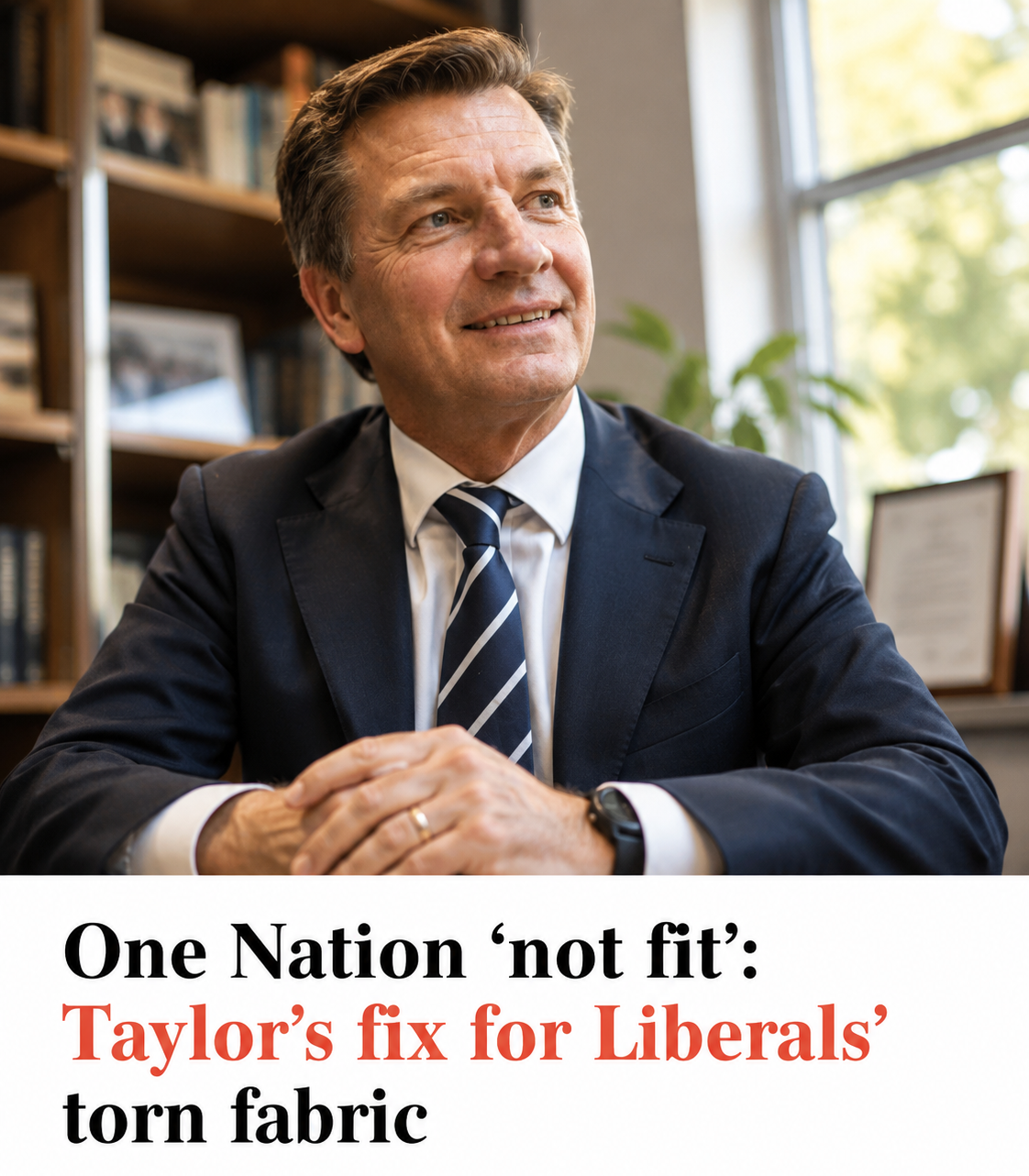
Taylor said One Nation is “not fit to govern”, arguing that governing Australia requires more than public support or strong campaign messaging. According to the Opposition Leader, a government must also demonstrate detailed policy development, experienced leadership and the administrative capability to implement complex national reforms. He maintained that the Coalition intends to offer that alternative while recognising why some voters have shifted toward minor parties.
Rather than focusing exclusively on criticism of One Nation, Taylor said the Coalition is preparing a broader policy agenda covering taxation, energy, housing, migration, education, artificial intelligence and economic growth. He urged colleagues to remain patient while that platform is developed, arguing that rebuilding public confidence requires comprehensive policy proposals rather than short-term political responses.
The comments reflect the changing dynamics within Australian politics. Recent polling has shown One Nation recording substantially stronger support than in previous election cycles, while the Coalition has experienced historically low primary vote figures in some national surveys. Those results have intensified internal debate about how the Liberal Party should respond to voters leaving for minor parties without abandoning its own political identity.
One Nation continues to argue that its growing support reflects widespread concern about housing affordability, immigration, taxation and the cost of living. Party representatives say many Australians believe the major parties have failed to address these issues effectively and that stronger policy changes are needed. The party has also continued campaigning on national identity, migration levels and economic reform as central themes of its platform.
Within the Coalition, senior figures have expressed differing views about the best approach. Some argue the party should compete directly with One Nation on policy while remaining clearly distinct as a potential governing party. Others believe the Coalition should concentrate primarily on presenting its own long-term economic agenda rather than responding to every initiative launched by rival parties.
Political analysts note that support for minor parties often increases during periods of economic uncertainty and declining trust in major parties. Housing affordability, inflation, migration and pressure on household budgets continue to rank among the issues Australians identify as their highest priorities, helping explain why competition for conservative voters has intensified in recent months.
Taylor also acknowledged that rebuilding trust will require more than campaign slogans. He said the Coalition intends to engage directly with communities, small businesses and younger Australians while presenting practical proposals that address long-term economic challenges. According to the Opposition Leader, restoring confidence depends on demonstrating both credible policies and the ability to govern effectively.
For Labor, the changing political landscape presents both opportunities and challenges. While divisions among conservative parties may benefit the government in some electorates, continued voter concern about housing, taxation and living costs ensures political competition remains intense across the country. Analysts caution that opinion polling reflects current public sentiment rather than predicting future election outcomes, particularly under Australia’s preferential voting system.
As Parliament prepares for further debates on housing, taxation and economic reform, the relationship between the Coalition and One Nation is likely to remain under close scrutiny. Whether the Coalition’s forthcoming policy agenda succeeds in winning back voters will become clearer as additional proposals are released and public opinion continues to evolve.






