Political protest has taken a highly visible turn across parts of Australia after banners carrying the slogan “Fire the Liar” appeared on highway overpasses, adding another chapter to an increasingly heated national debate surrounding the Albanese government and public trust in politics.
Photographs and videos of the banners spread rapidly across social media, generating widespread discussion about both the message itself and the growing use of public demonstrations as part of modern political campaigning. The displays follow weeks of intense debate over the federal government’s budget decisions, housing policies and changes to previously announced tax commitments.
The slogan has become closely associated with One Nation’s broader political campaign targeting Prime Minister Anthony Albanese. Earlier this month, the party launched a nationwide fundraising drive using the same message, arguing that recent government policy changes represented broken election commitments. One Nation says the campaign reflects dissatisfaction among Australians over housing affordability, taxation, migration and the broader cost of living.
According to recent reports, One Nation claimed its fundraising campaign attracted millions of dollars in donations within days, allowing the party to expand its advertising strategy through billboards, large public displays and other promotional activities. Party representatives have described the highway banners as another expression of growing public frustration with the government’s performance, although the specific individuals responsible for placing individual banners have not been independently identified.
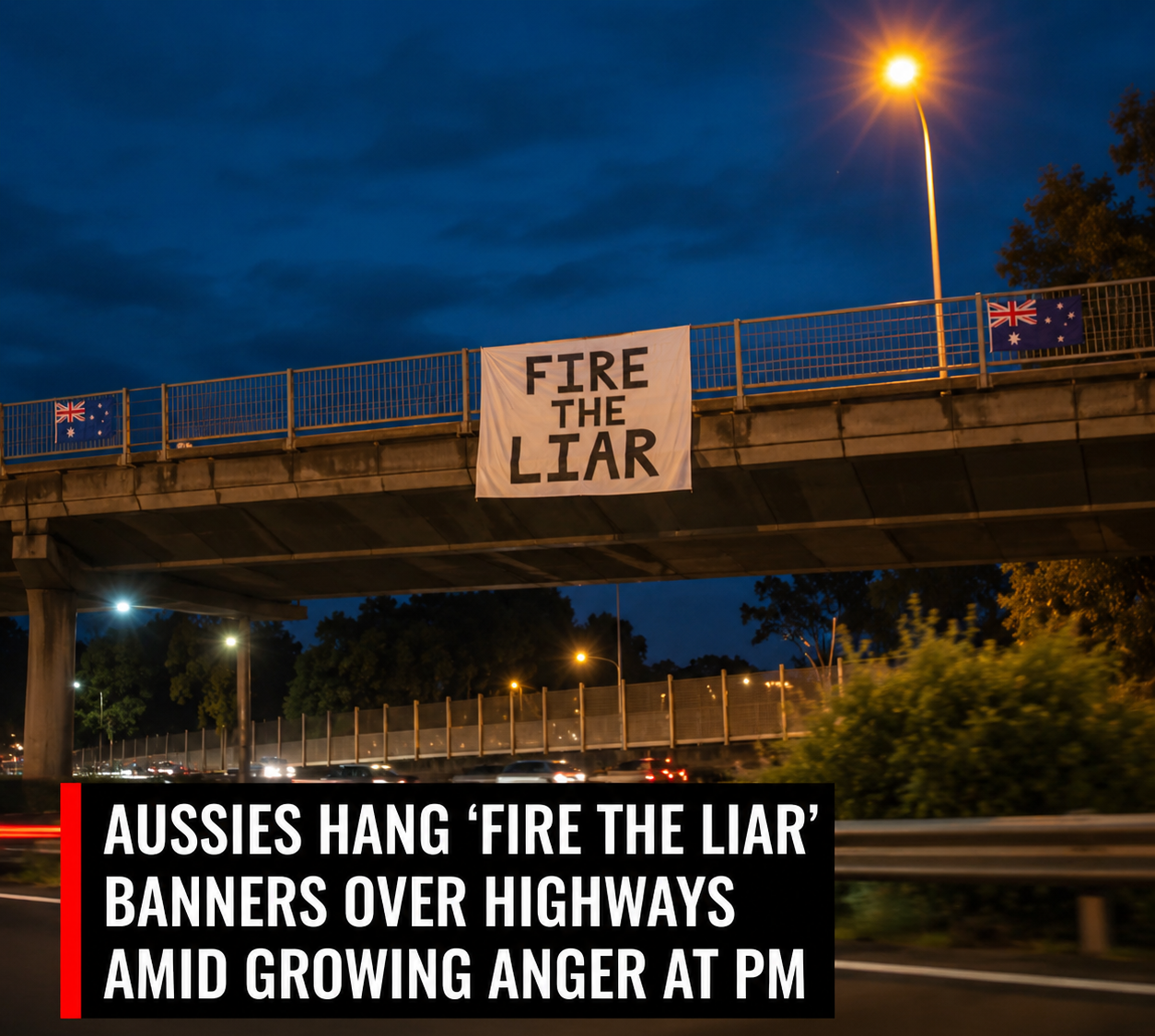
Supporters of the campaign argue that displaying political banners is a legitimate form of democratic expression and reflects concerns shared by many voters about government accountability. They point to issues such as housing affordability, taxation, migration and the rising cost of living as reasons for their dissatisfaction with current policies.
Others strongly disagree with both the slogan and the style of campaigning. Critics argue that highly confrontational political messaging risks increasing division within public debate and may oversimplify complex policy disagreements. Some observers have also questioned whether highway overpasses are appropriate locations for political displays, citing concerns about distraction for motorists and public safety.
The Albanese government has defended its policy decisions, arguing that several controversial changes introduced since the election were necessary to address long-term economic challenges, including housing affordability and intergenerational equity. Ministers maintain that adjusting policy after taking office does not necessarily indicate deliberate deception, while critics continue arguing that election commitments should be honoured unless circumstances change significantly.
Political analysts note that trust in government has become one of the defining themes of Australia’s current political environment. Recent polling has shown increased support for several minor parties, including One Nation, at the same time that debates over taxation, migration, housing and living costs have intensified. Campaigns centred on political trust are therefore likely to remain prominent as parties compete for dissatisfied voters.
Australia’s laws generally protect peaceful political expression, although demonstrations and displays in public places remain subject to state and local regulations relating to safety, traffic management and public infrastructure. Whether particular banners comply with those requirements depends on the circumstances of each location rather than the political message being expressed.
As campaigning continues, the appearance of the “Fire the Liar” banners illustrates how political messaging is increasingly extending beyond traditional advertising into highly visible public spaces. Regardless of differing opinions about the campaign, it has succeeded in generating widespread public discussion about government accountability, political communication and the issues shaping Australia’s national debate.






