Treasurer Jim Chalmers says Labor is taking the political warning from One Nation’s historic victory in Secret Harbour seriously, acknowledging Australians are under genuine pressure from inflation, living costs and weak real wages as Pauline Hanson’s party continues to gain ground.
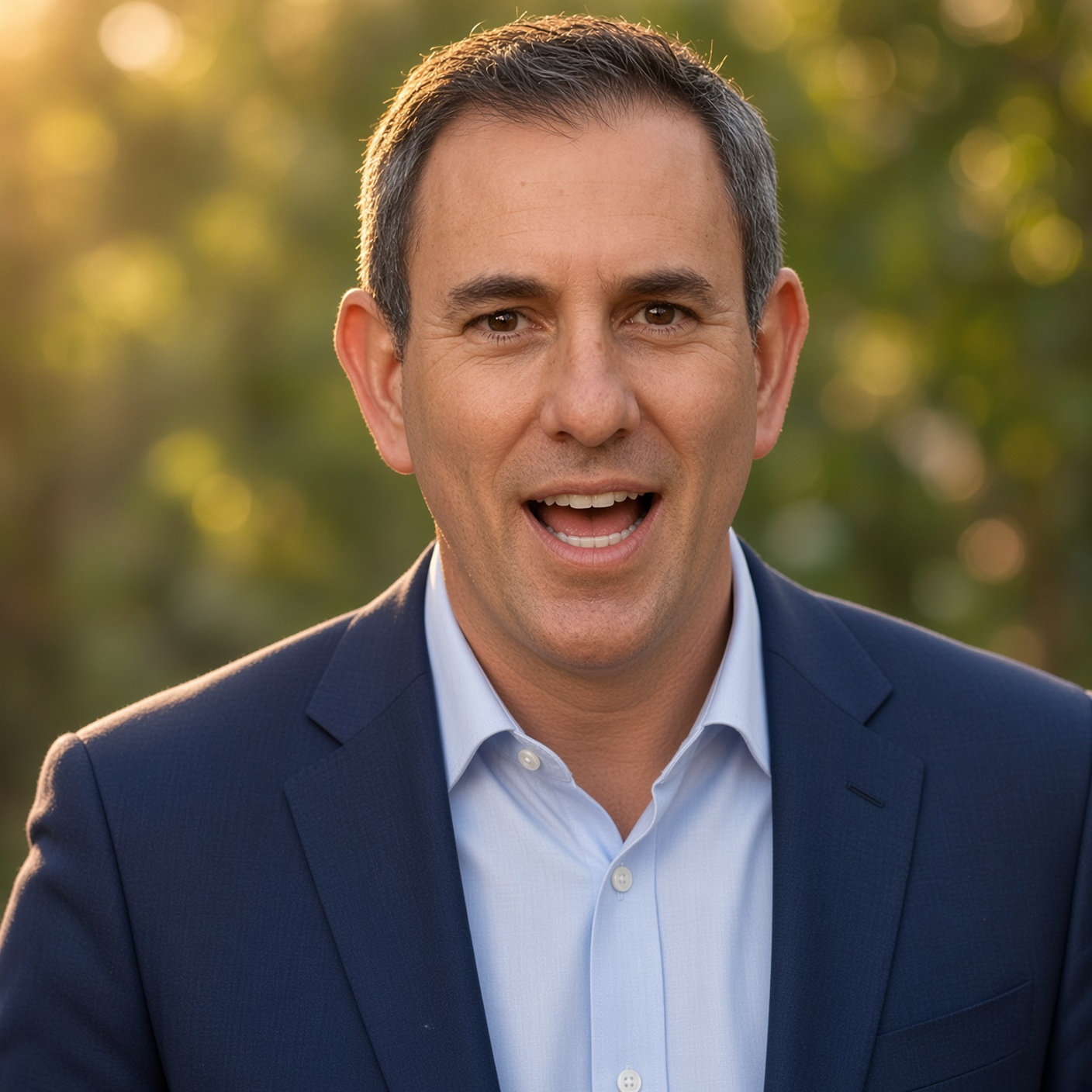
The final result of the Western Australian by-election has now been formally declared, with One Nation candidate Luke Herdegen securing 57.19 per cent after preferences against Labor’s Georgia Tree on 42.81 per cent.
It was a remarkable reversal in a seat Labor had previously held by a margin of 11.5 per cent and delivered One Nation its first lower-house victory in Western Australia.
ABC election figures put the swing away from Labor at about 18.7 percentage points.
Herdegen also comfortably led the primary vote with 39.1 per cent, compared with Labor on 24.1 per cent and the Liberals on 17.2 per cent.
Those numbers have become difficult for federal Labor to dismiss as a purely local aberration, particularly as separate national polling shows One Nation competing directly with the traditional major parties.
Chalmers had already confronted that question during an interview with ABC’s 7.30 on September 2, several days after polling day but before the Western Australian Electoral Commission formally declared the result on September 9.
His response was notable because he did not deny the economic frustrations helping reshape voting behaviour.
‘They’re not wrong to be frustrated’
Presenter Sarah Ferguson asked the Treasurer whether Labor risked seeing more voters abandon the party for One Nation if it failed to improve household finances.
Chalmers acknowledged people had legitimate concerns about the pressure they were experiencing.
“They’re not wrong to be frustrated about that,” he said.
He pointed to the government’s efforts to bring inflation down, lift productivity, strengthen wages and improve living standards as evidence Labor understood the problem.
The admission came during a discussion in which Chalmers also conceded inflation remained too high and real wages were still under pressure.
That matters because the Secret Harbour result has increasingly been interpreted through a national cost-of-living lens.
For households, political arguments about economic management are ultimately experienced through rent or mortgage payments, supermarket bills, electricity costs, fuel, wages and whether disposable income is actually improving.
A government can point to falling inflation or stronger nominal wage growth, but voters may still feel worse off if prices remain high and wages have not caught up with the cumulative increases of recent years.
Secret Harbour suggests that gap between improving economic statistics and household experience can carry a heavy electoral price.
Chalmers says Labor understood the warning before the by-election
The Treasurer resisted the suggestion that the WA result suddenly alerted Labor to a problem it had previously ignored.
He said the government had taken the pressures confronting households seriously before the vote and continued to do so afterwards.
That distinction is important to Labor’s political defence.
Chalmers does not want the government’s economic agenda portrayed as a panicked response to Pauline Hanson.
Instead, he argues Labor’s housing, tax, wage and cost-of-living policies were already designed to address the conditions driving voter frustration.
But Ferguson pressed the obvious follow-up: if Labor believes it understands the problem, why did that message fail so dramatically in Secret Harbour?
Chalmers’ answer revealed how Labor increasingly intends to frame the contest with One Nation.
He argued the central divide in Australian politics was no longer simply the traditional ideological contest between centre-left and right-wing parties.
In his version of the emerging political landscape, Labor is attempting to solve legitimate public grievances while the Liberals, Nationals and One Nation are seeking to exploit them.
That is a political argument rather than an objective conclusion, and One Nation strongly disputes it.
Hanson’s pitch is almost the opposite: the major parties have spent years failing to listen, while voters are turning to One Nation precisely because it is willing to respond to concerns on migration, housing, living costs and government priorities.
Secret Harbour was not a normal election
There are good reasons not to treat one state by-election as a perfect model for the next federal election.
Secret Harbour became vacant after long-serving Labor minister Paul Papalia resigned from politics in July because of a serious illness affecting an immediate family member.
Papalia had represented the seat and its predecessor electorates since 2007 and brought a substantial personal incumbency advantage that could not simply be transferred to a new Labor candidate.
By-elections can also produce unusually large swings because voters know they are not deciding who forms government.
Turnout was 78.98 per cent, below the 84.50 per cent recorded in the district at the 2025 general election.
Labor’s campaign also suffered several avoidable problems.
ABC analysis noted candidate Georgia Tree was prevented from speaking at two campaign press conferences, creating an opening for opponents to portray her as overly controlled by Labor.
Questions about her living outside the electorate also became a persistent campaign issue.
Those factors matter because an 18.7-point swing cannot responsibly be attributed to a single national issue such as inflation or migration.
Local campaign quality, the loss of an established incumbent, candidate perceptions and the unusual dynamics of a by-election all contributed to the environment in which voters made their decision.
But those qualifications do not make the result meaningless.
One Nation still had to persuade thousands of voters to put the party first.
It did.
The Liberals were hit as well
Perhaps the most consequential feature of the result is that it was not simply a Labor-to-Coalition swing.
The Liberal candidate received only 17.2 per cent of first preferences.
One Nation finished more than twice as high.
That creates a much more complicated problem for the established political system.
If dissatisfied Labor voters were simply moving back to the Liberals, the result would fit comfortably inside Australia’s traditional two-party cycle.
Instead, Secret Harbour showed One Nation capable of replacing the Liberals as the principal challenger to Labor in an outer-metropolitan electorate.
That is potentially dangerous for both major parties.
Labor risks losing parts of the working-class and outer-suburban electorate that have historically formed a central component of its coalition.
The Liberals risk being pushed into third place and losing their status as the automatic beneficiary of anti-Labor sentiment.
That is why the result attracted so much attention beyond Western Australia.
National polling makes the result harder to isolate
The political significance of Secret Harbour has increased because the by-election was followed by national polling showing One Nation at extraordinary levels of support.
The News24/YouGov Pulse conducted between September 1 and September 8 put One Nation on 30 per cent of the primary vote, ahead of Labor on 26 per cent and the Coalition on 18 per cent.
One Nation rose four points while Labor fell three.
The result should not be interpreted as a forecast that Hanson would form government.
When respondent preferences were allocated in a hypothetical Labor-versus-One Nation contest, Labor still led 53–47.
Australia’s preferential voting system and the geographic distribution of support also make national primary-vote figures difficult to translate directly into House of Representatives seats.
But the direction of travel is politically important.
One Nation is no longer merely taking a few percentage points from conservative voters.
It is increasingly competing for voters who previously supported both Labor and the Coalition.
The cost-of-living argument is becoming the battlefield
Chalmers’ response shows Labor understands that attacking One Nation’s ideology alone is unlikely to be enough.
The government must also convince voters that their own material circumstances are improving.
That means inflation matters, but so does the price level left behind after inflation falls.
Wages matter, but so does whether wages have caught up with previous price increases.
Housing policy matters, but so does whether a young family can actually afford a deposit or a renter can absorb another increase.
The challenge for Labor is that frustration can persist after an economic indicator begins moving in the right direction.
Chalmers said inflation had been coming down but remained too high.
He also acknowledged real wages remained under pressure because inflation was still eroding nominal wage gains.
That is a more economically nuanced message than simply insisting Australians are better off.
Politically, however, acknowledgement only goes so far.
If voters believe their situation is deteriorating, the government must eventually demonstrate improvement in household finances rather than simply explain why conditions should improve later.
One Nation now faces a different test as well
Success creates its own problem for Hanson’s party.
When One Nation was primarily a protest vote, it could benefit from anger without being expected to provide detailed solutions to every economic challenge.
At 30 per cent in national polling and with lower-house victories beginning to appear, that standard changes.
Its proposals on superannuation, migration, taxation and housing are already receiving far more detailed scrutiny.
Chalmers is attempting to make that the central contrast.
He wants voters to distinguish between identifying their frustrations and demonstrating a credible capacity to resolve them.
One Nation, in turn, argues the established parties have had decades to prove that capacity and that growing support for Hanson is evidence voters no longer accept their claims.
That contest will not be settled by one by-election.
But Labor cannot dismiss what happened
The final Secret Harbour result is now beyond argument.
Luke Herdegen won 57.19 per cent after preferences in what had been safe Labor territory.
One Nation secured its first lower-house seat in Western Australia.
Labor suffered a huge swing, and the Liberals finished a distant third on primary votes.
There were local explanations for all of it.
There are also wider political explanations that would be risky to ignore.
Chalmers’ response is therefore significant less because he offered a new policy on 7.30 than because he accepted the legitimacy of the anger behind the result.
Australians feeling pressured by living costs, inflation and wages are not imagining those problems.
The Treasurer’s argument is that Labor can solve them better than the parties benefiting from the frustration.
Secret Harbour delivered a warning that voters are not yet universally convinced.
The next test for Labor is whether acknowledging that warning can be translated into economic improvements people can actually feel before One Nation converts more frustration into votes.






