Pauline Hanson’s One Nation has overtaken Labor to lead Australia’s major political parties on primary voting intention in fresh polling, while the Coalition has sunk to a level that prompted an extraordinary warning it could eventually be reduced to fewer MPs than a cricket team.
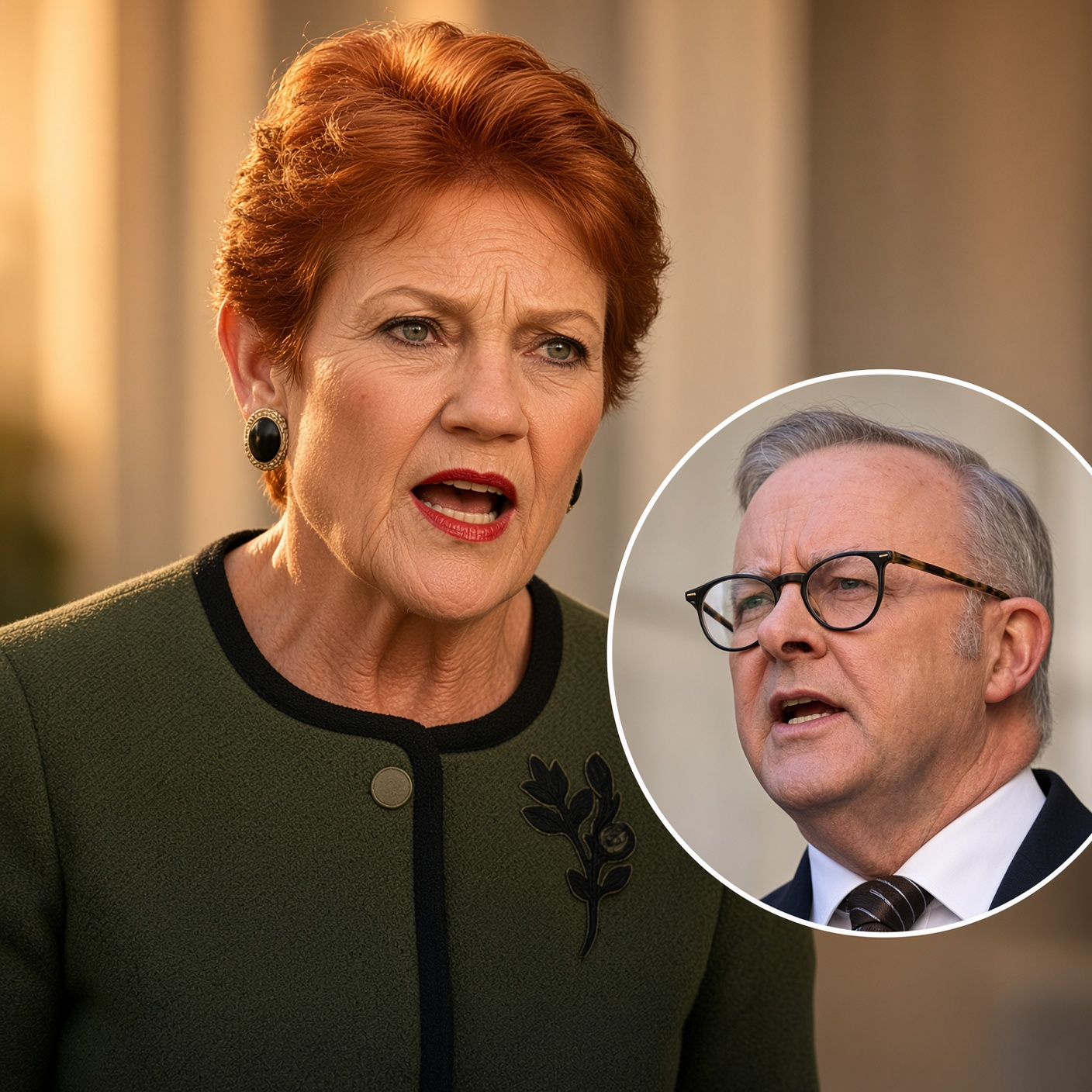
The latest News24/YouGov Pulse puts One Nation on 30 per cent of the primary vote, ahead of Labor on 26 per cent and the Coalition on just 18 per cent.
The Greens are unchanged on 12 per cent, while independents attract 7 per cent and other parties another 7 per cent.
The national survey was conducted between September 1 and September 8 among 1,510 Australian voters.
Compared with the previous Pulse conducted in late August, One Nation has risen four percentage points from 26 per cent, while Labor has fallen from 29 per cent to 26 per cent and the Coalition has dropped from 21 per cent to 18 per cent.
It gives One Nation its equal-highest result in the poll series and its largest recorded primary-vote lead over Labor.
For Labor, 26 per cent matches its worst result in the current YouGov series. For the Coalition, 18 per cent leaves it only one point above its previous low.
The result adds to growing evidence that Australian federal politics is becoming a three-way contest in which neither Labor nor the Coalition can assume voters dissatisfied with one major party will automatically move to the other.
One Nation is first on primary votes — but Labor still leads after preferences
The headline 30 per cent figure is politically significant, but it is not the same as a forecast that One Nation would form government if an election were held today.
Australia’s House of Representatives uses compulsory preferential voting, meaning the final result in each electorate depends not only on first preferences but also on where the preferences of eliminated candidates flow.
When YouGov asked respondents to allocate their preferences in a hypothetical Labor-versus-One Nation contest, Labor remained ahead by 53 per cent to 47 per cent.
Labor also leads the Coalition 52–48 on the corresponding respondent-preference measure.
That gap has nevertheless narrowed sharply.
In the previous Pulse, Labor led One Nation 56–44. The movement to 53–47 suggests One Nation is becoming more competitive not simply on first preferences but also when voters are asked to choose between the party and Labor in a final contest.
The distinction matters because Australian elections are won seat by seat rather than through a national popular vote.
A party polling 30 per cent across the country could perform very differently depending on whether its supporters are concentrated in particular outer-suburban and regional electorates or spread evenly across seats it cannot realistically win.
The next federal election is also not due until 2028, giving all parties considerable time to recover, decline or change strategy.
The Coalition’s 18 per cent creates a deeper problem
While Labor’s fall will attract immediate attention, the Coalition may face the more existential problem.
At 18 per cent, the Liberal-National Coalition trails One Nation by 12 percentage points.
That is not simply a case of the conservative opposition losing a few protest votes to a minor party.
At current levels, One Nation is competing to become the principal non-Labor force in parts of the country.
YouGov public data director Paul Smith warned that if the political trend continued all the way to the 2028 federal election, the Coalition could find itself with fewer than 11 seats in the House of Representatives — effectively fewer MPs than the number of players in a cricket side.
That should not be mistaken for a current seat-by-seat election forecast.
A national voting-intention poll cannot by itself reliably determine how 150 individual electorates will fall, particularly in an election involving three substantial political blocs, the Greens, independents and several smaller parties.
But the warning illustrates the scale of the difficulty confronting Opposition Leader Angus Taylor.
If Coalition candidates begin finishing third behind Labor and One Nation in significant numbers of electorates, the traditional preference dynamics of Australian politics could change dramatically.
Instead of One Nation preferences helping decide whether Labor or the Coalition wins, Coalition preferences could increasingly decide contests between Labor and One Nation.
That would represent a fundamental reversal of the political hierarchy on the Australian right.
Albanese remains ahead as preferred prime minister
The leadership figures are less dramatic than the primary-vote numbers.
Anthony Albanese remains ahead of both Taylor and Hanson when voters are asked who they would prefer as prime minister.
Against Taylor, Albanese leads 43 per cent to 39 per cent.
Against Hanson, the Prime Minister holds a larger 51–40 advantage.
Albanese’s personal satisfaction rating remains weak, with 36 per cent satisfied and 59 per cent dissatisfied, giving him a net rating of minus 23.
Taylor records 36 per cent satisfaction and 48 per cent dissatisfaction.
The figures show an electorate willing to punish Labor on primary voting intention without necessarily embracing an alternative leader.
That could provide Labor with some reassurance, but it also highlights the fluid nature of the political environment.
A government cannot rely indefinitely on dissatisfaction with its opponents if its own primary support continues to fall.
A second poll confirms One Nation’s rise
The latest YouGov result is not standing entirely on its own.
Roy Morgan polling conducted between August 31 and September 6 among 1,541 electors also recorded a significant shift towards One Nation.
Morgan had Labor on 27 per cent, One Nation on 26.5 per cent, the Coalition on 21.5 per cent and the Greens on 14.5 per cent.
In that survey, One Nation rose three percentage points while Labor fell 2.5 points.
Morgan therefore does not place One Nation clearly ahead of Labor, but the two parties are separated by just half a percentage point.
Its respondent-allocated preferences also have Labor leading One Nation 53.5–46.5.
The broad direction of the two polls is similar: One Nation is rising, Labor has weakened and the Coalition remains in a historically poor position.
Roy Morgan also found 62 per cent of voters believed Australia was heading in the wrong direction, with only 24 per cent saying the country was heading in the right direction.
That level of dissatisfaction helps explain why a party positioning itself against the established political system has room to grow.
Migration remains a major advantage for Hanson
The latest YouGov Pulse also provides clues about what may be driving the political shift.
Immigration remains one of One Nation’s strongest issues.
Sixty-six per cent of respondents said they wanted immigration reduced, including 42 per cent who wanted a large decrease and 24 per cent who preferred a smaller decrease.
Only 7 per cent wanted immigration increased.
When voters were asked which party they trusted most to manage immigration, One Nation led on 36 per cent, double the 18 per cent recorded by both Labor and the Coalition.
That advantage gives Hanson a strong political position on an issue that intersects with public concerns about housing availability, infrastructure, wages and the cost of living.
It does not mean voters necessarily support every detail of One Nation’s migration policy.
The party has faced recent questions about its own migration numbers and how its proposed permanent intake would interact with temporary and rotating workers.
But the polling suggests those policy disputes have not erased Hanson’s broader advantage on the issue.
Secret Harbour adds an electoral result to the polling trend
One Nation’s renewed momentum follows its victory in the Western Australian state by-election of Secret Harbour on August 29.
The seat had previously been held by Labor but was won decisively by One Nation candidate Luke Herdegen.
Roy Morgan noted that One Nation secured about 39 per cent of the primary vote in the contest while Labor fell to about 24 per cent, with One Nation winning approximately 57–43 after preferences.
A state by-election cannot be directly translated into a national federal result.
Local candidates, turnout, state issues and the absence of an incumbent government campaign can all produce unusual swings.
But Secret Harbour gave One Nation something national polling alone could not provide: evidence that a surge in support can be converted into an actual lower-house victory in an outer-metropolitan electorate.
That result has sharpened concern in both major parties.
Labor risks losing working-class and outer-suburban voters who once formed a central part of its electoral base.
The Coalition risks something even more serious — losing its position as the natural home for voters seeking to remove Labor.
A volatile electorate rather than a settled realignment
There are strong reasons for caution before declaring Australian politics permanently transformed.
Opinion polls are snapshots rather than election results, and support for One Nation has already moved significantly during 2026.
Even the latest YouGov figure of 30 per cent matches an earlier peak rather than establishing an entirely new record.
Different pollsters also continue to produce different rankings.
YouGov has One Nation four points ahead of Labor, while Roy Morgan still has Labor narrowly in first place.
That is normal. Polls use different samples, weighting methods and survey techniques, and relatively small movements can fall within the uncertainty surrounding individual estimates.
The more important signal is the trend visible across multiple surveys.
One Nation is no longer polling at the level traditionally associated with a minor party. It is competing directly with Labor for first place while consistently sitting ahead of the Coalition.
For Hanson, that creates an opportunity but also a new standard of scrutiny.
A party polling around 30 per cent will increasingly be judged not simply on its capacity to protest against government policy but on whether its economic, taxation, migration, defence and social policies are credible enough for a potential governing force.
For Labor, the latest figures add urgency to the task of understanding why voters are leaving rather than assuming they will return once an election approaches.
And for the Coalition, the danger is now unmistakable.
An 18 per cent primary vote does not merely threaten a poor election result. If it became entrenched at electorate level, it could alter the structure of conservative politics in Australia.
The “cricket team” comparison is deliberately dramatic and should not be read as a prediction that the Coalition will definitely fall below 11 seats.
But it captures the political warning contained in the latest numbers.
One Nation is on 30 per cent, Labor has dropped to 26 and the Coalition is a distant third.
For the first time in generations, Australia’s two major political forces are confronting polling in which neither can safely assume the old two-party contest will still define the next election.






