A widening gap between the Commonwealth funding available to Ben Roberts-Smith’s defence and the rates government agencies can pay their own barristers has triggered fresh scrutiny of how one of Australia’s most consequential criminal prosecutions is being resourced.
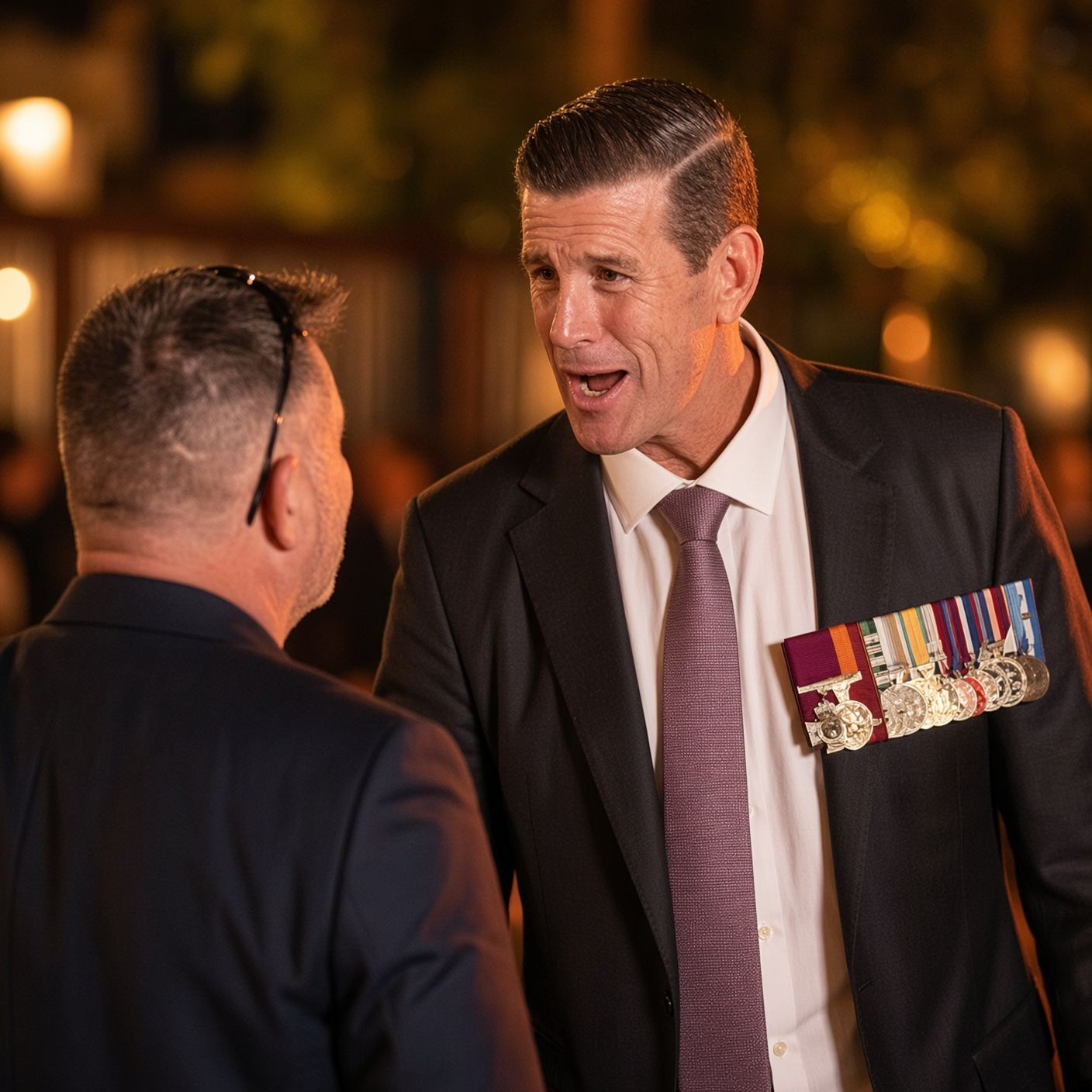
The Victoria Cross recipient is facing five counts of the war crime of murder over alleged killings in Afghanistan between 2009 and 2012.
He has consistently denied wrongdoing and the criminal allegations have not been proven.
Each charge carries a maximum penalty of life imprisonment, placing extraordinary importance on both the prosecution’s ability to present its case and Roberts-Smith’s ability to mount a full defence.
That is why differences between two Commonwealth legal-funding frameworks are now attracting attention from veterans’ advocates and lawyers.
Current and former Australian Defence Force members caught up in criminal investigations or prosecutions arising from the Afghanistan Inquiry can receive assistance under the Afghanistan Inquiry Legal Assistance Scheme, known as AILAS.
The scheme was established in September 2021 to fund reasonable legal representation costs for people involved in matters investigated by the Australian Federal Police and the Office of the Special Investigator.
Its published cost schedule sets a maximum government-funded daily rate of $3,650 including GST for senior counsel and $2,300 for junior counsel.
Those figures remain in the cost document dated September 30, 2021.
By comparison, the Commonwealth’s broader rules for engaging its own external barristers changed in March this year.
Under the Legal Services Directions 2025, Commonwealth agencies can negotiate up to $5,000 a day including GST for senior counsel and $3,300 for junior counsel without seeking additional approval from the Office of Legal Services Coordination.
The difference is substantial.
Measured against the Commonwealth thresholds, the AILAS senior-counsel cap is approximately 27 per cent lower, while its junior-counsel cap is about 30 per cent lower.
Looked at in the other direction, the Commonwealth thresholds are roughly 37 per cent and 43 per cent above the respective AILAS caps.
But an important distinction has been lost in some of the political commentary surrounding the issue.
The $5,000 and $3,300 Commonwealth figures are not published pay rates for the individual barristers prosecuting Roberts-Smith.
They are maximum thresholds within which Commonwealth entities can negotiate without seeking special approval.
The Attorney-General’s Department explicitly says those figures operate as ceilings rather than standard or starting rates.
Government agencies are expected to negotiate value for money and may pay substantially less depending on counsel’s experience, the complexity of the brief and other circumstances.
Rates above those thresholds can also be approved in sufficiently important or complex matters.
The funding debate therefore establishes a disparity in the frameworks available to the two sides, but it does not by itself prove that Roberts-Smith’s prosecutors are personally receiving the maximum Commonwealth rates.
Another difference concerns billable time.
The AILAS cost schedule imposes a strict six-hour daily cap on professional fees for solicitors, counsel, paralegals, articled clerks and administrative work.
The cap applies during hearings as well as pre-hearing preparation.
The Commonwealth’s general counsel guidance is more flexible.
It says daily rates would ordinarily reflect about six to eight hours of work, but acknowledges that counsel may work eight or 10 hours during hearings and allows those anticipated hours to be considered when the rate is negotiated.
That does not mean Commonwealth prosecutors automatically receive 10 billable hours each day.
It does mean the general Commonwealth framework can accommodate longer working days in a way the published AILAS schedule does not.
In an ordinary criminal matter that distinction might attract limited attention.
Roberts-Smith’s case is anything but ordinary.
The Commonwealth Director of Public Prosecutions says the five charges concern allegations that five Afghan nationals who were not taking an active part in hostilities were killed between 2009 and 2012.
The allegations include claims Roberts-Smith personally caused deaths and, in other charges, aided, abetted, counselled or procured another person to commit murder.
Roberts-Smith rejects the allegations and remains entitled to the presumption of innocence.
The prosecution is already generating an enormous volume of sensitive material.
At proceedings this week, the court was told the prosecution had served thousands of documents, including hundreds of witness statements, while extensive restrictions remain around the identities of witnesses and classified material.
National-security concerns have required more than 200 orders governing how sensitive information is handled.
The matter is expected to involve soldiers who served alongside Roberts-Smith, national-security evidence and events that occurred in Afghanistan more than a decade ago.
The prosecution may not reach a Supreme Court trial for years.
Those circumstances help explain why veterans’ representatives are focusing on resources rather than merely headline counsel rates.
RSL NSW president Brigadier Vince Williams has argued that procedural fairness requires a level playing field and that the justice system must be seen to give an accused veteran a genuine opportunity to answer the case against him.
Military lawyer and Army veteran Dr Glenn Kolomeitz has similarly argued that the state already possesses major structural advantages in investigating and prosecuting complex criminal cases and that legal-aid arrangements should not unnecessarily widen that imbalance.
Their argument is not that Roberts-Smith should receive preferential treatment because he holds the Victoria Cross.
Nor does adequate defence funding determine whether the allegations are true.
The argument is that serious charges should be resolved on evidence tested through an adversarial criminal process in which both sides can properly perform their role.
That principle has particular historical resonance for the Australian Defence Force.
During an earlier controversy involving Australian soldiers facing charges arising from Afghanistan, then chief of the Defence Force Angus Houston gave an unusually strong assurance about legal support.
Houston said Defence would ensure accused soldiers had access to a robust and effective defence and declared that “no expense will be spared” in providing legal representation.
That statement related to a different prosecution more than 15 years ago and was not itself a legal guarantee governing Roberts-Smith’s present funding arrangements.
Nevertheless, veterans’ advocates have invoked it as a statement of the principle they believe should apply when Australia prosecutes personnel for conduct arising from military service.
The broader cost of the Afghanistan investigations has intensified the comparison.
The Office of the Special Investigator was established after the Brereton Inquiry to investigate potential criminal offences arising from alleged conduct by Australian Defence Force personnel in Afghanistan.
Budget documents allocated approximately $320.5 million to the OSI from its establishment through the 2025–26 financial year.
The office told AAP FactCheck that it had spent about $231 million between January 2021 and March 2026.
That money was not spent solely investigating Roberts-Smith.
The OSI and AFP have commenced 53 investigations involving allegations of war crimes by Australian Defence Force members.
By April, 39 were no longer active after investigators concluded there was insufficient evidence to support referral for prosecution, while other investigations remained under way.
Roberts-Smith is one of two former soldiers to have been charged through the process.
That context is important because claims that hundreds of millions of dollars were spent prosecuting him personally are incorrect.
The expenditure covers the entire OSI organisation and its Afghanistan investigation program.
Another figure provoking criticism is the AILAS reimbursement rate for administrative work.
The published schedule provides $25 an hour excluding GST, or $27.50 including GST.
Australia’s National Minimum Wage rose to $26.44 an hour on July 1.
At first glance, the $25 reimbursement therefore appears to sit below the national minimum.
But the comparison is not legally straightforward.
The AILAS figure is not a wage the Commonwealth authorises a law firm to pay an employee.
It is the amount the government will reimburse a legal provider for specified administrative work.
Any firm employing administrative staff remains responsible for complying with the Fair Work Act, applicable awards and minimum pay rates.
The practical criticism is therefore better expressed as a question about whether the government’s reimbursement amount realistically covers the cost of employing support staff, rather than an allegation that the Commonwealth has authorised unlawful wages.
The Attorney-General’s Department also notes that AILAS recipients may obtain other assistance for costs not met by the scheme.
That means the Commonwealth funding cap does not necessarily represent the total amount a defendant can spend on legal representation.
Private funding can supplement it.
But that does not remove the policy question.
AILAS was created specifically because the Commonwealth recognised that current and former service personnel facing Afghanistan-related investigations required access to appropriate legal assistance.
An official oversight review later said Australia’s handling of war-crimes investigations and trials would attract international scrutiny and that its legal-assistance arrangements needed to be “unimpeachable”.
Five years after the scheme was introduced, its cost schedule now sits alongside a newer Commonwealth counsel regime with significantly higher thresholds.
Whether that gap should be closed is ultimately a policy decision for government.
There is no general rule of criminal justice requiring the prosecution and defence to spend identical amounts of public money.
Public prosecutors have institutional obligations, investigators and salaried staff that do not map neatly onto the operating costs of a privately retained defence team.
Exact dollar-for-dollar parity is therefore not the only measure of fairness.
But fairness does require that an accused person facing the most serious penalties available under Australian law has a real opportunity to test the prosecution case.
In Roberts-Smith’s prosecution, that task is likely to involve years of preparation, large numbers of witnesses, classified evidence and events reconstructed from military operations conducted thousands of kilometres away.
The Commonwealth has committed substantial resources to investigating those allegations.
It has an equally strong interest in ensuring the eventual criminal judgment is respected as the product of a rigorous and fair process.
Roberts-Smith’s guilt or innocence will not be determined by the size of either side’s legal bill.
It will be determined in court under the criminal standard of proof.
But precisely because the possible sentence is life imprisonment, the debate over whether Australia’s five-year-old defence funding schedule remains adequate is unlikely to disappear before that evidence is finally heard.






