The murder case against Massachusetts mother Lindsay Clancy remains unresolved after a six-week trial ended without a verdict, leaving prosecutors to decide whether to put her before a second jury over the deaths of her three young children.
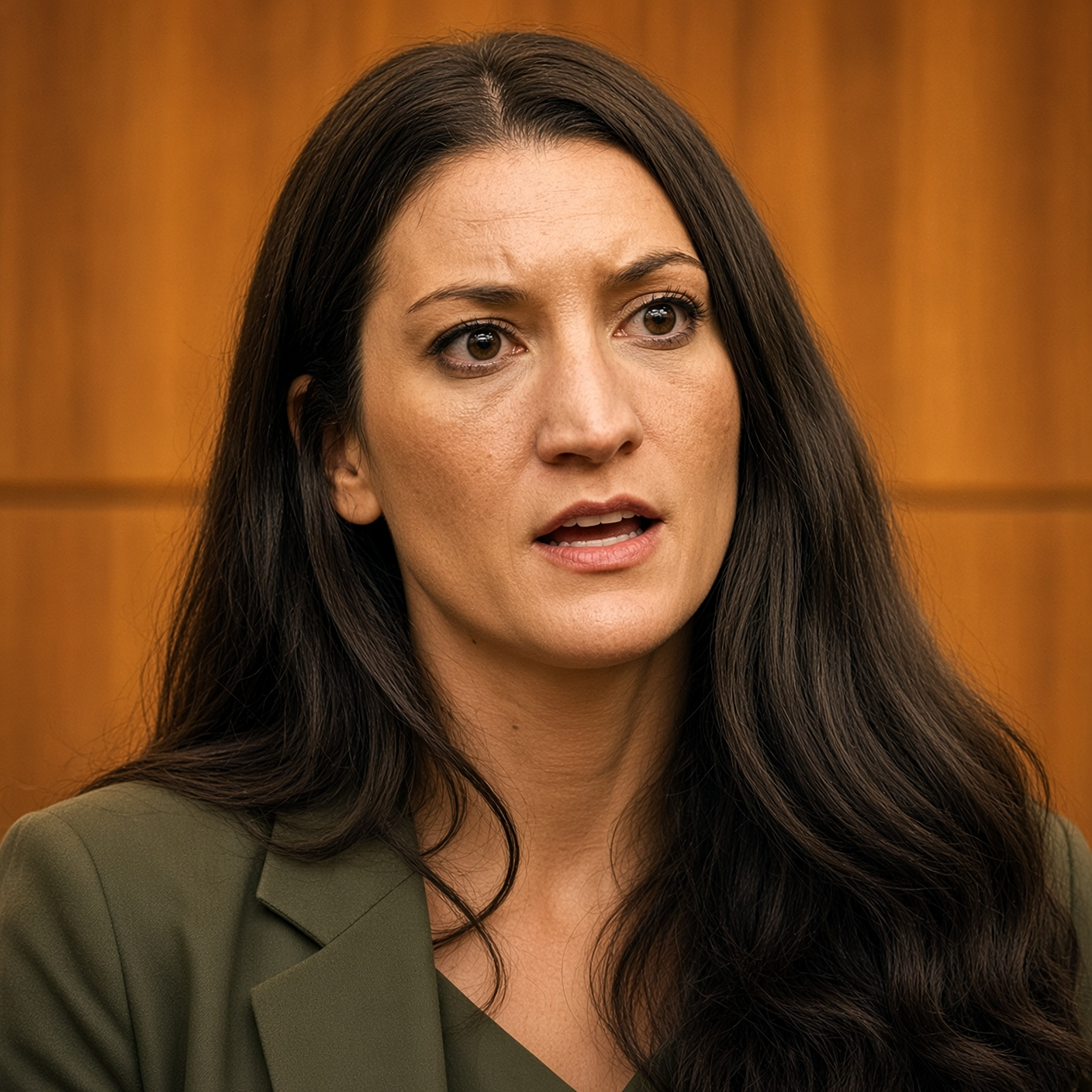
The extraordinary case has divided public opinion far beyond the United States, raising deeply confronting questions about criminal responsibility, maternal mental illness and how the justice system should respond when severe psychiatric illness is alleged in the killing of children.
Clancy, 36, does not dispute that she killed her children at the family’s home in Duxbury, Massachusetts, on January 24, 2023.
Her children were Cora, five, Dawson, three, and eight-month-old Callan.
After the killings, Clancy attempted to take her own life by jumping from an upper-storey window. She survived but suffered serious spinal injuries and remains paralysed from the waist down.
The central issue at her trial was therefore not whether she was responsible for the physical acts that caused her children’s deaths.
It was whether she was legally criminally responsible for them.
Her defence argued that Clancy was experiencing a severe psychotic episode associated with postpartum mental illness and could not properly appreciate the wrongfulness of what she was doing.
Prosecutors presented a profoundly different account.
They argued that the former labour and delivery nurse was depressed but capable of understanding her actions, and that evidence surrounding the events showed planning, awareness and deliberate decision-making.
After hearing weeks of conflicting psychiatric evidence, family testimony, digital records and other evidence, the jury could not agree.
Judge William Sullivan formally declared a mistrial on September 4 after jurors spent more than 38 hours deliberating across seven days without reaching the unanimous verdict required under Massachusetts law.
That outcome has produced an important legal distinction that has sometimes been blurred in commentary surrounding the case.
Clancy has not been acquitted.
She has also not been convicted.
And despite commentary describing her as already serving a “life sentence” because of her physical injuries and emotional burden, she has not received a legal sentence of life imprisonment.
The phrase appeared in an opinion column by British writer Sarah Vine, who argued that surviving the deaths of her children and living with paralysis could amount to a punishment of its own.
That is an emotional and moral judgment, not Clancy’s legal status.
If she were eventually convicted of first-degree murder, she could face life imprisonment without parole.
If she were found not guilty because she lacked criminal responsibility due to mental illness, she could instead remain subject to psychiatric commitment and ongoing court supervision.
For now, the murder charges remain pending.
Clancy continues to be held in a Massachusetts psychiatric hospital while prosecutors consider their next step.
A court status hearing is scheduled for September 29, when the possibility of another trial, further motions or other resolutions may become clearer.
The mistrial followed an unusually bitter final stage of jury deliberations.
Clancy’s defence lawyer Kevin Reddington told the court that a single juror was preventing an agreement and argued that the juror was refusing to follow the judge’s directions on reasonable doubt.
Reporting from the proceedings indicated an approximately 11–1 division among jurors.
The defence sought to have the disputed juror removed, but Sullivan declined to intervene in the substance of jury deliberations.
An emergency attempt to stop the mistrial through Massachusetts’ highest court also failed.
The result was a hung jury rather than a legal determination of Clancy’s mental state.
That distinction is essential because the competing psychiatric evidence was the heart of the entire case.
In the months before the children’s deaths, Clancy’s mental health had deteriorated significantly.
Witnesses testified that she suffered severe anxiety, insomnia, intrusive thoughts and suicidal thinking after the birth of Callan.
She sought help repeatedly.
She had contact with specialists in perinatal mental health, was prescribed multiple psychiatric medications and ultimately admitted herself to a psychiatric hospital.
She was discharged less than three weeks before the killings.
Evidence at trial showed that in late 2022 she told a healthcare provider she was experiencing intrusive thoughts she had never experienced before and felt hopeless.
Her mother also testified that Clancy had disclosed thoughts of harming the children.
Her phone searches in the weeks before the deaths included queries relating to hallucinations, psychosis, bipolar disorder, insomnia, suicide and postpartum depression.
The defence argued that these warning signs formed part of a progressive psychiatric collapse.
Its experts testified that Clancy had bipolar disorder and postpartum psychosis and that her ability to distinguish right from wrong had been overwhelmed.
One defence psychologist told the jury that she did not appreciate the wrongfulness of killing her children because of her mental condition.
The prosecution strongly challenged that conclusion.
Its experts questioned whether Clancy’s account of hearing a commanding voice was clinically convincing and argued that aspects of her behaviour before and after the killings demonstrated awareness and intentionality.
Prosecutors pointed to phone evidence and the sequence of events on January 24 as indications that the killings were not simply the product of an uncontrollable psychotic episode.
They also highlighted the fact that Clancy arranged for her then-husband Patrick to leave the house on errands shortly before the children died.
The defence countered that organised behaviour and psychosis are not mutually exclusive and argued that apparently ordinary actions did not establish that Clancy possessed legal criminal responsibility.
The trial ultimately became a contest between two questions that sound similar but are legally very different.
Was Clancy mentally ill?
And if she was, was that illness severe enough at the time of the killings to prevent her from understanding the wrongfulness of her actions?
Even prosecution experts did not present her as a psychologically healthy woman.
The disagreement concerned the severity and legal significance of her condition at the crucial moment.
That is where postpartum psychosis became central.
The condition is much rarer than postpartum depression.
The Royal College of Psychiatrists estimates that postpartum psychosis affects roughly one in every 1,000 women who give birth.
It describes the illness as a psychiatric emergency that can develop rapidly and may involve extreme mood changes, confusion, mania, hallucinations and delusions.
Most women with the illness do not harm themselves or their children, and the diagnosis should never be treated as synonymous with violence.
But severe untreated psychosis can dramatically distort a person’s perception of reality and requires urgent specialist treatment.
That medical reality has driven much of the sympathy directed towards Clancy.
Hundreds of supporters gathered outside the courthouse during the trial, many arguing that her case exposed serious failures in maternal mental-health care.
They focused on the fact that Clancy repeatedly sought treatment before the deaths and had been seen by numerous professionals.
Her supporters have argued that a mother in severe psychiatric distress should have received more intensive specialist care rather than cycling through medications and services before returning home.
Separate civil lawsuits involving Clancy and her former husband have alleged failures in her medical treatment.
Those allegations are distinct from the murder prosecution and have not themselves established legal negligence.
The deaths of Cora, Dawson and Callan also remain at the centre of the prosecution’s case.
Plymouth County District Attorney Timothy Cruz has repeatedly stressed that the legal proceedings concern three children who lost their lives and that their interests cannot disappear behind the debate about their mother’s illness.
That tension has made the case so emotionally difficult.
Recognising the seriousness of postpartum psychosis does not require minimising the deaths of three children.
Equally, acknowledging the horror of those deaths does not resolve the legal question of whether their mother was criminally responsible while allegedly psychotic.
Patrick Clancy’s position has added another deeply unusual element.
He testified during the trial and has previously said publicly that he forgave Lindsay, whom he regarded as ill rather than evil.
His testimony described both the children he lost and the dramatic decline in his former wife’s mental health before the tragedy.
That has made simplistic portrayals of the case particularly difficult to sustain.
The argument is not between people who believe the children’s deaths were tragic and people who do not.
It is about how responsibility should be assigned when severe mental illness may have altered the mind of the person who caused them.
Opinion writers have approached that question in starkly different ways.
Some argue that Clancy’s physical injuries, psychiatric condition and the knowledge that she killed her children mean she will live with consequences more severe than any punishment a court could devise.
Others reject that reasoning and say the suffering of the accused should never displace the need for a formal legal judgment on the deaths of the victims.
The criminal justice system has not yet answered that argument.
A mistrial is not a compromise verdict and it does not declare both sides partially correct.
It simply means this jury could not unanimously decide whether prosecutors had proved criminal responsibility beyond a reasonable doubt.
A second jury may still be asked to decide the same question.
Prosecutors must now consider whether another trial is likely to produce a clearer result, whether the evidence should be presented differently and whether putting witnesses and the family through the process again is justified.
The defence, meanwhile, is expected to continue pursuing legal avenues aimed at preventing another murder trial or securing a finding in Clancy’s favour.
Until those decisions are made, one of America’s most closely watched murder cases remains legally unfinished.
Clancy is alive, paralysed and confined in psychiatric care.
Her three children are dead.
A jury spent weeks hearing evidence about why it happened and still could not agree on the legal meaning of what it heard.
That unresolved question — not the suggestion that Clancy is already serving a sentence — is where the case stands today.






