Victorian Labor is promising another $590 million for major road upgrades across Melbourne’s south-east as Premier Ben Carroll makes deteriorating roads and suburban congestion a centrepiece of his campaign ahead of the November state election.
The package targets three heavily used corridors through some of Melbourne’s fastest-growing communities, with Labor promising wider roads, upgraded intersections and improved walking and cycling connections if it is returned to government.
The largest commitment is approximately $350 million for Hallam Road through Hallam and Hampton Park.
The project would add road capacity along the corridor and improve intersections designed to move traffic more efficiently through an area where population growth has placed increasing pressure on the arterial network.
A further $180 million would be committed to expanding Evans Road at Cranbourne West, while about $60 million would be used for works around the Mordialloc and Braeside area, including the removal of a roundabout and changes intended to improve traffic flow.
Together, the projects bring Labor’s latest south-eastern road announcement to $590 million.
Planning is expected to begin next year, with the government promising construction would start before the following Victorian election in 2030.
That timing is important.
The announcement is an election commitment rather than three projects already under full construction, meaning their delivery depends on Labor retaining government on November 28 and subsequently completing planning, design and procurement.
The package nevertheless represents another major shift in the government’s priorities since Carroll became Premier in July.
He has repeatedly argued that Victorians want greater attention paid to everyday infrastructure — particularly roads — rather than simply announcing larger megaprojects.
The condition of the state’s roads has become one of the most politically potent issues facing Labor.
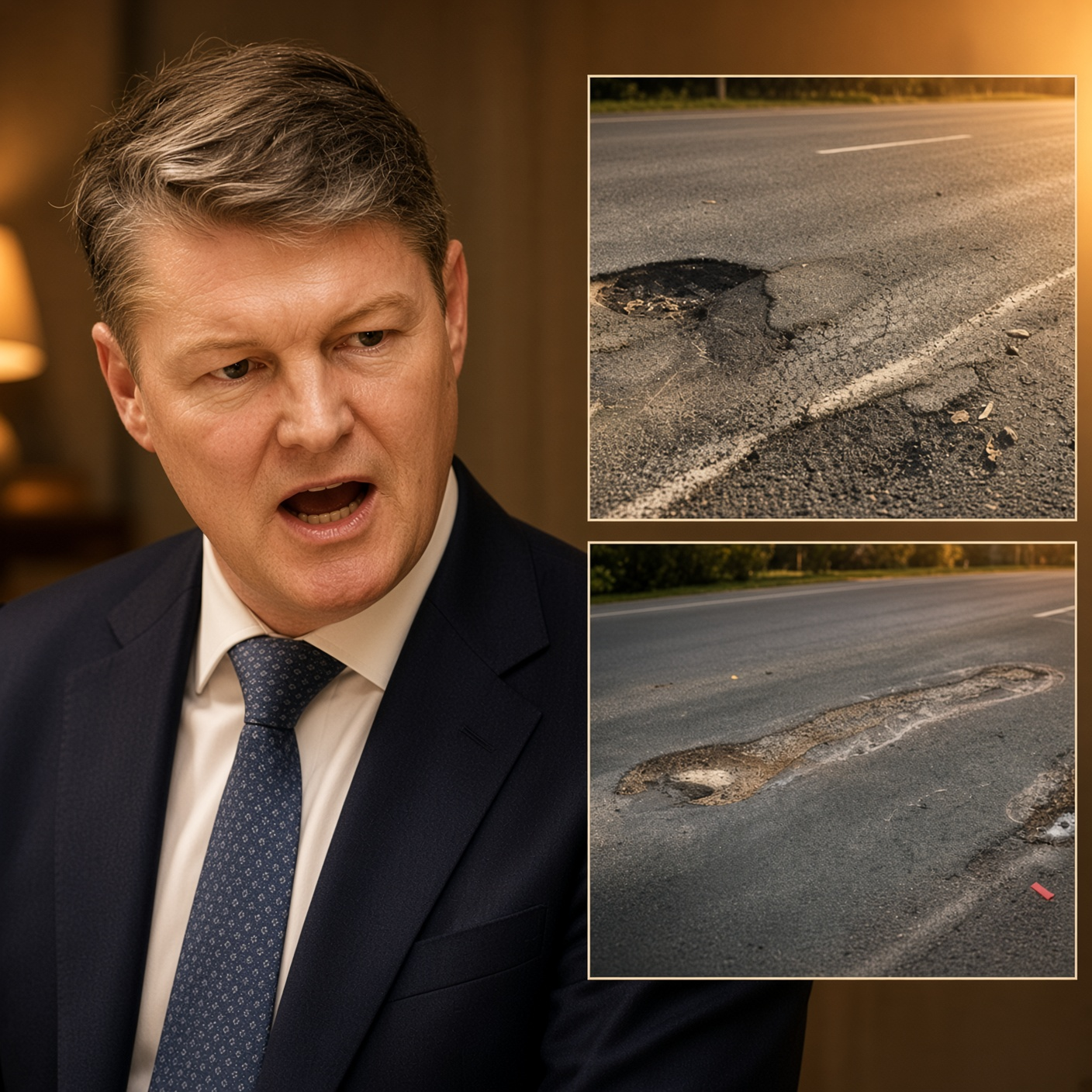
Heavy rainfall, increasing traffic volumes and years of debate over maintenance funding have produced widespread complaints about potholes and deteriorating road surfaces across metropolitan Melbourne and regional Victoria.
Carroll has openly conceded that the condition of the network is not good enough.
Labor announced an additional $352 million for road repairs at the end of August, saying it would double the number of potholes targeted this repair season from 250,000 to 500,000.
That funding came on top of $1 billion for road maintenance included in the 2026–27 Victorian Budget.
The government is now moving beyond maintenance and pothole repairs into major capacity upgrades in politically significant growth corridors.
Melbourne’s south-east is a logical target.
Suburbs through Casey, Cardinia, Greater Dandenong and surrounding areas have experienced sustained residential growth, while major arterial roads carry commuters, freight and commercial traffic towards employment centres and the freeway network.
Hallam Road has already undergone substantial upgrades over previous years.
An earlier project added lanes between Ormond Road and the South Gippsland Highway and upgraded the intersection involving Hallam Road, Evans Road and the highway.
The Hallam Road level crossing was later removed as part of a wider transformation of the Pakenham rail corridor.
The new commitment would continue that expansion rather than begin investment in the corridor from scratch.
Evans Road has a similar history.
The road was reconnected after its level crossing was removed and a new bridge built several years ago, restoring a direct link between Cranbourne West, Lyndhurst and Lynbrook.
Labor now argues further capacity is required as housing and employment continue to expand through the area.
The projects therefore illustrate a broader challenge facing Melbourne.
Governments can build new suburbs relatively quickly compared with the time required to plan, finance and construct major transport infrastructure.
When housing arrives before road capacity, schools, public transport and community services, congestion can become embedded before upgrades are completed.
That problem has become especially visible across outer Melbourne, where long commutes and dependence on cars leave households highly sensitive to the quality of arterial roads.
For Carroll, the road campaign is also part of an attempt to demonstrate a different approach to public spending.
Labor says the latest commitments can be funded partly through savings identified in the Suburban Rail Loop.
In August, the government announced approximately $1 billion in immediate reductions to the estimated cost of SRL East by cutting or modifying parts of the project’s scope.
Those changes included abandoning underground station interchanges at Box Hill and Glen Waverley, dropping a second Clayton station entrance, scaling back some precinct works and removing several pedestrian structures.
The government reduced the stated estimated investment in the first stage to $33.3 billion.
Carroll has also commissioned an independent technical review with a target of finding another $1 billion in savings.
The distinction between those two numbers is significant.
About $1 billion has been identified through changes already announced. The second $1 billion remains a savings target that the technical review is being asked to find.
Labor has increasingly used those SRL savings to explain how it intends to fund more visible road and community infrastructure.
The $590 million south-eastern package follows a separate commitment of another $550 million towards upgrading the Western Freeway between Melton and Caroline Springs.
That project will supplement a $1 billion Commonwealth commitment and widen sections of the freeway to three and four lanes in each direction while upgrading major interchanges.
Taken together, the announcements show the government directing substantial new political attention towards Melbourne’s growth corridors in both the west and south-east.
But Labor is not campaigning on roads uncontested.
Opposition Leader Jess Wilson and the Liberals and Nationals have made the condition of Victoria’s road network one of their central election attacks.
The Coalition has promised $5 billion over four years for road maintenance and reconstruction if elected.
Its plan includes a headline target to eliminate one million potholes, re-establish preventative maintenance programs and create a dedicated Better Roads Victoria division within the Department of Transport and Planning.
The opposition says the state has relied too heavily on reactive patching rather than resurfacing and rebuilding roads before they deteriorate further.
It has also announced a separate $288 million Country Roads and Bridges program, under which each of Victoria’s 48 rural and regional councils would receive $1.5 million annually for four years.
That money would be controlled locally, allowing councils to decide which road and bridge projects were most urgent.
The competing promises have turned road spending into a pre-election bidding contest.
Labor says it is demonstrating that it can repair roads immediately while funding major upgrades without abandoning projects such as the Suburban Rail Loop.
The Coalition argues Labor has allowed the network to deteriorate and is now announcing large packages only because voters are approaching an election.
The underlying maintenance problem predates the current campaign.
Victoria has more than 200,000 kilometres of roads in total, of which about 23,000 kilometres are state-managed roads under the Department of Transport and Planning.
The Victorian Auditor-General’s Office has long warned that allowing road surfaces to deteriorate increases costs over time because badly damaged pavements become more expensive to rehabilitate than roads maintained through early intervention.
A previous VAGO audit found an increasing proportion of the state network was in poor or very poor condition and criticised maintenance practices that were too reactive.
The Auditor-General is again examining whether the department is effectively maintaining the present state-managed network.
Its current audit material notes that the department carried an accumulated impairment of $1.24 billion for roads and bridges at June 30, 2024.
That figure is an accounting impairment rather than an estimate of the amount required to fix every road, but it underlines the scale and value of the assets involved.
Local leaders have also warned that headline pothole targets do not necessarily resolve deeper structural deterioration.
A road can develop repeated potholes because water has penetrated damaged pavement layers beneath the surface. In those circumstances, repeatedly filling the visible hole may provide only temporary relief unless the pavement itself is reconstructed.
That is why both sides of politics are increasingly talking about resurfacing and reconstruction as well as basic patching.
The debate is also about where money is spent.
Regional councils argue their road networks have been neglected, while voters in Melbourne’s growth suburbs say congestion and population expansion have left arterial infrastructure behind demand.
A government attempting to satisfy both groups can quickly face enormous costs.
The state budget adds another constraint.
Victoria carries the highest debt burden of any Australian state by several credit-rating measures, and ratings agencies have warned that unbudgeted election commitments could weaken the state’s financial position if they are not matched by genuine savings.
That makes the source of funding for promises such as the $590 million package politically important.
Carroll’s answer is that his government is reprioritising money already tied to large infrastructure programs rather than simply borrowing without restraint.
The opposition is likely to question whether promised SRL savings are sufficient and whether money announced before the election will ultimately be delivered at the stated cost.
Major road projects frequently take years to move from announcement to construction.
Planning must deal with utilities, land acquisition, environmental requirements, traffic modelling and project design before contracts can be awarded.
Construction costs can also change considerably during that period.
For residents of Hallam, Hampton Park, Cranbourne West, Mordialloc and Braeside, the immediate significance of the latest announcement is therefore a political commitment rather than an overnight improvement to traffic.
The practical benefits would arrive later if Labor is re-elected and the projects proceed through planning into construction.
For the election campaign, however, the effect is immediate.
Roads offer politicians something voters experience every day.
A pothole, an overloaded intersection or a congested arterial is far more tangible to a commuter than a long-term budget projection.
Both major sides now appear convinced that fixing those frustrations can shift votes.
The result is a rapidly escalating contest over who can promise the largest credible road program without losing control of Victoria’s finances.
Labor’s latest answer is another $590 million for Melbourne’s south-east.
Whether voters regard that as a long-overdue investment or an election-year spending surge will be tested when Victoria goes to the polls on November 28.






