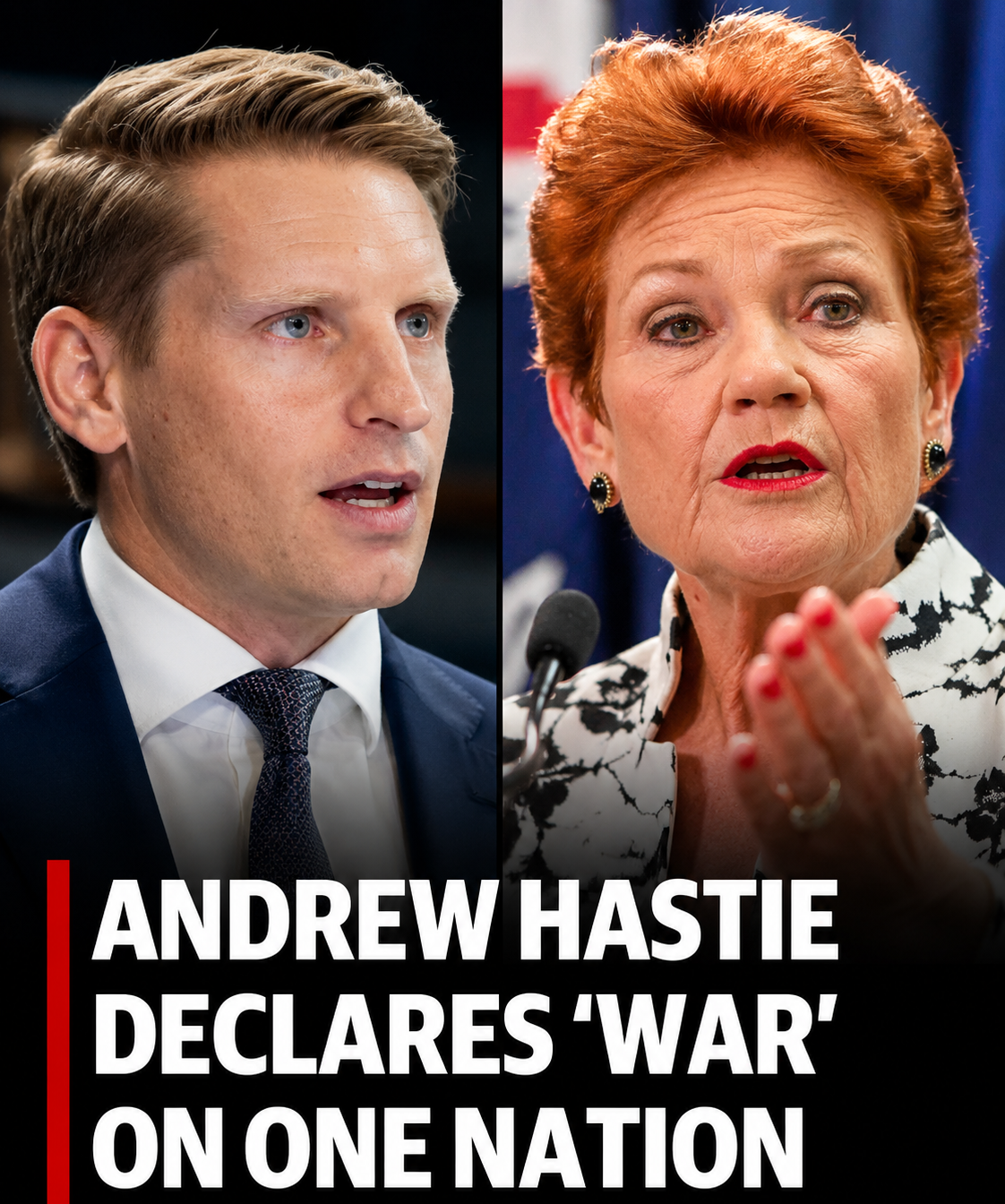
A bitter political confrontation has erupted between senior Liberal frontbencher Andrew Hastie and Pauline Hanson’s One Nation, with the battle over Western Australia’s Canning electorate rapidly escalating into one of the most closely watched contests on the conservative side of Australian politics.
The dispute intensified after One Nation signalled it intended to mount a serious campaign in Canning, prompting Hastie to tell supporters that the conflict had become personal. In a strongly worded message, the former SAS commander declared that One Nation had effectively declared war on him — and that the party would receive the same response in return.
Hastie said the dispute was no longer simply about electoral competition. According to him, members of One Nation had carried out a campaign of personal attacks that extended beyond normal political debate, forcing additional security measures at both his family home and electorate office. He told supporters he would not be intimidated and insisted he would continue defending his seat.
The comments followed statements from senior One Nation figures indicating the party planned to heavily contest Canning at the next federal election. As One Nation’s national polling has improved, the party has increasingly targeted conservative-held electorates, arguing it can attract voters dissatisfied with both Labor and the Coalition.
Hastie also criticised discussion within conservative circles about negotiating preference arrangements with One Nation. He argued that any negotiations should occur only from a position of electoral strength rather than political necessity, warning that conceding ground too early would weaken the Liberal Party’s ability to rebuild after recent electoral setbacks.
Beyond the immediate dispute, Hastie used the opportunity to outline what he believes should be the Coalition’s priorities. He argued the Liberal Party should concentrate on policies covering migration, taxation, energy, national security and economic growth rather than relying on electoral deals with smaller parties.
Pauline Hanson responded by rejecting suggestions that One Nation’s campaign was driven by personal motives. She maintained that the party’s broader objective remains removing the Albanese government from office and expanding One Nation’s parliamentary representation rather than focusing on individual Liberal MPs.
The clash reflects growing competition for conservative voters as One Nation continues to record stronger polling across several parts of Australia. Recent surveys have shown increasing support for the party, placing additional pressure on the Coalition as it attempts to rebuild after its election defeat. That changing political landscape has intensified debate over whether the Liberal Party should compete directly with One Nation or seek greater cooperation on selected issues.
Political analysts note that contests such as Canning are becoming increasingly significant because they illustrate a broader struggle over the future direction of Australia’s conservative movement. While the Coalition remains the principal opposition, One Nation has attempted to position itself as an alternative voice on issues including immigration, energy policy and the cost of living.
For voters in Western Australia, the immediate consequence is likely to be a far more competitive campaign than previously expected. Both parties are preparing substantial local campaigns, with Canning emerging as one of the key battlegrounds to watch during the next federal election.
Whether the dispute ultimately strengthens One Nation or helps the Liberal Party consolidate its support remains uncertain. What is already evident, however, is that competition on the political right has become more intense, with policy differences increasingly accompanied by direct personal and strategic confrontations between senior figures from both parties.






