How Much Freedom Should Australians Have In Managing Their Retirement Savings?
Retirement planning is rarely about the next year.
It is about the next twenty or thirty.
Australians spend decades contributing to superannuation with one objective in mind.
Financial security later in life.
How those savings should be invested, however, remains one of the most debated questions in economic policy.
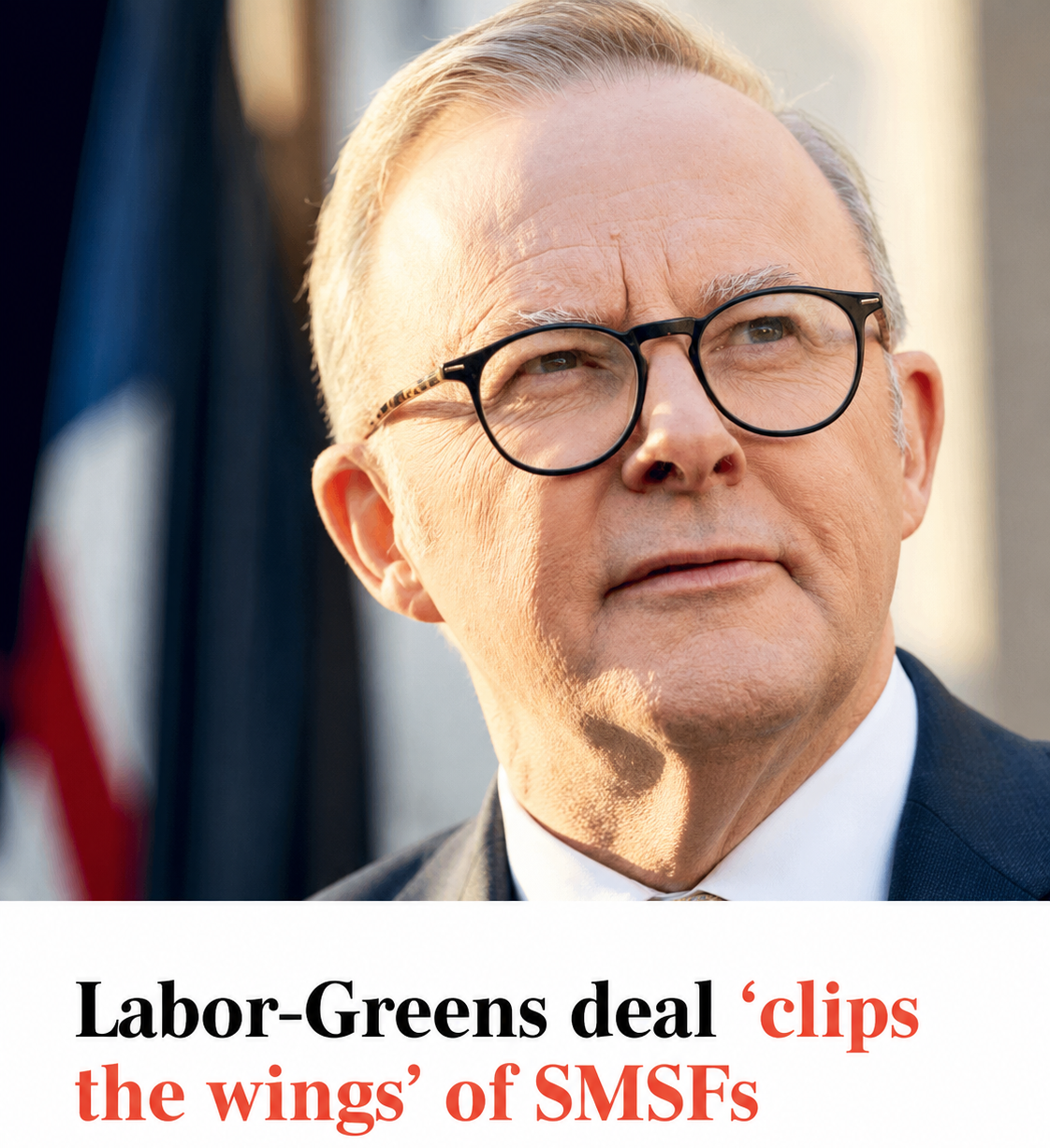
Debate surrounding proposed changes to borrowing arrangements for self-managed superannuation funds has renewed discussion about the balance between investor choice, financial risk and government regulation. While opinions differ on the proposed reforms, the broader issue extends well beyond a single investment strategy.
Self-managed superannuation funds, commonly known as SMSFs, allow Australians to make many of their own investment decisions within the framework established by superannuation law.
Supporters value the flexibility these arrangements provide.
Property.
Shares.
Cash.
Fixed income.
Alternative investments.
Many investors choose SMSFs because they want greater control over how retirement savings are allocated.
Diversification is often central to that strategy.
Financial advisers frequently encourage investors to spread assets across multiple investment classes rather than relying heavily on a single market.
The objective is straightforward.
Reducing overall risk while improving long-term resilience.
Borrowing arrangements have been one method some SMSFs use to acquire investment assets, particularly property.
Supporters argue that leverage, when carefully managed, may expand investment opportunities and help build diversified retirement portfolios over long investment horizons.
Others take a different view.
Borrowing also increases financial risk.
Higher debt magnifies both gains and losses.
Changing interest rates.
Property market fluctuations.
Economic downturns.
Each may have a greater impact when investments are financed through borrowing.
From this perspective, limiting leverage may strengthen the long-term stability of retirement savings.
Governments therefore face a complex policy challenge.
They seek to encourage investment while maintaining confidence in Australia’s retirement income system.
They also consider broader economic objectives, including financial stability and housing market conditions.
Those priorities do not always point toward the same policy outcome.
Investors, meanwhile, often prioritise flexibility.
Retirement planning is highly personal.
Every household has different financial goals.
Different levels of risk tolerance.
Different income expectations.
Different time horizons.
Many believe individuals should retain considerable freedom to design investment strategies that suit their own circumstances, provided appropriate safeguards remain in place.
This broader discussion extends beyond property alone.
It concerns the role governments should play in regulating private investment decisions made within compulsory retirement savings systems.
Too little oversight may increase systemic risks.
Too much regulation may reduce flexibility and individual choice.
Finding the right balance has challenged policymakers for many years.
Internationally, retirement systems adopt a wide variety of approaches.
Some jurisdictions impose tighter investment restrictions.
Others provide greater discretion to individual investors.
Each reflects different priorities regarding risk management, consumer protection and market efficiency.
Ultimately, retirement planning depends upon confidence.
Confidence that savings will grow.
Confidence that investment rules are predictable.
Confidence that policy changes are carefully considered.
Reasonable people may disagree about where regulatory boundaries should be drawn.
Some emphasise protecting the financial system from unnecessary risk.
Others place greater weight on investor autonomy and long-term portfolio flexibility.
Both perspectives seek the same outcome.
A retirement system capable of providing Australians with financial security while remaining resilient through changing economic conditions.
As superannuation continues evolving, that balance between freedom and protection will remain one of the defining questions shaping Australia’s retirement landscape.






