Can Governments Really Spend Less Without Delivering Less?
Every government eventually faces the same challenge.
How do you control spending without upsetting voters?
It sounds simple in theory.
Spend less money.
Reduce waste.
Improve efficiency.
Protect essential services.
Yet in practice, those goals are often much harder to achieve than political slogans suggest.
Every dollar spent by government supports something.
A program.
A service.
A department.
An employee.
Or the systems that keep public institutions running.
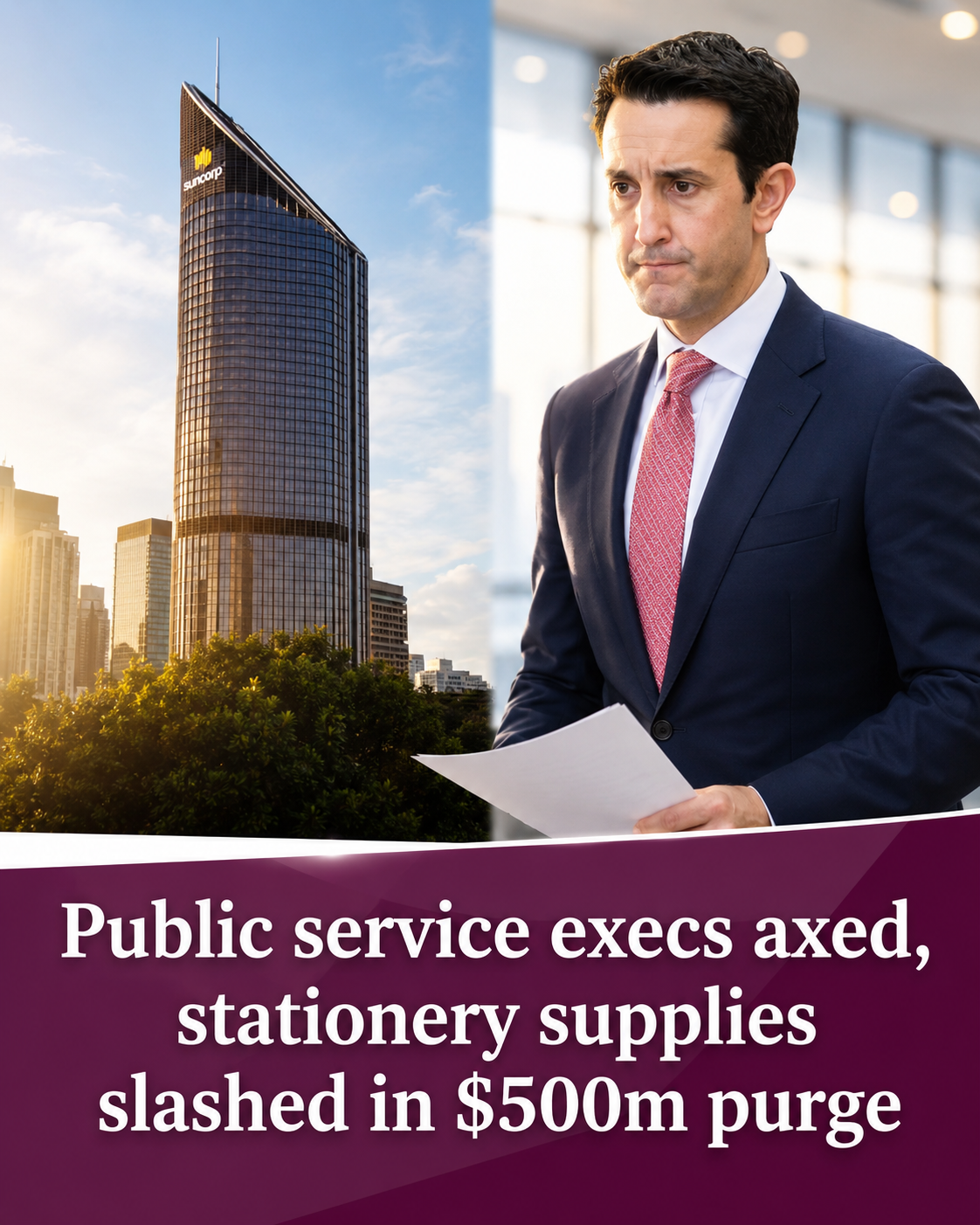
The latest debate comes from Queensland, where public sector agencies are reportedly being asked to reduce spending on items ranging from office space and recruitment costs to stationery and other administrative expenses as part of a broader savings target worth hundreds of millions of dollars.
At first glance, the measures may seem relatively minor.
Fewer highlighters.
Smaller office footprints.
Reduced spending on support services.
But these types of decisions often represent something much larger.
They reflect a broader question confronting governments around the world.
Can public services become significantly more efficient without reducing the quality of outcomes delivered to citizens?
The answer depends on where inefficiencies actually exist.
If genuine waste can be identified, savings may be achieved with little impact on service delivery.
Many governments have successfully modernised systems, reduced duplication and streamlined processes while maintaining performance.
Technology has often played a major role in these improvements.
Digital services can reduce paperwork.
Online transactions can reduce processing costs.
Automation can eliminate repetitive administrative tasks.
From this perspective, efficiency gains appear both desirable and achievable.
Supporters of spending restraint frequently argue that taxpayers expect governments to operate with the same discipline required in private businesses.
They point out that households and companies routinely review costs when economic conditions become more challenging.
Governments, they argue, should be willing to do the same.
Rising debt levels and growing budget pressures have intensified those arguments in recent years.
Across Australia, governments face increasing demands for healthcare, infrastructure, education and social services.
At the same time, taxpayers expect value for money.
Balancing those competing pressures has become one of the most difficult tasks facing modern policymakers.
Critics, however, caution that efficiency and service quality are not always easy to separate.
Administrative systems exist for reasons.
Recruitment supports workforce planning.
Office infrastructure supports collaboration.
Support staff often perform functions that are largely invisible to the public.
Reducing costs in these areas may appear straightforward until unintended consequences begin emerging.
One challenge is that successful administration is often most noticeable when it fails.
When systems operate smoothly, they attract little attention.
When delays occur, vacancies increase or service standards slip, public concern rises quickly.
This creates a dilemma for governments attempting to cut costs.
Visible savings can generate positive headlines.
But any decline in service delivery can create political problems that outweigh those gains.
The debate also reflects a broader shift in how public institutions operate.
Remote work.
Digital communication.
Flexible employment models.
Cloud-based systems.
These changes have prompted many organisations to reconsider traditional office arrangements.
Both public and private sector employers are asking similar questions.
How much office space is truly needed?
How many processes can be automated?
Where can resources be redirected?
These questions are no longer temporary responses to changing circumstances.
They are becoming permanent features of organisational planning.
For governments, the stakes are particularly high because public expectations continue rising.
Citizens want faster services.
More responsive agencies.
Better infrastructure.
Greater transparency.
And improved outcomes.
Delivering all of those objectives while simultaneously reducing costs requires careful management.
There is no universal formula.
Some savings programs succeed.
Others struggle.
The difference often depends on whether reforms focus on eliminating inefficiencies or merely reducing expenditure.
The distinction matters.
Cutting costs and improving efficiency are not necessarily the same thing.
One can reduce spending.
The other can improve performance.
The most successful reforms usually attempt to achieve both.
That is why debates about office supplies and administrative budgets often become surprisingly significant.
They are rarely just about stationery.
They are really about competing visions of government itself.
How large should it be?
How much should it spend?
And what level of service should taxpayers expect in return?
As budget pressures continue building across Australia, those questions are likely to become even more important.
The answers may shape not only future government spending but also public expectations about what efficient government actually looks like.






