Why Events In The Middle East Can Affect The Price You Pay At The Australian Petrol Pump
For many Australians, petrol prices are one of the most visible indicators of economic pressure.
Unlike interest rates or government budgets, fuel costs appear immediately.
Drivers see them every time they pass a service station.
Businesses feel them through transport expenses.
Families notice them in weekly household budgets.
Even small changes can quickly become national talking points.
That is exactly why recent developments involving fuel relief and rising tensions in the Middle East have attracted so much attention.
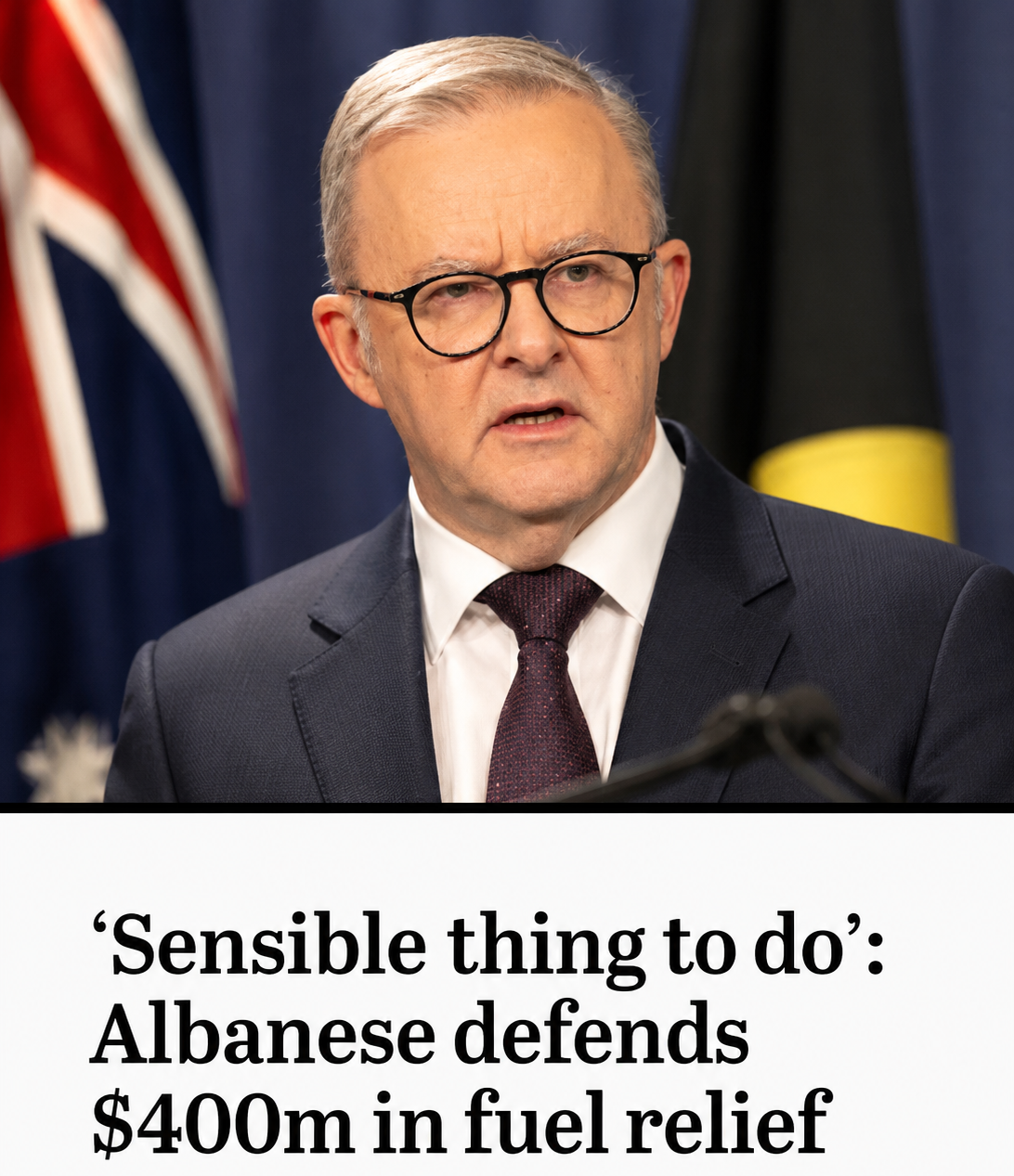
The Albanese Government has defended a fuel relief measure expected to reduce petrol prices by approximately 16 cents per litre from July. The announcement comes at a time when global energy markets are closely monitoring developments in the Middle East, including concerns about shipping routes and oil supplies moving through the Strait of Hormuz.
At first glance, these issues may appear unrelated.
One concerns Australian household budgets.
The other concerns international geopolitics.
In reality, they are deeply connected.
Australia may produce energy domestically, but fuel prices remain heavily influenced by global oil markets.
When uncertainty affects oil-producing regions or major shipping routes, markets often react quickly.
Traders attempt to estimate future supply risks.
Oil prices move.
Fuel wholesalers respond.
Eventually, drivers notice changes at the bowser.
The Strait of Hormuz plays a particularly important role in global energy markets.
A significant portion of the world’s traded oil passes through this narrow waterway connecting the Persian Gulf with international shipping routes.
Whenever concerns emerge about disruptions to traffic through the strait, energy markets pay close attention.
Even the possibility of interruptions can contribute to price volatility.
This is because oil markets are influenced not only by actual supply shortages but also by expectations about future supply conditions.
Investors, refiners and energy companies constantly assess geopolitical developments and adjust their forecasts accordingly.
The result is that events occurring thousands of kilometres from Australia can still affect local fuel prices.
That reality highlights an important feature of the modern economy.
Australia is deeply integrated into global markets.
Energy.
Trade.
Shipping.
Finance.
All are interconnected.
As a result, international developments can influence domestic living costs in ways that are not always immediately obvious.
This helps explain why governments often face pressure to respond when fuel prices rise sharply.
Petrol costs affect far more than private motorists.
Freight companies rely on fuel.
Food distribution relies on fuel.
Construction relies on fuel.
Agriculture relies on fuel.
Many products purchased by consumers ultimately incorporate transport costs somewhere within the supply chain.
When fuel becomes more expensive, those costs can spread throughout the broader economy.
That is one reason fuel prices frequently become part of wider cost-of-living debates.
Supporters of fuel relief measures argue that reducing fuel costs can provide immediate assistance to households and businesses facing inflationary pressures.
Because fuel is purchased regularly, even relatively modest savings can accumulate over time for commuters and transport-dependent industries.
Critics, however, often argue that such measures provide temporary relief without addressing underlying vulnerabilities in global energy markets.
They contend that long-term energy security requires broader solutions involving infrastructure, domestic production, strategic reserves and supply-chain resilience.
Both arguments reflect legitimate concerns.
Short-term affordability matters.
Long-term stability matters as well.
The challenge for policymakers is balancing those priorities.
The current debate also illustrates how closely economic policy and international affairs have become intertwined.
For many Australians, foreign policy can seem distant from everyday life.
Yet events affecting energy supplies, trade routes and global markets often find their way into household budgets remarkably quickly.
A conflict in one region may influence shipping costs.
Shipping costs may influence fuel prices.
Fuel prices may influence inflation.
Inflation may influence interest rates and household spending.
The chain of effects can be surprisingly direct.
As a result, discussions about petrol prices are rarely just about petrol.
They are often conversations about economic resilience, energy security and the extent to which Australia can shield itself from international shocks.
For now, drivers may welcome any reduction in fuel costs.
But the broader question remains.
How can Australia manage future global disruptions while keeping living costs under control?
That challenge is likely to remain at the centre of economic policy debates long after the current tensions fade from the headlines.






