The Growing Debate Over Inheritance, Trusts And Who Should Pay More Tax
Few topics generate stronger reactions than inheritance.
People may disagree about many aspects of taxation, but discussions about what happens to family assets after death often become deeply personal.
For some Australians, inheritance represents a lifetime of hard work being passed to future generations.
For others, it raises questions about fairness, wealth concentration and whether tax rules should treat inherited wealth differently from earned income.
Those competing perspectives have moved to the centre of national debate following recent controversy surrounding trust taxation and estate planning structures.
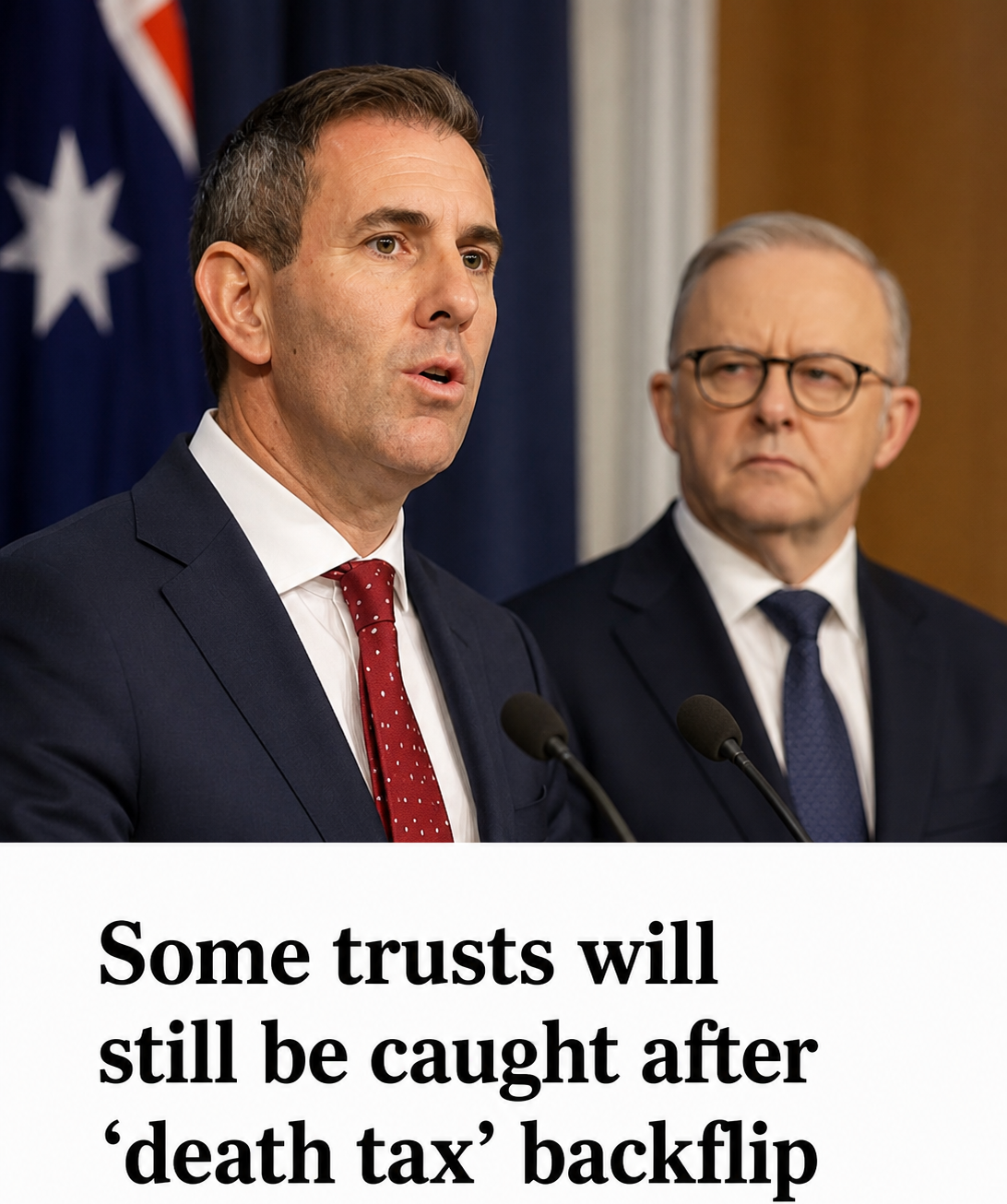
The debate intensified after the Albanese Government proposed broader changes affecting discretionary trusts. Critics argued that some aspects of the proposal would effectively create a new tax burden on certain inheritance arrangements, particularly testamentary discretionary trusts established through wills. Following significant backlash, the government announced exemptions for genuine testamentary trusts, while signalling that other trust structures could still face the new minimum tax framework.
The controversy quickly became about more than a technical tax rule.
It opened a much larger discussion about wealth, inheritance and the role of taxation in modern society.
At the heart of the argument lies a simple but powerful question.
Should wealth transferred between generations be treated differently from wealth earned through work?
Supporters of stronger trust taxation often argue that some trust structures allow high-income families to reduce tax liabilities through income splitting and other legal mechanisms.
They contend that workers earning wages do not enjoy the same flexibility and that the tax system should apply more consistently across different forms of income. Government policy documents supporting the reforms specifically cite concerns about income splitting through discretionary trusts and the growing concentration of trust-held wealth among higher-income households.
Critics view the issue differently.
They argue that many trusts exist for legitimate family reasons rather than tax minimisation.
Trusts can be used to protect vulnerable beneficiaries.
They can help families manage assets after a death.
They can provide safeguards for children, people with disabilities or beneficiaries facing financial risks.
Estate planning specialists have argued that treating these arrangements primarily as tax structures overlooks their broader social purpose.
The disagreement reflects a wider challenge confronting governments around the world.
Most tax systems attempt to balance two objectives.
Raising revenue.
And encouraging productive economic behaviour.
When those objectives conflict, policy becomes controversial.
Inheritance and wealth-transfer rules sit directly at that intersection.
Governments seeking greater tax fairness often face accusations of penalising success.
Governments seeking to protect inherited wealth often face criticism for entrenching inequality.
There is rarely a solution that satisfies everyone.
Australia currently does not impose a traditional inheritance tax or estate duty.
That fact has become a major part of the public discussion.
Many critics of the proposed trust changes argued that even if the reforms were not technically a death tax, they could still increase tax liabilities connected to inherited assets and estate planning arrangements. The phrase “death tax” became a powerful political slogan throughout the debate despite the government’s repeated rejection of that description.
The government’s subsequent amendments suggest policymakers recognised the strength of community concerns.
Exemptions for genuine testamentary trusts were introduced after industry groups, financial advisers and legal experts warned that vulnerable families could face unintended consequences.
Yet the broader trust reform agenda remains alive.
The government continues arguing that discretionary trusts have expanded significantly over recent decades and now play an increasingly important role in Australia’s tax system. Treasury documents indicate that more than one million trusts operate across Australia, with discretionary trusts accounting for the overwhelming majority.
This leaves policymakers facing a difficult task.
How do they distinguish between trusts used primarily for succession planning and those used primarily for tax advantages?
How do they improve fairness without creating unintended harm?
How do they modernise tax rules without undermining confidence in long-term estate planning?
Those questions have no easy answers.
They are likely to remain central to economic and political debates for years to come.
The argument also reflects broader concerns about wealth inequality, housing affordability and intergenerational opportunity.
As property values and asset prices have increased over recent decades, inherited wealth has become increasingly important in determining financial outcomes for many families.
That reality places additional pressure on governments to explain how tax rules should apply to wealth transfers.
Ultimately, the dispute over trusts is not simply about legal structures.
It is about competing visions of fairness.
One vision prioritises the right of families to pass assets to future generations with minimal interference.
Another emphasises the need for tax systems to limit advantages that may not be available to ordinary wage earners.
The challenge for policymakers is finding a balance between those competing priorities.
Recent events demonstrate just how difficult that balance can be.
A proposal intended as tax reform rapidly evolved into a national conversation about inheritance, family wealth and the future direction of Australia’s tax system.
And judging by the reaction it generated, that conversation is far from over.






