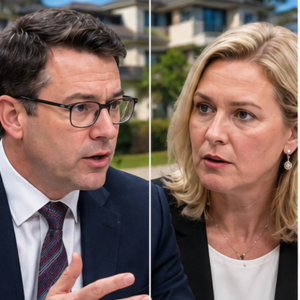
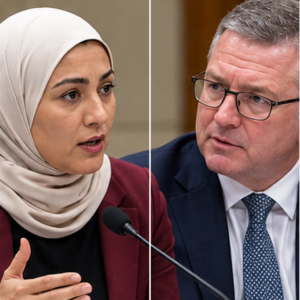
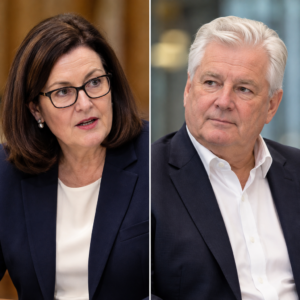
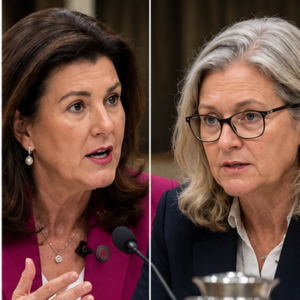
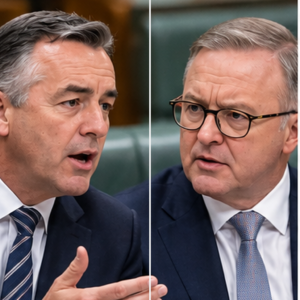
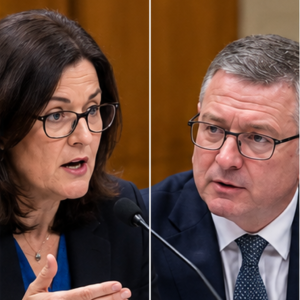
Liberal deputy leader Jane Hume has firmly ruled out any prospect of the Liberal Party entering a governing coalition with Pauline Hanson’s One Nation, insisting the Coalition’s only governing partner remains the National Party despite renewed speculation about Australia’s political landscape.
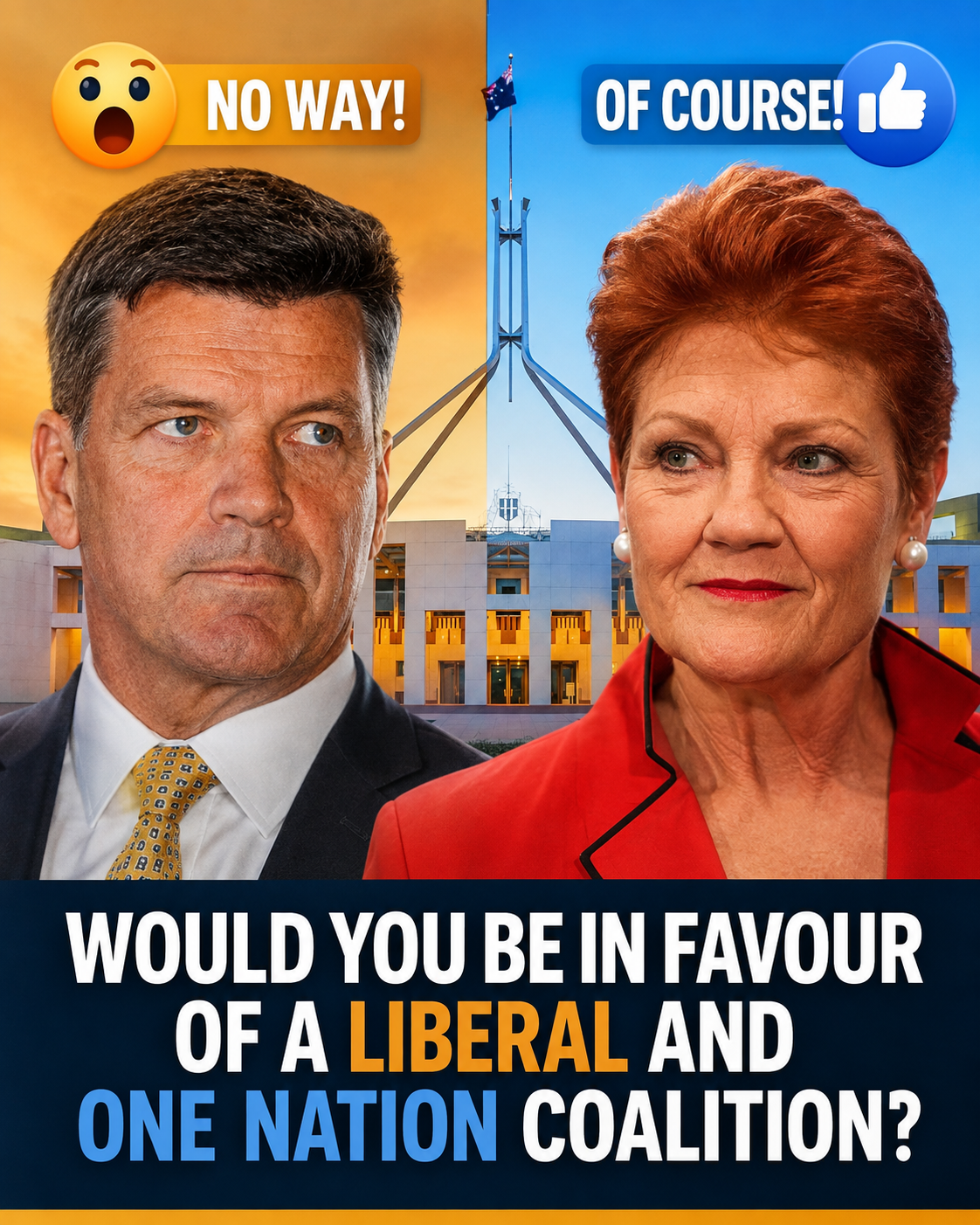
Hume made the comments during an appearance on ABC Insiders, where she repeatedly dismissed suggestions that the Liberal Party could one day govern alongside One Nation.
“No, no, we will not be governing in coalition with One Nation,” Hume said.
“We are not forming a coalition with One Nation. I think we couldn’t be any clearer than that.”
The Deputy Liberal Leader stressed that the Liberal Party already has an established coalition arrangement with the Nationals, describing the partnership as one that has underpinned Coalition governments for approximately eight decades.
“We are already in coalition,” she said.
“We plan to govern as a Liberal-National coalition.”
Her remarks came after several senior Coalition figures appeared less categorical when discussing hypothetical post-election scenarios.
Earlier in the week, Liberal frontbencher Andrew Bragg said any discussion about future coalition arrangements would depend on the numbers produced by voters after the next federal election.
When later pressed on whether he was leaving the door open to a possible arrangement with One Nation, Bragg replied that discussions would occur “if that’s what the numbers were”, while emphasising that no decisions had been made.
Former minister Dan Tehan also declined to completely rule out accepting parliamentary support from One Nation in the event of a hung parliament.
Asked whether he would automatically reject such support, Tehan responded that political parties would first need to see the composition of the next Parliament before determining how government could be formed.
Those comments fuelled renewed public discussion about the Coalition’s relationship with One Nation, particularly as recent opinion polling has suggested growing support for Pauline Hanson’s party among conservative voters dissatisfied with both major parties.
Some recent polling has indicated One Nation has improved its national vote, although polling results do not necessarily predict election outcomes.
Hume nevertheless sought to shut down speculation.
She described repeated questions about governing arrangements as hypothetical because the next federal election remains some time away.
“There isn’t an election for at least 18 months,” she said, adding that the Coalition’s objective remained to secure government in its own right rather than rely on post-election negotiations.
“Our intention is to win outright.”
Although Hume rejected a formal coalition, she acknowledged that minority governments in Australia have historically relied on support from a variety of crossbench parties and independent members.
She did not speculate on any future parliamentary negotiations, instead reiterating that the Coalition’s campaign strategy is focused on presenting what she described as a credible team and policy platform capable of winning a majority.
The debate comes amid increasing attention on One Nation’s electoral ambitions.
The party has expanded candidate recruitment across several states, recently unveiling Warren Pickering as its Victorian leader while announcing a substantial list of candidates for the November Victorian election.
One Nation has also continued building organisational structures in preparation for future state and federal contests.
For Pauline Hanson, discussion surrounding potential coalition arrangements has often been secondary to the party’s broader political objectives.
Hanson has previously said One Nation’s priority is to maximise its own representation rather than actively pursue formal coalition negotiations, while indicating the party would consider proposals if future parliamentary arithmetic required discussions.
The issue also reflects broader strategic questions confronting the Liberal Party following recent electoral setbacks.
Since Angus Taylor became Opposition Leader earlier this year, senior Coalition figures have emphasised rebuilding support among voters who have shifted towards minor conservative parties.
Taylor has argued that the Liberal Party must restore confidence among those considering One Nation while simultaneously insisting the Coalition is “not seeking to be One Nation light”.
Political analysts note that Australia’s preferential voting system frequently requires major parties to negotiate preference arrangements with smaller parties during election campaigns.
Preference agreements, however, are distinct from formal governing coalitions.
While parties may exchange preferences in particular electorates, a coalition involves an ongoing agreement to govern together through shared cabinet responsibility and coordinated parliamentary leadership.
That distinction became central to Hume’s remarks.
She repeatedly emphasised that any discussion about future preference flows should not be interpreted as evidence that the Liberal Party intends to replace or expand its long-standing partnership with the Nationals.
Recent public debate has nevertheless highlighted differing tones among Coalition figures when responding to hypothetical questions about One Nation.
Some have categorically rejected formal coalition arrangements, while others have focused on the practical reality that minority governments sometimes require parliamentary support from parties outside government.
Those nuances have fuelled continuing media speculation despite Hume’s unequivocal rejection of a formal coalition.
The discussion also reflects the increasingly fragmented nature of Australian politics.
Support for major parties has declined over recent decades as voters have increasingly backed minor parties and independents, making the possibility of minority parliaments more common than in previous generations.
That environment has naturally increased interest in how governments could be formed should no major grouping secure an outright majority.
For now, however, the Liberal Party’s official position remains unchanged.
Jane Hume’s remarks leave little doubt that the Coalition intends to contest the next federal election as the long-established Liberal–National partnership and is not planning to govern alongside One Nation.
Whether Australia’s electoral landscape ultimately produces circumstances requiring broader parliamentary negotiations remains a question that will only be answered after voters cast their ballots.