For decades, conventional wisdom has suggested that Australia was becoming an increasingly secular nation. Church attendance appeared to be declining, census data showed growing numbers of people identifying as having “no religion”, and many commentators predicted organised religion would continue losing influence in public life.
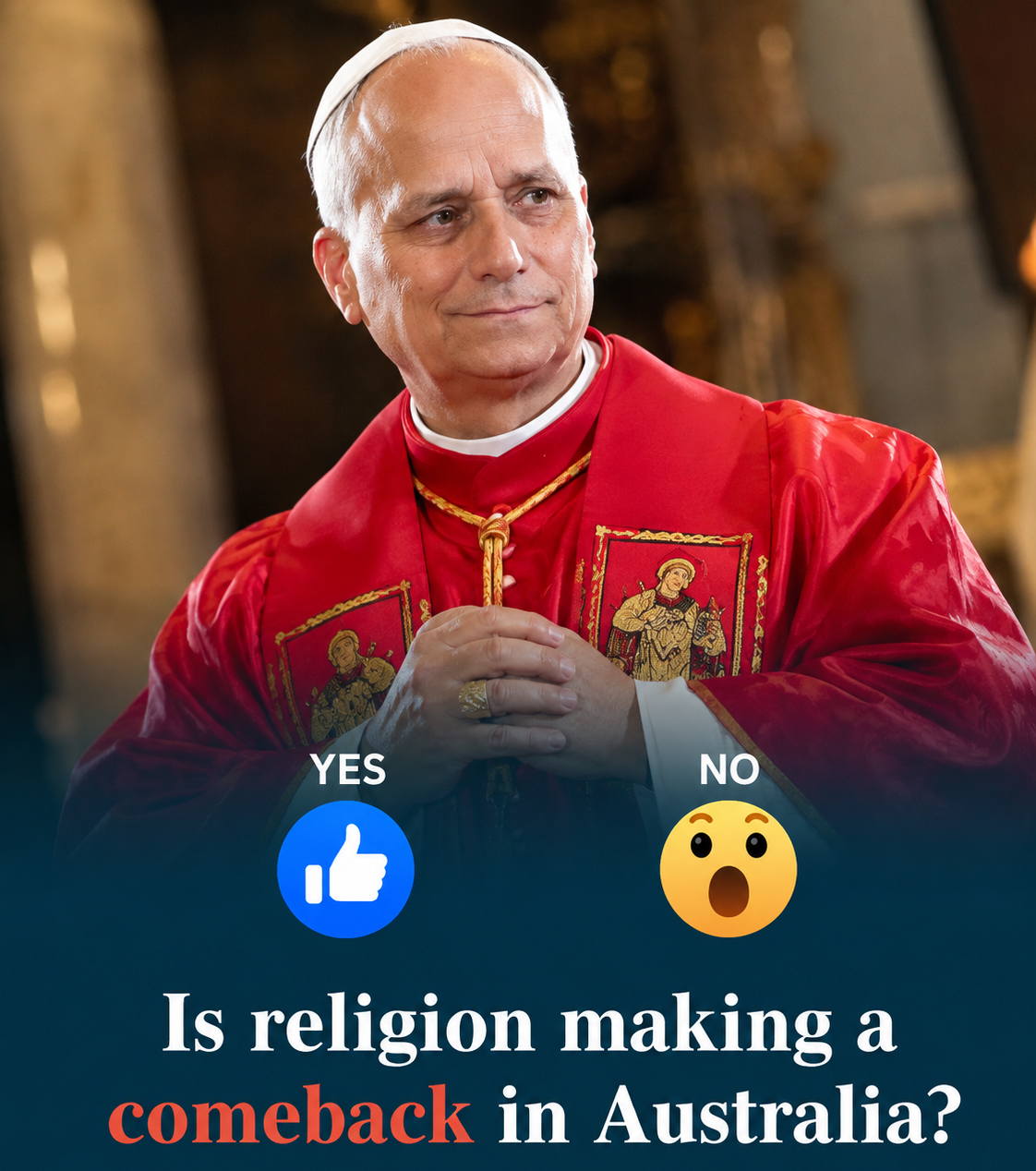
A new opinion article, however, argues that those assumptions are increasingly being challenged.
Writing in a commentary piece titled Bigger than Footy: The Unstoppable Revival of Faith, former Australian Catholic University vice-chancellor Greg Craven contends that religion is enjoying an unexpected resurgence in Australia and across much of the Western world. According to the article, evidence ranging from growing church participation to increasing religious interest among younger generations suggests faith may be proving far more resilient than many observers expected.
The commentary argues that recent developments cannot be explained simply by nostalgia or isolated local events.
Instead, Craven suggests Australia is participating in what he describes as a broader international revival affecting Christianity in particular, with examples drawn from Europe, North America and other Western democracies.
Among the examples highlighted are reports of growing Catholic participation, increasing numbers entering religious instruction and major public religious gatherings attracting exceptionally large crowds.
One of the article’s central arguments is that modern societies have become increasingly materialistic.
According to the author, economic success, consumerism and technological progress have delivered greater prosperity but have not necessarily answered deeper questions about meaning, purpose or mortality.
He argues that many people continue searching for spiritual answers despite living in societies often characterised by secular values.
In Craven’s view, this growing spiritual hunger helps explain why organised religion continues attracting new followers even after years of predictions that it would steadily decline.
The commentary also argues that religion provides a moral framework many people believe cannot easily be replaced by purely secular philosophies.
According to the author, questions surrounding good and evil, justice, forgiveness and human dignity often draw individuals back toward religious traditions during periods of uncertainty and rapid social change.
He suggests that developments such as artificial intelligence, geopolitical instability, economic insecurity and social fragmentation have encouraged renewed interest in spiritual belief among some Australians.
The article further contends that similar trends are becoming visible internationally.
Craven points to reports of growing participation within Christian communities across several European countries, while also noting renewed religious engagement among some Jewish communities following rising concerns about antisemitism.
These examples are presented as evidence that the renewed interest in religion extends beyond Australia alone.
However, the commentary represents one interpretation of broader social trends.
Researchers studying religion caution that measuring a genuine religious revival is complex.
While some churches report increased attendance, baptisms or enquiries about faith, nationwide survey data often presents a more mixed picture, with long-term patterns differing across denominations, regions and age groups.
Australia’s most recent Census showed that the proportion of Australians identifying with Christianity has declined over several decades, while the number selecting “No Religion” has continued to increase.
At the same time, sociologists note that formal religious affiliation does not necessarily capture broader spiritual beliefs, with many people describing themselves as spiritual despite not regularly attending religious services.
Some scholars therefore distinguish between declining institutional participation and continuing interest in spirituality.
That distinction has become an important area of contemporary research into religion in Western societies.
Others argue that public discussion about religion has itself changed.
Rather than viewing faith primarily as a private matter, issues relating to religion increasingly intersect with debates over education, ethics, freedom of speech, multiculturalism and national identity.
Those broader discussions have contributed to renewed public attention surrounding the role religion continues to play within Australian society.
The commentary also draws a cultural comparison reflected in its headline, suggesting that major religious gatherings are now attracting audiences comparable to—or exceeding—some of Australia’s largest sporting events.
The comparison is intended as a rhetorical illustration rather than a formal statistical analysis, highlighting the author’s argument that religion remains a powerful social force despite assumptions about secularisation.
Whether Australia is genuinely experiencing a sustained religious revival remains the subject of ongoing academic debate.
Some researchers point to encouraging signs within particular churches and demographic groups, while others emphasise that broader population trends still indicate declining formal religious affiliation over the long term.
Many scholars therefore argue that it is too early to conclude that a nationwide revival has definitively occurred, even if signs of increased spiritual curiosity are emerging.
What appears less disputed is that questions of faith, meaning and community are once again receiving greater public attention than many commentators expected only a few years ago.
Whether that renewed interest ultimately produces lasting changes in religious participation will likely become clearer through future census results, academic research and longer-term patterns of community engagement.
For now, Craven’s commentary has added fresh momentum to an already active debate about religion’s place in modern Australia.
Supporters argue the article highlights evidence that has too often been overlooked by secular commentators.
Critics respond that anecdotal examples should not be confused with comprehensive demographic trends.
Either way, the discussion reflects a broader question confronting many Western societies: whether faith is gradually fading from public life—or quietly finding new ways to return.