A New South Wales Police undercover operation targeting alleged illegal firearms trafficking has resulted in the arrest of a western Sydney man accused of selling a loaded semi-automatic handgun for A$25,000 during what investigators say was a carefully planned covert operation.
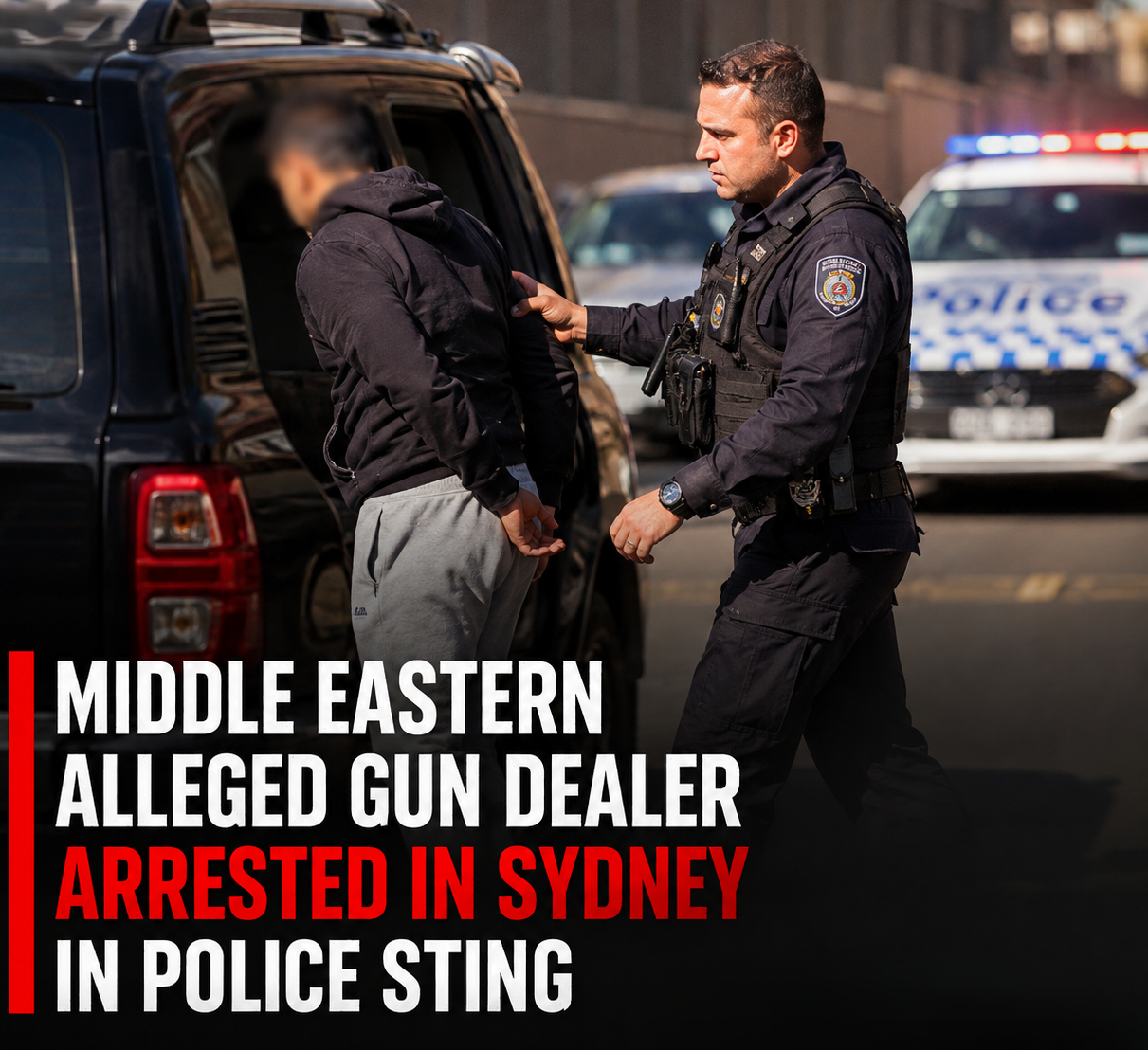
Issam Ajaj, 31, has been charged with multiple firearms, ammunition and drug offences after detectives alleged he supplied a prohibited handgun to a police witness during an undercover sting conducted in Sydney’s south-west.
According to court documents, detectives from Strike Force Dameer—established under Taskforce Falcon to investigate illegal firearms trafficking—had been investigating Ajaj since February 2026.
On 8 May, a senior police officer authorised a controlled operation that allowed an undercover police witness to begin communicating with the accused through the encrypted messaging application Threema, where investigators allege Ajaj used the online alias “The Juice“.
Police allege the two discussed the sale of a compact Colt 1911 pistol before eventually agreeing on a purchase price of A$25,000.
Investigators claim the pair arranged to meet on 15 May at Weir Crescent in Lurnea, approximately 600 metres from Ajaj’s residence.
According to police, surveillance officers observed Ajaj leaving his home carrying a backpack before walking through nearby streets and a laneway to the agreed meeting point.
Once inside the vehicle, prosecutors allege the undercover witness handed Ajaj A$25,000 in pre-recorded cash.
Court documents state the firearm was not carried directly into the vehicle. Instead, investigators allege Ajaj directed the buyer towards a concealed package left in a nearby laneway.
The package was allegedly hidden inside a plastic bag containing a Red Bull cardboard box wrapped in microfibre cloth.
Police say the box contained a loaded Colt 1911 .45 calibre semi-automatic pistol fitted with a 10-round magazine. Investigators further allege Ajaj later sent a message advising the buyer that the first cartridge inside the firearm was a training or dummy round.
Following forensic examination, NSW Police allege the weapon was a prohibited operational self-loading pistol under Australian firearms legislation.
Several months after the alleged transaction, officers from the Raptor Squad and Highway Patrol stopped Ajaj while he was driving in western Sydney.
He was arrested and transported to Liverpool Police Station before police executed search warrants at his home and other associated locations.
According to investigators, officers seized two mobile phones and cash from his vehicle before locating additional evidence during searches of the residence.
Police allege they discovered a suspected encrypted Google Pixel phone, approximately A$5,000 in cash, 548 grams of cocaine with an estimated street value exceeding A$190,000, and 68 rounds of ammunition concealed inside a lawn mower catcher in a backyard shed.
Ajaj has subsequently been charged with numerous offences, including allegedly supplying a prohibited firearm while subject to a Firearms Prohibition Order, possessing ammunition, supplying a commercial quantity of a prohibited drug, dealing with the proceeds of crime and exposing a child to drugs.
Police allege the accused was already prohibited from possessing firearms at the time of the alleged handgun sale.
During a bail hearing in Liverpool Local Court, prosecutors opposed Ajaj’s release, arguing the seriousness of the alleged offences, the quantity of drugs allegedly seized and the risks associated with illegal firearms trafficking justified continued detention.
The magistrate formally refused bail.
Ajaj remains in custody and is scheduled to next appear before Campbelltown Local Court for further proceedings.
The allegations form part of broader efforts by NSW Police to disrupt the illegal firearms market through Taskforce Falcon, a long-running initiative established to investigate organised criminal groups involved in firearm trafficking across the state.
Authorities have repeatedly warned that illicit firearms continue to present a significant threat to community safety because many weapons entering the black market are ultimately linked to organised crime, drug trafficking and violent offending.
Police say controlled operations involving undercover officers and authorised civilian witnesses remain among the most effective investigative techniques available when targeting sophisticated criminal networks involved in illegal firearm supply.
Such operations are conducted under strict legislative controls requiring senior police approval and ongoing oversight.
The alleged transaction described in the court documents forms part of that investigative framework.
Australian firearms laws are among the strictest in the world.
Possession, supply or trafficking of prohibited self-loading handguns without lawful authority can attract lengthy prison sentences if proven in court.
Separate offences also apply where prohibited weapons are supplied while a person is already subject to a Firearms Prohibition Order.
Police have consistently argued that disrupting illegal firearm supply remains one of the most effective methods of preventing future violent crime.
The investigation also highlights the growing role encrypted communication platforms play in contemporary organised crime investigations.
Law enforcement agencies increasingly rely on covert surveillance, controlled operations and digital forensic analysis when investigating suspected firearms and drug trafficking networks using encrypted messaging services.
At this stage, however, the allegations against Ajaj remain untested before the courts.
Under Australian criminal law, he is presumed innocent unless and until the charges are proven beyond reasonable doubt.
The prosecution will now be required to present its evidence through the judicial process, while the defence will have the opportunity to challenge the allegations in court.
As proceedings continue, the case is expected to remain under close attention because it combines allegations involving illegal firearms, organised crime, commercial drug supply and the use of an authorised undercover police operation.