Several of Australia’s leading swimmers have publicly thanked mining billionaire Gina Rinehart after receiving substantial performance bonuses following the Commonwealth Games in Glasgow, despite reports that Commonwealth Games Australia had advised athletes against making public expressions of gratitude on social media.
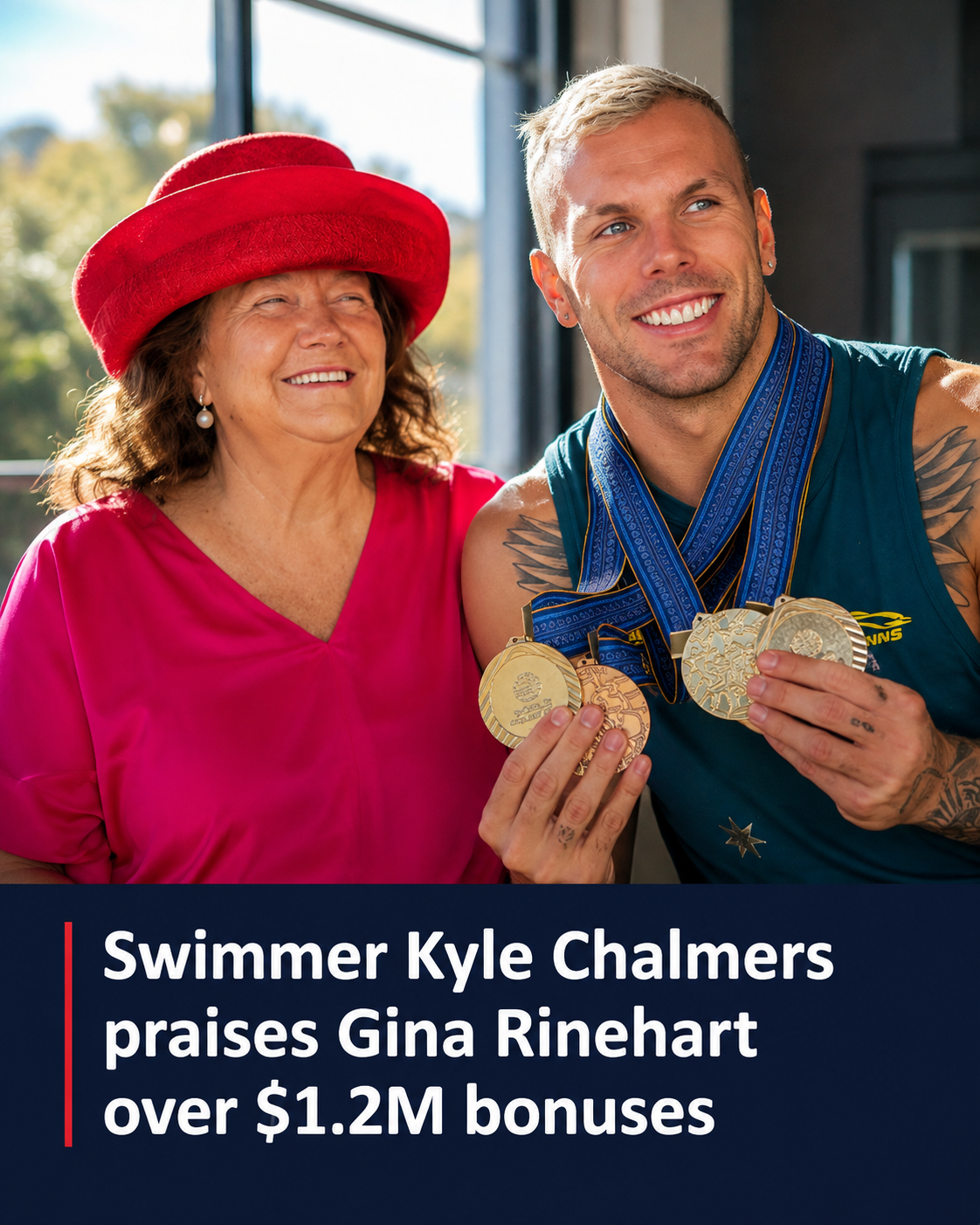
The public messages have reignited discussion about the growing role of private philanthropy in elite Australian sport, with Olympic champion Kyle Chalmers among the athletes openly acknowledging the significance of Rinehart’s long-term financial support.
Rinehart, executive chair of Hancock Prospecting and widely regarded as Australia’s wealthiest individual, awarded more than A$1.27 million in bonus payments to members of the Australian swimming team following their outstanding performances at the Commonwealth Games. The incentive payments recognised medal-winning achievements across individual and relay events and continued a sponsorship relationship that has extended across multiple Olympic and Commonwealth Games cycles.
Despite reports that Commonwealth Games Australia had encouraged athletes not to post public thank-you messages acknowledging the bonuses, several swimmers chose to do so anyway.
Kyle Chalmers was among the highest-profile athletes to publicly express his appreciation.
The Olympic gold medallist said Rinehart’s financial backing had played an important role in allowing him to continue competing at the highest level.
“Without Gina’s support, I genuinely don’t know whether I would still be swimming today,” Chalmers said, explaining that sponsorship assistance had helped reduce financial pressures associated with elite competition and enabled him to remain focused on international success.
Other Australian swimmers also posted messages thanking Rinehart, praising her ongoing commitment to Australian sport and acknowledging the substantial contribution she has made to athlete development over many years.
The public tributes contrasted with reports that Commonwealth Games Australia had preferred athletes avoid publicly highlighting the payments.
The organisation has not suggested athletes were prohibited from expressing gratitude, but the reported advice has nevertheless generated debate about how sporting bodies should manage relationships between athletes and major private benefactors.
Rinehart has become one of Australia’s most significant private supporters of high-performance sport.
Through Hancock Prospecting, she has invested tens of millions of dollars across numerous sporting organisations, including Swimming Australia, Rowing Australia, Volleyball Australia, Artistic Swimming Australia and other elite programs.
Her funding has helped finance athlete scholarships, international competition, coaching, sports science and high-performance development programs.
Many elite athletes have repeatedly acknowledged that private sponsorship plays an increasingly important role in Australia’s sporting success.
While Olympic and Commonwealth athletes receive support through government-funded programs and national sporting organisations, many competitors continue to meet significant personal expenses associated with training, travel, equipment and international competition.
For athletes outside the highest commercial profile sports, sponsorship arrangements often determine whether they can continue competing professionally.
Chalmers’ comments reflected that reality.
The South Australian swimmer, one of Australia’s most decorated athletes, indicated that long-term financial certainty had enabled him to focus on training and recovery rather than the ongoing challenge of securing sponsorship.
His remarks resonated with many current and former athletes who have previously spoken about the financial pressures involved in representing Australia at the highest level.
The discussion has also highlighted the increasingly important relationship between philanthropy and elite sport.
Australia’s high-performance sporting system combines public funding, commercial sponsorship and private philanthropy to support athletes preparing for Olympic Games, Commonwealth Games and world championships.
Private donors frequently provide funding beyond normal government grants, allowing sporting organisations to expand coaching programs, invest in technology and reward exceptional performances.
Supporters argue that philanthropic investment has helped Australia maintain its international competitiveness despite increasing global competition and rising costs associated with elite sport.
Critics, however, caution that heavy reliance on individual benefactors may create long-term funding challenges if those relationships change.
They argue that sustainable public investment remains essential to ensuring Australia’s sporting success does not depend excessively on a small number of wealthy private supporters.
The latest controversy also reflects broader discussion about governance within Australian sport.
Questions have been raised about whether sporting organisations should influence how athletes publicly acknowledge sponsors who provide significant financial assistance.
Some observers argue athletes should remain free to thank individuals who directly contribute to their careers, provided sponsorship arrangements comply with organisational policies and contractual obligations.
Others suggest governing bodies must carefully balance commercial relationships, existing sponsorship agreements and organisational neutrality when advising athletes about public communications.
Neither the public expressions of gratitude nor the reported internal advice affect the substantial contribution Rinehart has made to Australian swimming over many years.
Her financial backing has coincided with one of the most successful periods in Australian swimming history, during which national teams have consistently ranked among the world’s leading performers at Olympic Games, World Championships and Commonwealth Games.
The Glasgow Commonwealth Games continued that tradition.
Australian swimmers delivered another dominant campaign, finishing among the leading nations in the pool and securing numerous gold medals across freestyle, backstroke, butterfly, breaststroke and relay events.
The bonus payments announced afterwards recognised those performances and rewarded athletes for their achievements on the international stage.
For Rinehart, whose philanthropic support extends beyond swimming into several Olympic sports, the payments formed part of a broader philosophy of rewarding excellence and encouraging future success.
For the athletes, the bonuses represented not only financial assistance but also public recognition of years of training, sacrifice and international competition.
The willingness of swimmers such as Kyle Chalmers to publicly acknowledge that support demonstrates the importance many athletes place on private sponsorship in sustaining elite sporting careers.
As Australia prepares for future international competitions, including the lead-up to the Brisbane 2032 Olympic Games, debates about the balance between government funding, commercial sponsorship and private philanthropy are likely to become increasingly prominent.
Whatever the outcome of those discussions, the latest episode has illustrated one point clearly: many of Australia’s most successful swimmers believe Gina Rinehart’s contribution extends well beyond financial bonuses, helping provide the stability required to pursue success at the highest levels of world sport.