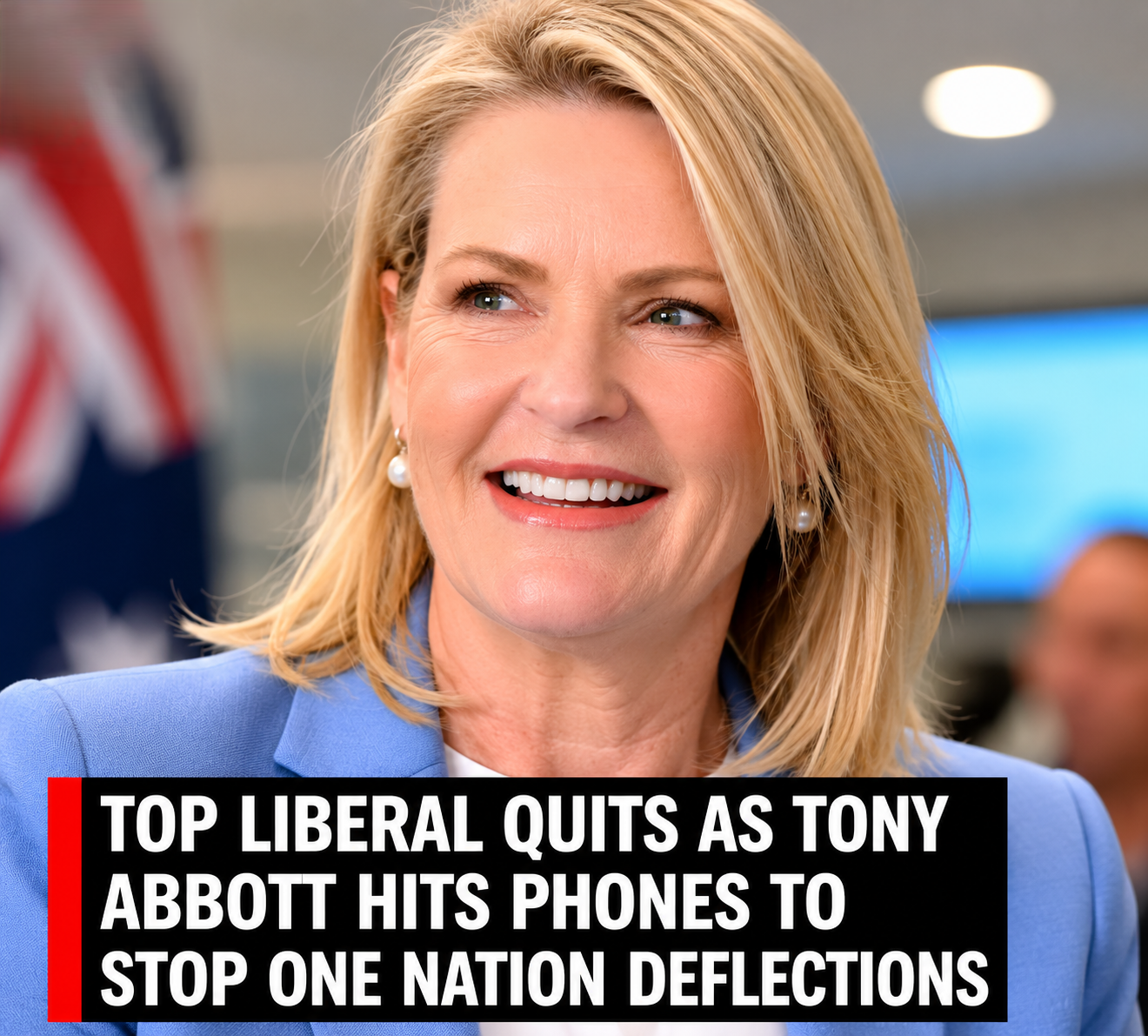
A senior Liberal figure has reportedly quit the party after attending a Pauline Hanson event in Melbourne, adding to growing speculation that One Nation’s recent momentum is beginning to reshape Australia’s conservative political landscape.
The development comes amid reports that former prime minister Tony Abbott has been making calls to party members and supporters in an effort to prevent further defections to Pauline Hanson’s party.
Whether the reports signal the beginning of a broader political shift remains unclear, but they have intensified discussion about the future of conservative politics in Australia.
For years, the Coalition largely viewed One Nation as a competitor operating on the edges of mainstream politics.
Today, however, the conversation appears increasingly different.
As cost-of-living concerns, migration debates, housing affordability pressures and dissatisfaction with major parties continue to dominate public discussion, minor parties have found new opportunities to expand their support.
One Nation has been one of the biggest beneficiaries of that environment.
Under Pauline Hanson, the party has spent years focusing on issues such as immigration, national identity, government spending and concerns about political elites.
Supporters argue those messages are increasingly resonating with Australians who feel disconnected from the major parties.
Critics argue the party’s solutions are often simplistic and rely heavily on voter frustration rather than detailed policy alternatives.
Regardless of where voters stand, One Nation’s growing visibility has become difficult to ignore.
The reported departure of a senior Liberal figure has therefore attracted attention not simply because of one individual’s decision, but because of what it may represent.
Political parties pay close attention to membership trends.
While elections ultimately determine power, party memberships often provide an early indication of where political energy is building.
If members begin moving between parties, strategists often view it as a signal worth monitoring.
The reported involvement of Tony Abbott highlights the seriousness with which some conservatives appear to be viewing the situation.
Abbott remains an influential figure among many traditional Liberal supporters and continues to hold significant standing within conservative circles.
His reported efforts to maintain party unity suggest concerns that divisions on the right could weaken the Coalition’s ability to compete effectively against Labor.
This challenge is not unique to Australia.
Across many Western democracies, established centre-right parties have faced growing competition from smaller movements seeking to attract voters dissatisfied with traditional political structures.
In some countries those movements have remained minor players.
In others, they have significantly reshaped political systems.
The Australian experience remains different in many respects, but similar pressures are becoming increasingly visible.
Many voters who once reliably supported major parties are now more willing to consider alternatives.
That shift has made political loyalty less predictable and elections more competitive.
Housing affordability remains a major concern.
Migration continues to generate intense debate.
Cost-of-living pressures are still affecting households across the country.
These issues have created fertile ground for political movements promising change.
For the Coalition, the challenge is maintaining support among conservative voters while continuing to appeal to the broader electorate.
For One Nation, the challenge is converting increased attention into long-term political influence and electoral success.
The coming years may determine whether the current movement of members and supporters represents a temporary reaction to current issues or the beginning of a deeper political realignment.
Either way, the reported resignation and Abbott’s intervention have become fresh reminders that Australia’s political landscape remains highly fluid.
As voters continue to reassess their loyalties and priorities, the battle for conservative support may become one of the defining contests of the next political cycle.






