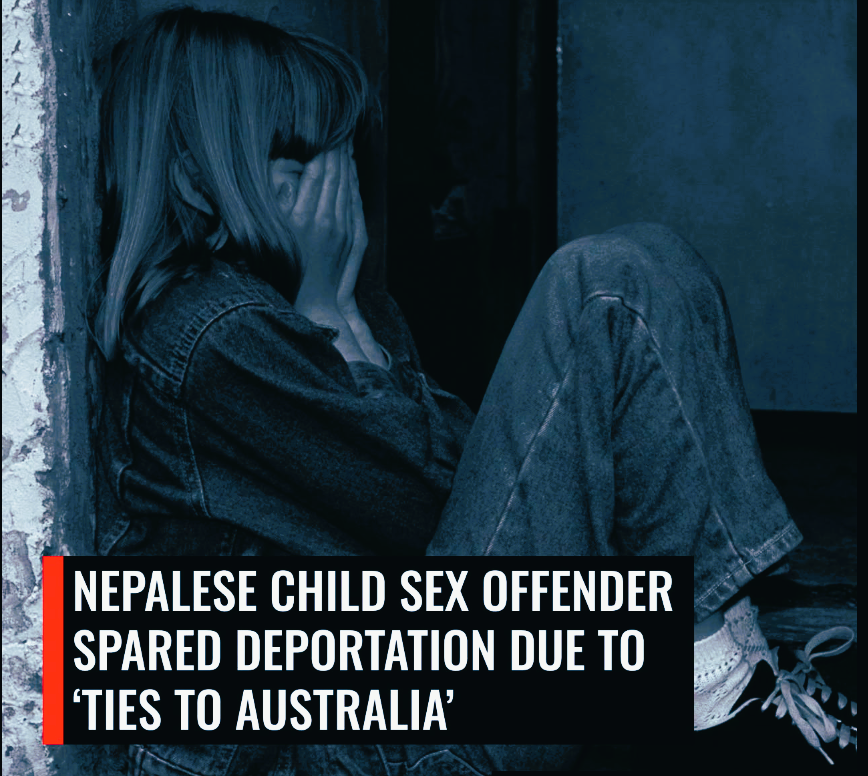
A Nepalese man convicted of child sex offences has avoided deportation from Australia after a tribunal ruled that his personal ties to the country outweighed the benefits of removing him from the community.
The decision has triggered fresh debate about how Australia handles the deportation of non-citizens who commit serious crimes, particularly when those offences involve children.
According to the ruling, the tribunal concluded that the man’s long-standing connections to Australia and the difficulties he would face if returned to Nepal were significant factors that needed to be considered.
Among the arguments raised was that he considers himself culturally Australian and would struggle to reintegrate into life in Nepal after spending much of his life connected to Australia.
That finding proved decisive in a case that is now drawing attention far beyond the courtroom.
For many Australians, the controversy centres on a simple question: what should happen when a non-citizen commits a serious criminal offence?
Successive governments have argued that deportation powers are an important tool for protecting the community and maintaining confidence in Australia’s migration system.
Under Australian law, visas can be cancelled when non-citizens fail character requirements, particularly after serious criminal conduct.
However, the legal process does not end there.
Individuals are often entitled to appeal decisions and present evidence about their personal circumstances, family relationships, community ties and the consequences they may face if removed from Australia.
It is during these appeals that tribunals are required to weigh competing considerations.
On one side sits the need to protect the Australian community.
On the other sits the question of fairness, proportionality and the impact deportation may have on the individual involved.
Cases involving serious offences frequently generate strong public reactions because many people believe community safety should be the overriding consideration.
Others argue that legal systems must examine each case individually and apply established principles rather than simply responding to public anger.
The latest decision has once again exposed that tension.
Critics argue that individuals convicted of offences involving children should face the strongest possible consequences available under the law, including deportation where applicable.
Supporters of a case-by-case approach argue that tribunals exist precisely because immigration decisions can be complex and require detailed examination of personal circumstances.
The broader debate is not new.
Australia has spent years grappling with difficult questions surrounding visa cancellations, deportations and the rights of long-term residents who are not citizens.
Some cases have involved individuals who arrived in Australia as children and have spent most of their lives in the country.
Others have involved offenders with extensive family networks, employment histories and community connections in Australia.
These factors often become central during appeals against deportation orders.
At the same time, community safety remains one of the most powerful considerations in the public debate.
Whenever a case involves serious violence, sexual offences or crimes against children, public scrutiny tends to intensify significantly.
That is because many Australians expect immigration laws to place strong emphasis on protecting the public from individuals who have committed serious offences.
The tribunal’s decision in this case is therefore likely to remain controversial.
Supporters will argue it demonstrates the legal system carefully examining all relevant circumstances.
Critics will argue it highlights weaknesses in Australia’s deportation framework.
Either way, the ruling has reignited a discussion that extends far beyond one individual case.
It touches on larger questions about citizenship, identity, migration policy, rehabilitation and the extent to which personal ties should influence deportation decisions.
As public attention grows, pressure is likely to increase on policymakers to explain where the balance should lie between individual circumstances and community protection.
That debate is unlikely to disappear any time soon.






