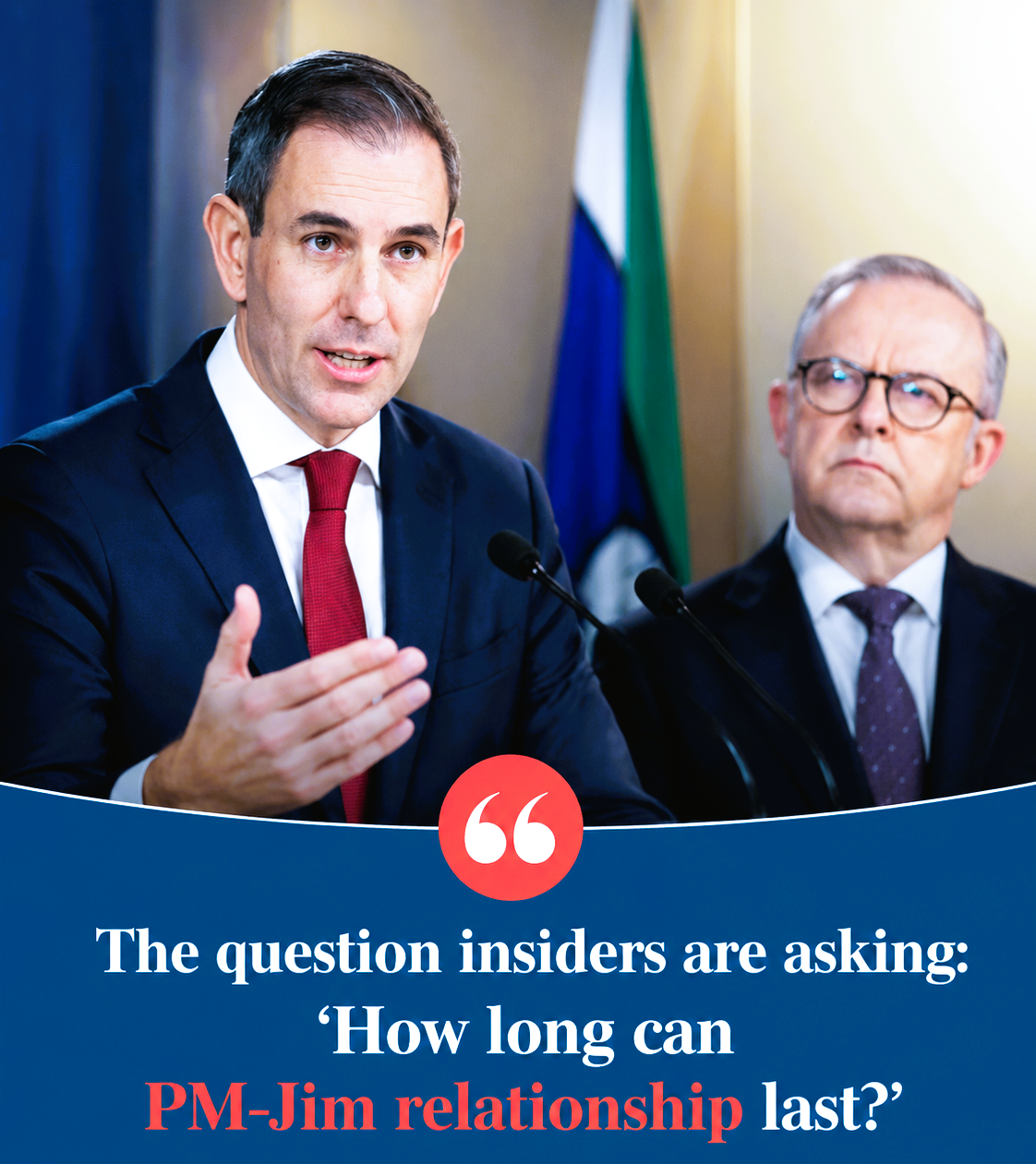
Treasurer Jim Chalmers is facing renewed political pressure after prominent business leaders and political figures reportedly described him as an increasingly diminished force within the Albanese government.
The criticism comes amid ongoing debate over recent budget decisions, particularly a series of tax-related adjustments that have sparked controversy across political and business circles.
Critics argue that repeated backdowns on key fiscal measures are creating uncertainty and weakening confidence in the government’s economic direction.
They say that while individual policy changes may be justified, the overall pattern of revisions is raising concerns about consistency and leadership strength within the Treasury portfolio.
Business leaders in particular have pointed to instability in tax policy settings as a key issue affecting investment confidence and long-term planning.
However, government supporters reject claims that Chalmers’ influence is weakening, arguing that policy refinement is a normal part of the legislative process.
They say that consultation with stakeholders often leads to adjustments designed to improve fairness and reduce unintended consequences.
From this perspective, revising budget measures should be viewed as responsiveness rather than political weakness.
The debate highlights a broader tension in economic governance between maintaining policy stability and responding to political and economic feedback in real time.
Jim Chalmers has been central to Labor’s economic strategy, particularly on issues such as inflation management, wage growth and cost-of-living relief.
That makes any perception of reduced influence particularly significant in the broader political context.
Opposition figures have used the controversy to question the government’s overall economic credibility and direction.
Labor maintains that its fiscal strategy remains consistent and focused on long-term economic outcomes.
As scrutiny continues, the discussion around Chalmers’ role reflects wider uncertainty in how Australia’s economic policy is being shaped during a period of cost-of-living pressure and budget adjustment.
Whether the criticism leads to lasting political consequences remains unclear, but the debate over leadership strength within the Treasury portfolio is likely to continue.






