Debate over the use of historical comparisons in Australian politics has intensified following a recent opinion article arguing that major historical events should be discussed with greater accuracy, context and care when used in contemporary political arguments.
According to the published commentary, the author contends that some recent political statements have relied on historical analogies that oversimplify complex events surrounding the years leading up to the Second World War. The article argues that inaccurate historical comparisons can distort public understanding and weaken informed political discussion. These views represent the opinion of the author rather than an established historical conclusion.
Historical references have long formed part of political debate in democratic societies. Politicians frequently invoke past leaders, conflicts and major historical decisions to explain current policy positions or illustrate broader political principles. Historians, however, generally emphasise that meaningful comparisons require careful attention to historical context, available evidence and the unique circumstances surrounding each period.
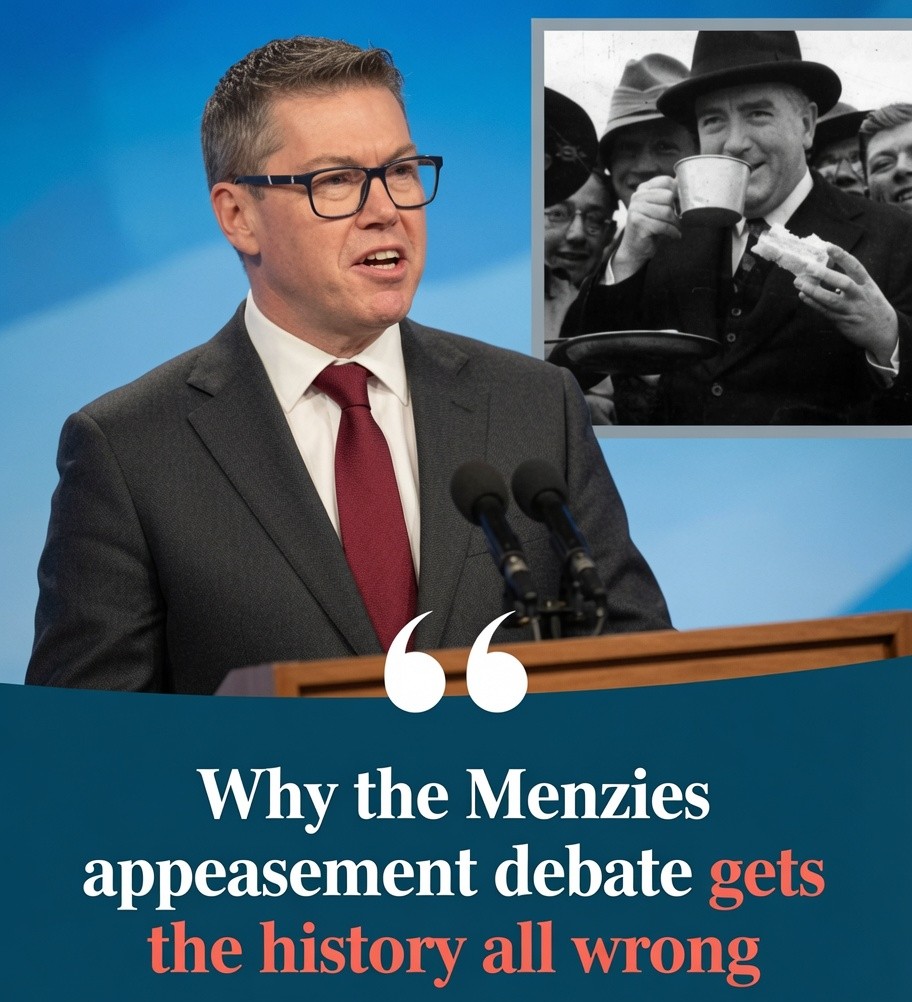
The diplomatic environment preceding the Second World War remains one of the most extensively studied periods in modern history. Decisions made by governments during the 1930s were influenced by numerous factors, including military preparedness, domestic politics, international alliances, economic conditions and public attitudes shaped by the devastating legacy of the First World War. As a result, historians often caution against reducing these events to simple political analogies.
Academic historians note that historical interpretation frequently evolves as new archival material becomes available and scholarly research advances. While broad agreement exists regarding many major events, historians often continue debating the motivations, responsibilities and consequences associated with significant historical decisions. Such debate is regarded as a normal part of historical scholarship.
Political analysts observe that references to history can be powerful because they provide familiar narratives through which contemporary issues are interpreted. At the same time, comparisons involving particularly significant historical events can become controversial when critics believe they exaggerate similarities or overlook important differences between past and present circumstances.
Public discussion about historical memory also raises broader questions about civic education, media responsibility and the quality of political communication. Many educators argue that encouraging careful examination of historical evidence helps strengthen public understanding while reducing the risk of misleading or overly simplistic interpretations.
Australia’s political debate has increasingly featured references to major historical events as parties contest issues involving national identity, foreign policy, democratic institutions and leadership. Historians generally encourage these discussions to remain grounded in documented evidence rather than rhetorical comparisons alone.
As political debate continues, differing interpretations of history are likely to remain part of public discussion. While commentators may disagree about how historical events should inform present-day politics, there is broad agreement among historians that careful analysis, factual accuracy and historical context remain essential when drawing lessons from the past.






