Australia’s men’s national football team has become the focus of renewed discussion about national identity after an opinion piece argued that the squad reflects the country’s cultural diversity while representing a shared Australian identity on the international stage.
According to the commentary, the national team includes players from a wide variety of ethnic, cultural and family backgrounds, illustrating how Australians with different personal histories come together to compete under a single national flag. These views represent the opinion of the author rather than an official government position.
Australia has experienced significant migration over many decades, resulting in communities with origins across Europe, Asia, the Middle East, Africa and the Pacific. This diversity is reflected in many areas of Australian society, including business, education, science, the arts and elite sport.
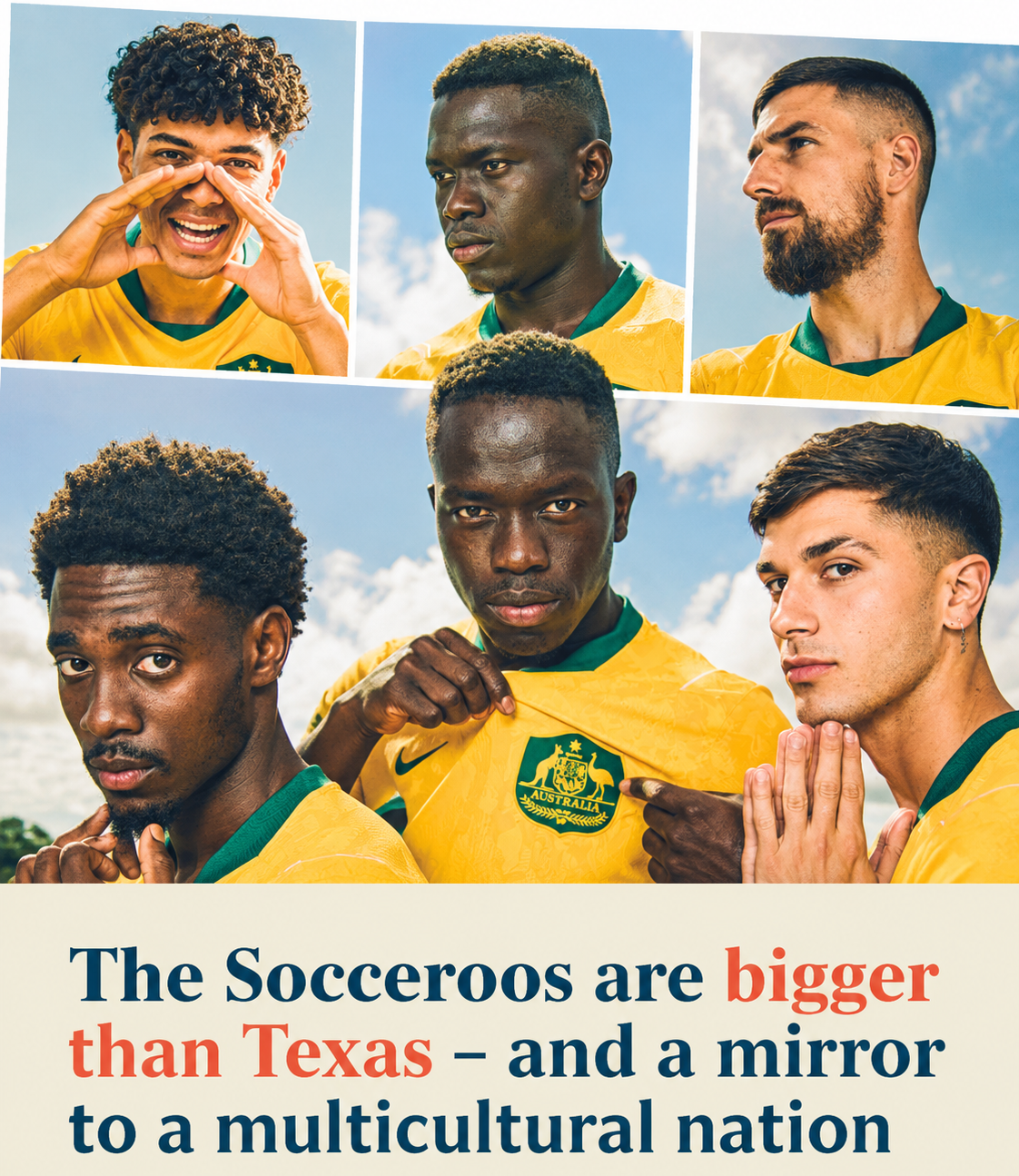
Sport has often been viewed as a unifying element within Australian society. National teams bring together athletes from different backgrounds who compete on behalf of the country, with selection based on sporting performance rather than cultural heritage. Many supporters see international competition as an opportunity to celebrate both Australia’s diversity and its shared national identity.
Supporters of multiculturalism argue that Australia’s cultural diversity has strengthened the nation by encouraging new ideas, broadening international connections and creating opportunities for people from many backgrounds to contribute to public life. They point to the achievements of athletes, entrepreneurs, professionals and community leaders as examples of these contributions.
Others argue that while cultural diversity is valuable, maintaining strong social cohesion also depends on shared civic values, English language proficiency and participation in Australian institutions. This broader discussion continues alongside political debate over immigration, integration and national identity.
Social researchers note that sport frequently provides a common ground where Australians from different backgrounds support the same teams and celebrate shared achievements. International sporting success can reinforce a sense of national unity regardless of cultural or family heritage.
The composition of Australia’s national sporting teams naturally evolves over time as new generations of athletes emerge. Their backgrounds often reflect broader demographic changes within Australian society while maintaining the common objective of representing the country in international competition.
As debate continues over Australia’s identity and future direction, national sporting teams remain one of the most visible examples of how people from diverse communities can come together in pursuit of a shared goal. While political opinions on multiculturalism differ, the athletes representing Australia continue to compete as members of one national team.






