Australia’s tobacco excise policy is once again under intense scrutiny after fresh warnings that soaring cigarette taxes are driving smokers into the illicit market, costing the federal budget billions of dollars in lost revenue while strengthening organised crime.
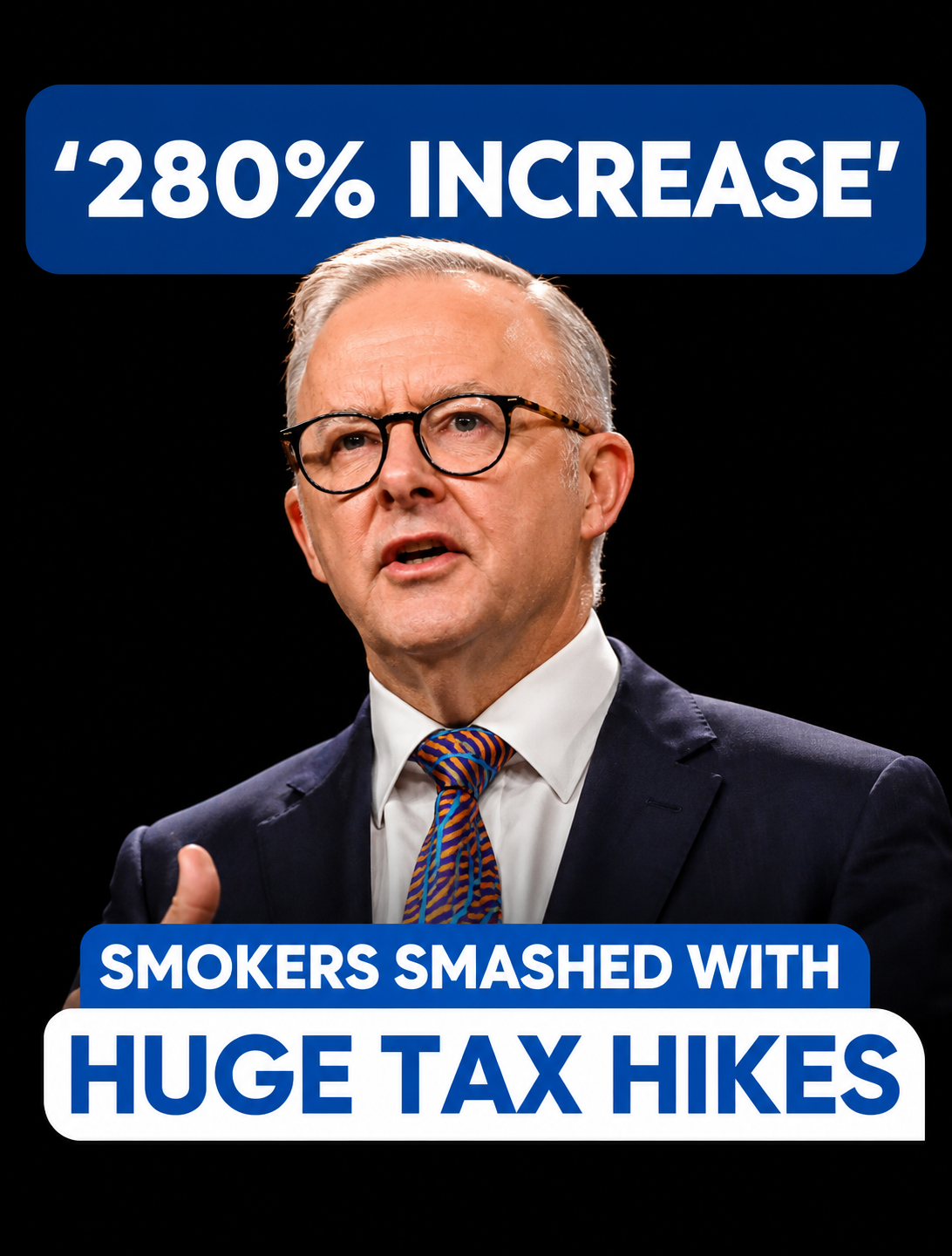
The latest debate follows comments from Liberal MP for Monash, Mary Aldred, who argues Australia’s tobacco taxation system has reached a tipping point after excise rates increased by around 280 per cent over the past decade.
Speaking with 2GB’s James Willis, filling in for Ben Fordham, Aldred said the growth of the illegal tobacco market had become a major economic and law enforcement issue.
“We’re losing up to $10 billion in lost excise tax that could have gone towards funding roads, schools and hospitals,” she said, arguing that increasingly expensive legal cigarettes are encouraging many smokers to purchase untaxed products instead.
The comments add to a broader national discussion over whether Australia’s long-running strategy of using ever-higher tobacco taxes to reduce smoking is now producing unintended consequences.
Australia has historically maintained some of the world’s highest cigarette prices after years of repeated excise increases. Successive governments defended the approach as an effective public health measure designed to discourage smoking and reduce long-term healthcare costs.
Public health experts have consistently argued that higher prices encourage smokers to quit while discouraging younger Australians from taking up the habit in the first place. Numerous international studies continue to find that tobacco tax increases generally reduce smoking prevalence over time, particularly among younger age groups.
However, critics argue Australia’s unique combination of exceptionally high prices and strong consumer demand has also created one of the world’s most lucrative illegal tobacco markets.
Instead of quitting entirely, many smokers are reportedly switching to cheaper illicit products sold outside the regulated retail system.
These products avoid federal excise, GST and regulatory compliance costs, allowing them to sell for a fraction of the price charged by licensed retailers.
The rapid expansion of the illicit market has become increasingly visible across several Australian states, where authorities have investigated criminal networks involved in illegal tobacco cultivation, importation, distribution and retail sales.
Law enforcement agencies have also linked violent disputes within the illegal tobacco trade to arson attacks, extortion and organised crime activity.
The federal government has acknowledged the rapid growth of illicit tobacco and has invested additional resources into border protection, investigations and enforcement operations targeting criminal syndicates.
Rather than reducing tobacco excise, the government’s position has largely focused on disrupting illegal supply chains while maintaining high cigarette prices to preserve public health objectives.
Supporters of the current approach argue that lowering tobacco taxes could make smoking more affordable, potentially reversing decades of progress in reducing smoking rates.
They contend that organised crime should be addressed through stronger policing and customs enforcement rather than reducing excise.
Opponents, however, argue that enforcement alone cannot overcome the enormous profit margins created by Australia’s price gap between legal and illegal tobacco.
Several economists and policy commentators have suggested that when legal cigarette prices become dramatically higher than illicit alternatives, financial incentives naturally encourage illegal trade regardless of enforcement efforts.
Some Liberal figures have proposed examining whether a reduction in tobacco excise could shrink criminal profits while recovering legal sales and government revenue.
Reports earlier this year indicated the Coalition had established internal work examining possible tobacco tax reforms, including potential excise reductions and alternative approaches to combating the black market.
The issue has also attracted attention from state leaders concerned about the growing impact of organised crime linked to illicit tobacco distribution.
Industry estimates, while varying considerably, have suggested illegal tobacco now accounts for a substantial share of Australia’s overall tobacco consumption.
If those estimates are broadly accurate, governments face a dual challenge of losing significant tax revenue while continuing to carry much of the healthcare burden associated with smoking.
For retailers operating legally, the expansion of the illicit market has created additional commercial pressure.
Licensed tobacconists must comply with taxation, packaging laws and regulatory requirements that illegal sellers simply ignore, making price competition increasingly difficult.
Consumers meanwhile face different incentives.
For smokers who continue purchasing cigarettes despite repeated excise increases, large price differences between legal and illegal products can represent hundreds or even thousands of dollars in annual household spending.
That economic reality has become central to critics’ argument that Australia’s tobacco taxation policy may now be encouraging unintended consumer behaviour rather than accelerating smoking cessation.
At the same time, health organisations continue to caution against interpreting declining legal tobacco sales as evidence that taxation policy has failed.
They argue many Australians have successfully quit smoking over recent decades and maintain that tobacco taxation remains one of the most effective public health interventions ever implemented.
The policy debate therefore increasingly centres not on whether smoking should be discouraged, but on how governments can simultaneously reduce smoking, protect revenue and limit opportunities for organised crime.
Finding that balance has become more difficult as illicit supply chains have become increasingly sophisticated and international.
For now, the Albanese Government has shown no indication that it intends to reverse Australia’s tobacco excise strategy, instead continuing to prioritise enforcement against illegal operators while maintaining the long-standing public health rationale behind high cigarette taxation.
Whether that approach ultimately succeeds—or whether mounting fiscal pressure leads policymakers to reconsider Australia’s tobacco tax settings—is likely to remain an important political and economic debate in the years ahead.