Whyalla’s 60-year-old blast furnace will not be restarted, bringing an end to primary steelmaking at the South Australian steelworks and triggering the loss of about 600 direct and labour-hire jobs as administrators abandon months of unsuccessful recovery attempts.
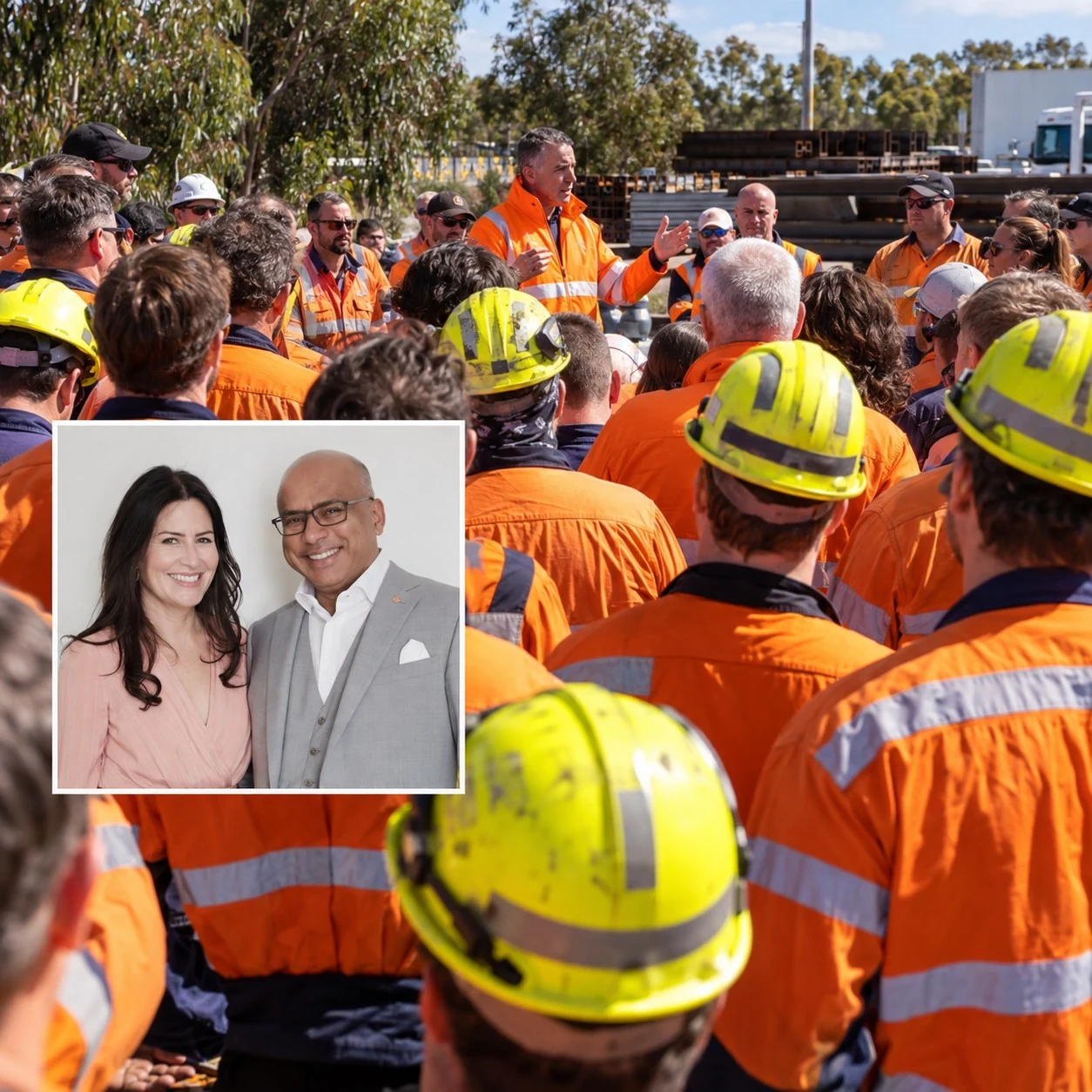
KordaMentha told workers that continuing efforts to revive the furnace was no longer safe or commercially realistic. About 500 employees will lose their positions, cutting the direct workforce from roughly 1,700 to 1,200, while another 100 labour-hire workers are expected to go. The future of about 200 embedded contractors employed by outside companies remains uncertain because some may be redeployed elsewhere.
The decision is a major industrial turning point for Whyalla. The blast furnace has been offline since April and workers had spent months trying to bring it back into service. In July, three employees were treated for injuries suffered during restart work. In its message to staff, KordaMentha said it was no longer appropriate to place people at risk in pursuit of a recovery that was no longer feasible.
The closure does not mean every part of the Whyalla operation will stop. Mining, port activity and sections of the steelworks will continue, and rolling operations can use imported or stockpiled semi-finished steel. But the city will no longer make new steel from iron ore on site until replacement assets are constructed. That creates a gap that could last years and shifts the focus from repairing the old plant to financing and building a new one.
The federal and South Australian governments have announced a $10.2 million support package for affected workers, including retraining, employment services, financial assistance and a transition centre at TAFE SA in Whyalla. Redundancy costs are expected to be far larger, with Premier Peter Malinauskas estimating a bill of between $60 million and $80 million.
For families receiving redundancy notices, the immediate issue is not the long-term promise of a modern steelworks but whether equivalent work can be found in the region. Whyalla’s economy has been shaped around heavy industry for generations. The steelworks supports not only its own employees but contractors, transport companies, maintenance firms, shops, landlords and service businesses. A sudden reduction in industrial payrolls can therefore spread through the local economy well beyond the gate.
The current crisis also raises difficult questions about how the plant was allowed to reach this condition. The state government and administrators have pointed to years of underinvestment under the previous owner, GFG Alliance, the industrial group associated with Sanjeev Gupta. A joint government statement issued after the closure said years of failure to invest had left the furnace beyond repair.
That description matters because the Whyalla story is more complicated than a single mechanical breakdown. The steelworks entered administration after a prolonged period of financial stress, unpaid liabilities and operational instability. The South Australian government took extraordinary steps in early 2025 to wrest control of the business from GFG, including changes to legislation, after the company failed to pay tens of millions of dollars in royalties and owed substantial sums to creditors.
Even so, it would be too simplistic to attribute every problem at Whyalla to one owner or one decision. The plant is old, steel markets are volatile and the business has struggled under previous owners as well. Arrium entered voluntary administration in 2016 after severe financial losses, demonstrating that Whyalla’s vulnerability predates the GFG era. What administrators inherited this time, however, was an ageing blast furnace already carrying the consequences of inadequate maintenance and delayed capital spending.
The permanent shutdown changes the economics of the sale process now under way. The government says it still expects a transaction to be finalised before the end of the year. Prospective buyers are no longer evaluating a business with an operating blast furnace that can be kept alive through a transition. They are considering a site that needs major new steelmaking infrastructure while continuing selected operations in the meantime.
That is why public funding is so central. The Commonwealth and South Australian governments have committed up to $1.9 billion to support the transformation alongside a new owner, including federal money from the Green Iron Investment Fund. The broader objective is to replace the old coal-fired production system with modern technology capable of producing lower-emissions iron and steel.
Governments describe Whyalla as a sovereign industrial capability because the site supplies products used in railways, bridges, buildings, transmission infrastructure and other projects. Australia can import steel, but relying heavily on overseas supply exposes major construction and infrastructure programs to global prices, shipping disruption and foreign production constraints. Preserving domestic capacity is therefore treated as a strategic issue as well as a regional employment issue.
The difficulty is that new steelmaking equipment cannot be installed quickly. Design, procurement, approvals, construction and commissioning take time. A new owner must also decide what technology to use, how it will be powered and how it will fit with the existing mine, port and rolling operations. Industry observers have warned that steelmaking could be interrupted for several years before new assets are ready.
That creates a workforce problem as serious as the engineering challenge. Steelmaking relies on specialist operators, electricians, fitters, maintenance crews, engineers and tradespeople with detailed knowledge of the site. If too many leave Whyalla for permanent work elsewhere, the eventual owner may find it easier to build new machinery than to rebuild the experienced workforce needed to operate it.
Governments will therefore need to manage two objectives that can pull in different directions. Workers need real jobs now, which may require helping them move into mining, energy, construction or infrastructure roles elsewhere. At the same time, the city needs enough skilled people to remain connected to Whyalla so a future steelworks can recruit locally when production returns.
The impact on contractors will also need close attention. About 200 embedded contractors are not counted in the 600 confirmed direct and labour-hire job losses. Some may be redeployed by their employers, while others could lose work as activity declines. That uncertainty makes the economic shock difficult to measure precisely and is one reason officials have cautioned against describing every contractor role as already lost.
For the Albanese and Malinauskas governments, the political challenge is to show that billions of dollars of support will produce a sustainable industrial future rather than another temporary rescue. Whyalla has already lived through repeated cycles of crisis, administration and promises of renewal. The next owner will need to demonstrate not only that it can finance new equipment but that the underlying business can compete without allowing maintenance and capital investment to fall behind again.
The end of the furnace is therefore both a closure and a reset. Workers have lost the battle to revive machinery that has defined the site for six decades, but the steelworks itself has not disappeared. Mining continues, the port remains active and parts of the operation will keep processing steel. What has ended is the possibility that the old blast furnace can bridge Whyalla into its next era.
The city now faces a far harder transition: living through a period with fewer jobs and no primary steelmaking while waiting for a sale, a new owner and a new production system. Whether that gap becomes the beginning of long-term decline or the painful start of a modernised steel industry will depend on the quality of the sale, the speed of new investment and whether governments can keep enough of Whyalla’s industrial workforce intact until steelmaking returns.