The World Health Organization (WHO) has issued one of its starkest warnings yet over the Ebola outbreak sweeping the Democratic Republic of the Congo (DRC), saying the epidemic is likely far larger than official figures indicate and is increasingly being driven by chains of transmission that health authorities cannot identify.
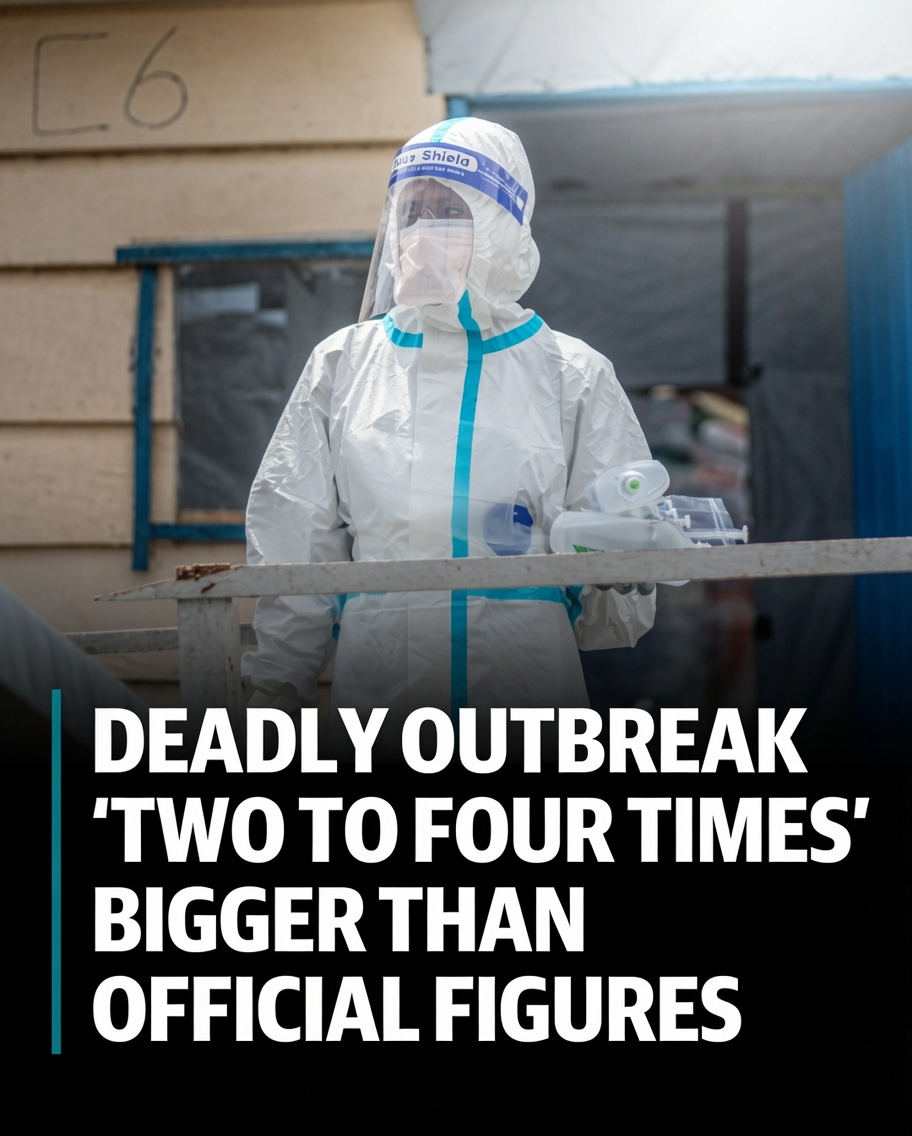
The warning comes as the DRC battles what WHO has described as the fastest-growing Ebola outbreak ever recorded, with modelling suggesting the true number of infections may be between two and four times higher than officially confirmed.
According to the latest available data, the country has recorded more than 2,000 confirmed Ebola infections and over 750 deaths since the outbreak began in May 2026. However, WHO officials believe those numbers may substantially underestimate the scale of transmission because many infected people are never identified through routine surveillance.
One of the greatest concerns is that the majority of newly detected cases are now emerging from “unknown” transmission chains.
In practical terms, this means health investigators cannot determine where many patients became infected or who transmitted the virus to them. That severely limits the effectiveness of contact tracing, which has historically been one of the most important tools for bringing Ebola outbreaks under control.
WHO officials say that in heavily affected communities, particularly around Bunia in Ituri Province, as many as four out of every five new cases have no known epidemiological link to previously identified patients. That pattern strongly suggests widespread undetected community transmission.
The outbreak is being caused by the Bundibugyo species of the Ebola virus, a relatively uncommon strain that presents additional challenges for public health authorities.
Unlike the more familiar Zaire strain, there is currently no licensed vaccine or approved targeted treatment specifically designed for Bundibugyo Ebola. Although experimental therapies are now being evaluated, health workers continue relying primarily on supportive medical care, rapid diagnosis, isolation of patients and rigorous infection control measures.
WHO believes the characteristics of the Bundibugyo strain may also be contributing to delayed detection.
Some patients appear to develop milder symptoms during the early stages of illness than are typically associated with Ebola. As a result, infected individuals may remain at home longer, unknowingly transmitting the virus to family members and communities before seeking medical care.
Health officials say that during the early phase of the outbreak, around 70 per cent of deaths occurred outside dedicated treatment centres, highlighting how many infections were escaping formal surveillance.
The humanitarian situation in eastern Congo is compounding those medical challenges.
The outbreak is unfolding in a region already affected by armed conflict, population displacement and fragile healthcare infrastructure. Violence has limited access to some communities, while frequent population movement across provincial and international borders has complicated efforts to trace contacts and contain new infections.
More than 100 healthcare workers have themselves become infected during the response, placing additional strain on already overstretched medical services. At the same time, strikes by some health workers over unpaid wages have further disrupted treatment and surveillance activities.
Médecins Sans Frontières (Doctors Without Borders) has warned that the current response is no longer keeping pace with the epidemic.
The organisation is operating multiple Ebola treatment centres and isolation units across affected provinces but says the outbreak has expanded so rapidly that additional international assistance is urgently required.
MSF has called for greater investment in surveillance, laboratory testing, safe burials, community education and healthcare staffing to slow transmission before the epidemic grows even larger.
The WHO has similarly described the outbreak as remaining in an “expansion phase”, meaning the epidemic has not yet reached its peak and new infections continue to outnumber successful containment efforts.
Officials have emphasised that improving case detection is now one of the highest priorities because identifying infections earlier dramatically reduces opportunities for onward transmission.
Thousands of community health workers are being deployed and trained to improve surveillance, identify suspected cases more quickly and encourage people with symptoms to seek medical care immediately.
The Democratic Republic of the Congo is unfortunately no stranger to Ebola.
Since the virus was first identified near the Ebola River in 1976, the country has experienced numerous outbreaks, including the devastating Kivu epidemic between 2018 and 2020 that infected more than 3,400 people.
However, health authorities say the current outbreak is expanding more rapidly than any previous Ebola epidemic recorded in the country.
The outbreak has also affected neighbouring Uganda, although health authorities there have reported considerable success in containing imported cases.
Uganda is preparing to discharge its final Ebola patient and has entered the 42-day observation period required before WHO can officially declare the country free of the outbreak, provided no additional infections are detected.
For the wider international community, WHO continues to assess the overall risk of global spread as relatively low, but the agency stresses that continued vigilance remains essential.
International travel restrictions, border screening, rapid laboratory testing and cooperation between neighbouring countries remain important elements of the response, particularly given the high level of cross-border movement throughout central Africa.
Public health experts also caution against unnecessary alarm.
Ebola is not transmitted through the air like influenza or COVID-19. Instead, infection occurs through direct contact with the blood or bodily fluids of an infected person or contaminated materials. Prompt isolation of patients, careful infection control procedures and effective contact tracing remain highly effective tools when implemented quickly.
Nevertheless, WHO says the latest findings demonstrate just how difficult the current outbreak has become.
If a substantial proportion of infections continue occurring through unknown transmission chains, health authorities risk remaining permanently one step behind the virus.
That prospect explains why the organisation now believes the real size of the epidemic may be several times larger than official statistics suggest and why it is urging governments and international partners to intensify support before the outbreak expands even further.






