Victoria’s long-awaited anti-corruption investigation into the Andrews government has reignited debate over political accountability after the Independent Broad-based Anti-corruption Commission (IBAC) found former Premier Daniel Andrews, senior ministers and public officials engaged in “serious and concerning conduct” during secret negotiations with the United Firefighters Union.
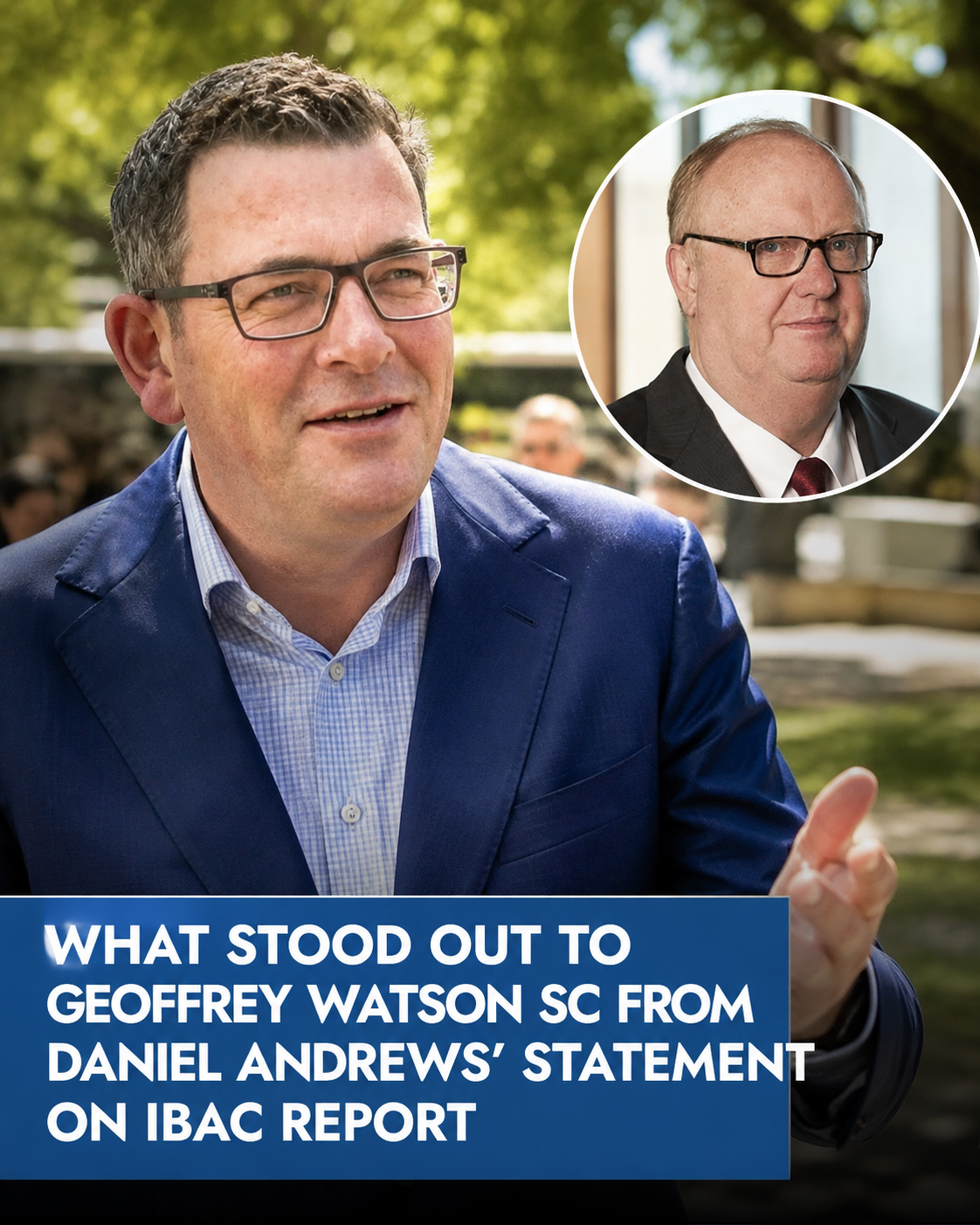
The findings, released through IBAC’s final Operation Richmond report, stopped short of concluding that corrupt conduct had occurred under Victoria’s legislation. However, the watchdog delivered a highly critical assessment of the way key government decisions were made, describing multiple departures from proper governance, transparency and ministerial processes.
The report triggered an immediate reaction across Victoria’s political landscape, including from 3AW Drive host Jacqui Felgate, who questioned whether the state’s integrity system has sufficient powers to hold politicians accountable.
“Who runs this state?” Felgate asked during her program after reviewing the report.
She argued that if IBAC possessed stronger powers to sanction misconduct, politicians involved in comparable behaviour would likely have faced much more serious consequences.
“If we had an IBAC with powers to properly punish this type of behaviour, these politicians would be gone,” Felgate said while discussing the findings with listeners.
Felgate also argued the report provided an insight into how major political decisions had been made during the Andrews era.
“This shows you how business is done in Victoria. It shows you the relationship between unions and the Andrews-Allan government,” she said.
Operation Richmond examined the Victorian Government’s negotiations with the United Firefighters Union (UFU) during the industrial dispute that ultimately led to the merger of the Country Fire Authority and Metropolitan Fire Brigade into Fire Rescue Victoria.
IBAC concluded senior government figures engaged in secret negotiations with UFU secretary Peter Marshall while excluding key decision-makers, including then Emergency Services Minister Jane Garrett, from critical discussions.
The watchdog found established Cabinet processes and public sector governance requirements were bypassed during negotiations that ultimately reshaped Victoria’s fire services.
Among IBAC’s strongest findings was its conclusion that the union exercised “extraordinary influence” over government decision-making during the period under investigation.
The report described instances where confidential information was shared inappropriately, government processes were deliberately concealed and officials failed to comply with expected standards of public administration.
While describing the conduct as serious, IBAC concluded it could not make findings of corrupt conduct because Victoria’s legislation requires a relatively narrow legal threshold before behaviour can be classified as corruption.
The watchdog instead characterised the conduct as inconsistent with expected standards of integrity, transparency and ministerial accountability.
Former Premier Daniel Andrews has defended his actions and rejected suggestions that he acted improperly, noting that IBAC made no corruption findings against him.
The United Firefighters Union has likewise disputed aspects of the report, with union secretary Peter Marshall criticising IBAC’s conclusions and rejecting allegations that inappropriate influence had been exercised over government policy.
The report nevertheless generated fierce political criticism.
Opposition figures described the findings as evidence of systemic failures within the former Labor government and renewed calls for stronger anti-corruption laws, arguing Victoria’s current legislative framework makes it unnecessarily difficult for IBAC to establish corrupt conduct even where serious misconduct has occurred.
Current Premier Ben Carroll said the government would carefully consider IBAC’s recommendations and indicated reforms would be implemented where appropriate to strengthen integrity processes within government.
Operation Richmond has also renewed debate about whether Victoria’s anti-corruption watchdog should receive broader investigative and enforcement powers.
For years, legal experts and integrity advocates have argued IBAC operates under one of Australia’s narrowest statutory definitions of corruption, making it significantly harder than some interstate agencies to reach formal corruption findings.
Critics contend the threshold means behaviour capable of seriously undermining public confidence can escape formal corruption findings even when investigators identify substantial governance failures.
Supporters of the existing framework argue the higher legal threshold protects against unfair findings and ensures corruption declarations are reserved for conduct clearly satisfying statutory requirements.
The Operation Richmond report has intensified that debate because IBAC explicitly identified repeated governance failures while simultaneously concluding the conduct did not satisfy Victoria’s legal definition of corruption.
Beyond the legal findings, the report has revived broader questions about the relationship between governments and influential stakeholder groups.
IBAC criticised opaque negotiations, inadequate record-keeping and decision-making that occurred outside established administrative processes, warning such practices risk undermining public confidence in government regardless of whether criminal offences are established.
Integrity experts have frequently argued that transparency, proper documentation and ministerial accountability remain essential safeguards against the perception that powerful external organisations receive preferential access to government decision-makers.
Although Operation Richmond did not result in criminal findings against Daniel Andrews or his ministers, the report’s conclusions are expected to continue influencing political debate in Victoria, particularly as Parliament considers future integrity reforms and amendments to IBAC’s powers.
For critics such as Jacqui Felgate, the report raises fundamental questions about accountability rather than criminal liability.
For the government and those criticised in the report, however, the absence of corruption findings remains a central point in defending their conduct.
As Victoria digests one of IBAC’s most closely watched investigations in recent years, Operation Richmond is likely to remain at the centre of discussions about government transparency, ministerial responsibility and whether the state’s anti-corruption framework is equipped to meet public expectations.






