Westdale Burnouts has been cleared to continue operating in the Shire of Beverley for another five years, extending the rural motorsport event through to 2030 as its history, reported links to the Gypsy Joker motorcycle club and earlier police concerns return to public attention.
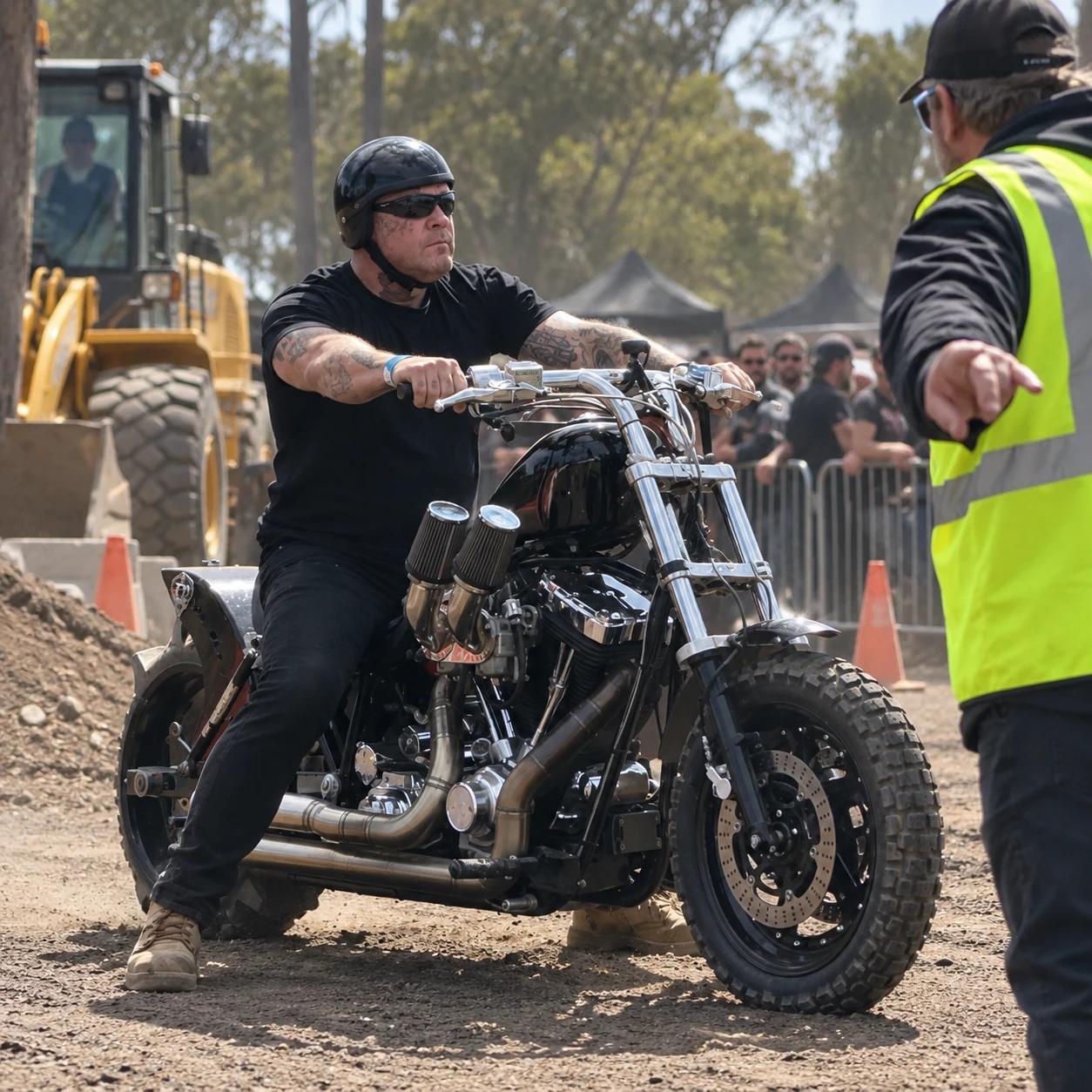
The latest approval means the event can continue at the Westdale venue on Butchers Road, east of Perth, subject to planning and event conditions. Planning firm Dynamic Planning and Developments, which acted for the applicant, said the approval allows the event to run for five years and confirmed the 2026 weekend would proceed from Friday, 18 September.
Organisers have promoted the event as a weekend of burnouts, camping and entertainment. Public event information for 2026 says gates are due to open at 9am on Friday, with test-and-tune activity on the burnout pads from 10am until midnight. Competition is scheduled for Saturday, with activity continuing into the early hours of Sunday.
Westdale has hosted dirt drags and burnout events for years, and the Shire of Beverley has repeatedly considered planning applications for the site. Council documents show the venue has been the subject of approvals and reviews dating back more than a decade.
Earlier council papers describe the property as a roughly 49-hectare rural site with purpose-built motorsport infrastructure. Organisers have previously told the council the venue was designed for controlled test-and-tune events and included a burnout competition, camping areas and food stalls.
Past applications have also included event risk management plans, emergency procedures, traffic arrangements and medical response documentation. Attendance at earlier events was estimated at about 1,500 people, with some applications allowing for up to 2,000 patrons.
The new five-year approval gives organisers greater certainty than a one-off event permit, but it does not remove the need to comply with safety, noise, traffic, health and other conditions that apply to the venue and individual events.
The event’s history has attracted scrutiny because Australian media have reported links between people associated with Westdale and the Gypsy Joker motorcycle club. Those links have previously prompted concern from Western Australia Police about public safety, outlaw motorcycle gang visibility and the management of club insignia at public events.
It is important to distinguish those reported associations from the legal status of the event itself. Council approval is a planning decision about whether the proposed use can operate under specified conditions. It does not amount to an endorsement of any motorcycle club, and reported club links do not mean every organiser, competitor or spectator is a member or associate of an outlaw motorcycle gang.
Police have previously taken an active interest in similar Westdale applications. Earlier reporting said WA Police urged councillors to reject a previous event proposal because of concerns about the involvement of Gypsy Joker members and the risks of a public event connected with an outlaw motorcycle gang.
At the time, police also raised concerns about the display of motorcycle club insignia. Event representatives said club colours had not been permitted at previous events and gave assurances that they would not be allowed at the upcoming event.
Those historical concerns help explain why a new approval can attract attention even when the immediate planning application focuses on land use, crowd numbers, hours and safety management.
For the Shire, the practical task is to decide whether the event can be conducted in a way that manages impacts on surrounding properties and public infrastructure. Rural motorsport can generate substantial noise, smoke, traffic and late-night activity, particularly when camping is included.
Shire documents from previous years show council staff have considered road signage, speed controls, fire precautions, medical plans, crowd management and the hours during which racing and burnouts can occur. Those conditions are designed to reduce risk to competitors, spectators, neighbouring properties and road users.
The location is one reason Westdale has been able to host an event of this type. A large rural property offers more separation from dense residential areas than a metropolitan site, and the venue has established tracks and burnout infrastructure. Rural location, however, does not eliminate planning concerns when events attract hundreds or thousands of visitors.
Traffic is one of the main issues. Large numbers of vehicles can arrive over a short period on local roads that were not designed for major event peaks. Previous event planning documents included temporary speed restrictions and directional signage around Butchers Road, Westdale Road and connections towards Brookton Highway.
Fire management is another significant consideration in regional Western Australia. Burnout competitions involve heat, fuel, mechanical failures and tyre debris, while camping adds cooking equipment, vehicles and large numbers of people staying overnight. Event plans have therefore included fire precautions and emergency access arrangements.
Medical response is also built into the approval process. Past Westdale applications included specific medical plans covering competitors, officials and spectators. Motorsport carries obvious risks even at controlled venues, and organisers need systems for first aid, ambulance access and escalation if a serious injury occurs.
For supporters, the event provides a legal venue for high-powered cars and motorcycles to compete or perform away from ordinary roads. Organisers promote that controlled environment as part of the attraction, giving enthusiasts a place to take part in burnouts and drag racing under event rules.
That argument is different from saying the event prevents illegal hooning. There is no simple evidence that a single motorsport event changes behaviour on public roads. The planning question is narrower: whether the organised activity itself can operate safely and within the conditions set by the local government.
Critics have historically raised concerns about noise, dust, smoke, visitor behaviour and the effect on nearby residents and roads. Online discussion about the venue has included complaints that event traffic and late-night activity impose costs on people who do not attend.
Those complaints are not the same as formal findings that the event breaches its approval. Where concerns arise, the relevant question is whether organisers are meeting conditions and whether the Shire or police have evidence requiring enforcement or changes to future operations.
The reported Gypsy Joker connection adds another layer because outlaw motorcycle gangs are subject to intensive policing in Western Australia. Police monitor club gatherings, public events and the display of insignia under state laws and enforcement strategies aimed at organised crime.
However, an event’s association with individuals connected to a motorcycle club does not itself determine a planning application. Local government must apply planning law and relevant policies, while police deal separately with criminal intelligence, public order and specific legal restrictions.
The five-year approval therefore reflects a separation of responsibilities. The Shire can approve the land use with conditions. Police can decide what operational presence is required. Organisers remain responsible for event management, and individual attendees remain responsible for complying with the law.
For 2026, event information says camping and food stalls will be available, children under 12 can attend free, and competitors must hold appropriate racing insurance. The published program indicates activity will run late into the night, making traffic, noise and crowd controls particularly important.
The approval through 2030 gives the Westdale event a longer planning horizon and may make it easier for organisers to invest in infrastructure, safety measures and promotion. It also means the Shire will have an ongoing reason to monitor how the venue operates across multiple years rather than assessing each event in isolation.
If conditions are breached or significant new problems emerge, local government and other authorities can still use the powers available to them. A multi-year approval is not a guarantee that every future event can operate without oversight.
The renewed scrutiny around policing and bikie links is likely to continue because those issues have followed Westdale for years. The most useful way to assess the event, however, is to separate reported associations from proven conduct and to examine whether organisers comply with the conditions imposed on a large, late-running rural motorsport gathering.
For now, the practical outcome is clear: Westdale Burnouts is authorised to continue, the 2026 event is set to proceed, and the venue has secured planning certainty extending through 2030. The continuing questions will be how the event is policed, how conditions are enforced and whether the five-year approval delivers the controlled and safe operation promised by organisers.
The approval history also shows that Westdale has not been treated as a completely new land use each year. Council papers from 2022, 2023 and 2024 record repeated applications, revised operating hours and additional risk-management material. That history gives decision-makers evidence about previous attendance, traffic and event management, while also allowing them to tighten conditions when new concerns are raised.
For residents, that history can cut both ways. Supporters may argue that a long-running event with established procedures is easier to manage than an untested proposal. Opponents may argue that repeated approvals can normalise impacts such as noise or traffic that they continue to find disruptive. A five-year permission does not resolve that disagreement; it simply sets the current planning position.
Police involvement will therefore remain separate from the planning approval. If officers receive intelligence about criminal activity, prohibited insignia or public-order risks, they can respond under state law regardless of the Shire’s decision. Likewise, the Shire can enforce planning conditions even where no criminal offence is alleged.