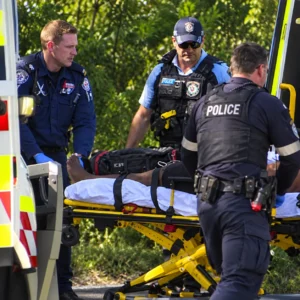
Western Australia’s Police Union is calling for tougher sentencing outcomes for people who assault officers as police in the state’s north report increasingly violent encounters and new research points to high levels of post-traumatic stress symptoms across the force.
The union says people convicted of assaulting police should not be eligible for suspended sentences, arguing that existing penalties are failing to provide a sufficient deterrent. The call comes after a series of incidents in the Kimberley and Pilbara in which officers have allegedly been punched, kicked, spat on, bitten or attacked while responding to jobs.

Police statistics cited by ABC News show 87 assaults on officers were recorded in the Kimberley in the period to June 2026, compared with 84 over the same period a year earlier.
The numerical increase is modest, but the union’s argument is focused as much on the severity and frequency of violence as on the raw count.
Union representatives say frontline officers in remote and regional areas can face volatile situations with limited immediate backup, long travel distances and a smaller pool of staff to share the workload.
Western Australia already has mandatory minimum penalties for some serious assaults on public officers, including cases where bodily harm is caused in specified circumstances. The state government says mandatory imprisonment is appropriate for serious assaults on police.
The union’s complaint is that sentencing outcomes do not always reflect the level of protection parliament intended and that suspended sentences can undermine the deterrent message.
That is a policy argument, not a claim that every assault on an officer is identical.
Courts still have to consider the offence proved, the level of injury, intent, prior offending, personal circumstances and the legislation applying to the specific case.
The debate is particularly sensitive in remote communities, where police often deal with family violence, alcohol-related harm, mental health crises and other complex situations as well as conventional criminal offending.
Any response to assaults needs to protect officers without assuming that harsher sentencing alone will prevent the conditions that produce violent confrontations.
The human cost is becoming clearer through research into police mental health.
A recent Edith Cowan University study involving 1,278 serving WA police officers — roughly one-fifth of the workforce — found 38.3 per cent of survey participants reported symptoms consistent with post-traumatic stress disorder. The researchers compared that with an estimated 5.6 per cent in the general Australian population.
The study does not mean 38.3 per cent of every WA police officer has a formal PTSD diagnosis. It is a survey-based estimate of symptoms among participants, and self-selection can affect who chooses to take part in mental-health research.
But the result is still a significant warning about cumulative trauma.
Police officers can be repeatedly exposed to fatal crashes, suicide, family violence, child abuse, serious assaults and threats to their own safety. A single incident can be traumatic; repeated exposure across years can compound the impact.
For officers working in the north of WA, distance adds another layer.
A serious incident in Perth can draw on nearby crews, specialist units and major hospitals. In the Kimberley, backup may be much further away and an officer can remain in the same small community as the people involved in a confrontation after the immediate event is over.
That does not mean remote policing is uniformly unsafe or that communities should be characterised by the actions of individual offenders.
It does mean staffing, housing, relief arrangements, mental-health support and the ability to rotate officers out of high-stress environments can be important parts of workforce safety.
The former sergeant featured in ABC’s reporting described the long-term impact of policing trauma after leaving the force, illustrating how the effects can continue beyond the end of a shift or even the end of a career.
The Police Union wants sentencing reform to be part of the response.
Its argument is that an assault on an officer is also an attack on the ability of police to perform a public-safety role, and that courts should send a stronger message that violence against frontline workers will result in custody.
There is a countervailing question for lawmakers: whether removing sentencing discretion in a wider range of cases produces fair outcomes and whether mandatory penalties actually reduce offending.
Mandatory sentencing can deliver consistency at the bottom end, but critics argue it can also shift discretion away from judges and produce outcomes that do not account well for the circumstances of an individual offence.
Those issues are for parliament to weigh.
What is less disputed is that officers should be able to go to work without expecting to be assaulted and that repeated exposure to violence carries a mental-health cost.
Reducing that cost may require more than one policy lever.
Sentencing can address what happens after an assault. Better staffing can reduce the risks officers face during an incident. Training, body-worn cameras, specialist backup and local prevention programs can affect how confrontations unfold. Mental-health care and early intervention can help after trauma occurs.
Community safety also depends on tackling the drivers that repeatedly bring people into contact with police, particularly family violence, substance misuse, overcrowding and untreated mental illness.
The latest Kimberley assault figures do not by themselves prove that every part of northern WA is becoming more dangerous. They do, however, support the union’s concern that attacks on officers remain a persistent problem.
Combined with the new PTSD research, the figures shift the debate from individual incidents to the sustainability of frontline policing.
The next question is whether the WA government believes existing mandatory provisions and sentencing laws are sufficient, or whether it will adopt the union’s call to further restrict suspended outcomes for people convicted of assaulting police.
Whatever parliament decides, the evidence points to a broader challenge: keeping officers safe requires both consequences for violence and a system capable of reducing the repeated trauma that accumulates across a policing career.