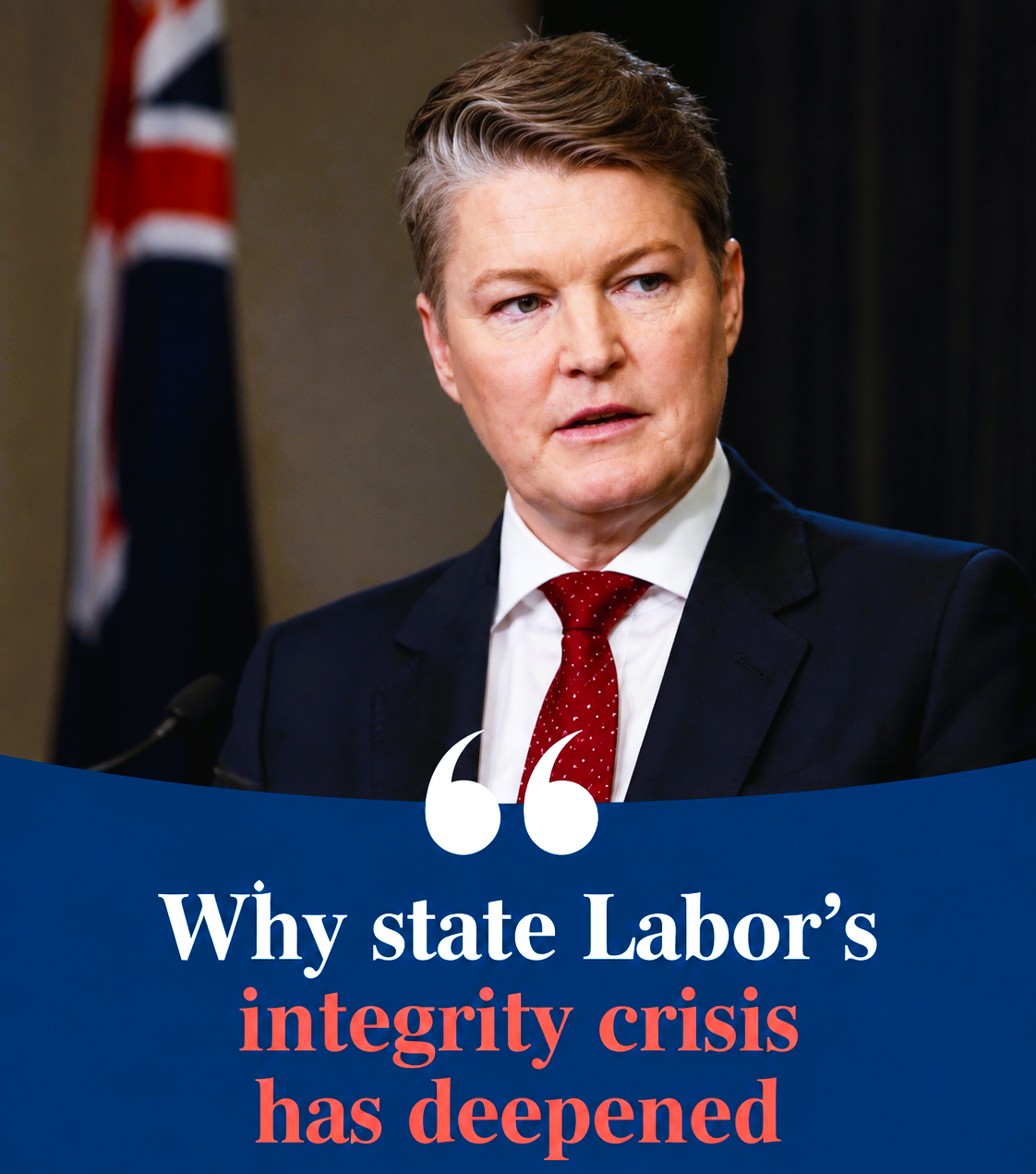
Victoria’s new Premier, Ben Carroll, has promised a fresh era of transparency and integrity following the release of a landmark Independent Broad-based Anti-corruption Commission (IBAC) report, but critics argue his government’s initial response demonstrates that little has fundamentally changed.
The debate follows the publication of Operation Richmond, one of the most significant integrity investigations conducted in Victoria in recent years. The inquiry examined the Andrews government’s handling of negotiations involving the United Firefighters Union (UFU) and concluded that senior government figures engaged in serious failures of governance, including secret negotiations that bypassed established ministerial and administrative processes. While IBAC identified conduct it described as deeply concerning, it did not make findings of criminal corruption under Victoria’s current legislation.
For opponents of the Victorian Labor government, that outcome has become the central issue.
The source material supplied for this article argues that the latest report exposes what it describes as a structural weakness within Victoria’s integrity system. According to that view, IBAC remains unable to deliver meaningful accountability because its legislative powers are too narrow, allowing serious misconduct to escape corruption findings even when investigations uncover significant governance failures.
The criticism comes despite Premier Carroll’s public commitment to restoring trust in government.
Following the release of the report, Carroll acknowledged that mistakes had been made during previous administrations and pledged that similar conduct would “never ever” occur under his leadership. He also committed to implementing IBAC’s recommendations and expanding the legal definition of corrupt conduct as part of broader integrity reforms.
Those commitments, however, have failed to satisfy many of the government’s political opponents.
Critics argue that simply accepting recommendations does little to address what they believe is the core problem—that Victoria’s anti-corruption watchdog lacks sufficient authority to hold powerful political figures accountable when conduct falls short of criminal corruption but nevertheless undermines public confidence.
The Operation Richmond report itself became the focus of intense public attention after detailing years of behind-the-scenes dealings between senior government officials and the United Firefighters Union during the CFA dispute.
IBAC found that confidential discussions took place outside normal decision-making channels and that then Emergency Services Minister Jane Garrett had effectively been sidelined while negotiations continued between senior government figures and union representatives. Although the Commission described aspects of the conduct as serious and concerning, it concluded that existing legislation prevented many actions from meeting Victoria’s legal threshold for corrupt conduct.
That legal limitation has become a recurring point of criticism.
Unlike the Independent Commission Against Corruption (ICAC) in New South Wales, Victoria’s IBAC operates under a narrower statutory definition of corruption, requiring investigators to establish “serious corrupt conduct” before stronger enforcement powers can be exercised. Integrity experts have argued for years that this threshold restricts IBAC’s ability to investigate and publicly expose misconduct that falls into ethical grey areas but still damages public administration.
The supplied source goes further, asserting that the contrast between Victoria and New South Wales illustrates the practical consequences of those legislative differences.
It argues that while NSW’s ICAC has historically forced the resignation or downfall of senior political leaders through public investigations, Victoria has repeatedly witnessed major integrity controversies without equivalent political consequences.
That comparison remains politically contentious, as supporters of Victoria’s framework argue that a higher legal threshold better protects individuals from reputational damage where criminal wrongdoing cannot be established.
Operation Richmond itself did not conclude that former Premier Daniel Andrews had engaged in criminal corruption. Instead, the report painted a picture of poor governance, blurred accountability and inappropriate political processes surrounding negotiations with the firefighters’ union.
The release of the report has also reignited debate about the broader relationship between Victorian Labor and major unions.
Over recent years, controversy surrounding the CFMEU, allegations involving organised crime infiltration and questions over governance standards have placed increasing political pressure on successive Labor governments in Victoria. Those issues have become central themes in opposition attacks as the state heads towards the next election.
Premier Carroll has attempted to distinguish his administration from previous governments by promising what he describes as a “big reset” focused on transparency, rebuilding trust and strengthening integrity institutions. He has indicated support for legislative amendments that would broaden IBAC’s definition of corrupt conduct while implementing recommendations arising from Operation Richmond.
Whether those reforms ultimately satisfy critics remains uncertain.
Opposition parties continue to argue that meaningful accountability requires not only legislative amendments but also stronger investigative powers, greater transparency and a willingness to impose political consequences when public confidence has been undermined.
The broader debate now extends well beyond the findings of a single investigation.
For supporters of reform, Operation Richmond has become evidence that Victoria’s integrity system requires substantial strengthening if public trust is to be restored.
For the government, the challenge is demonstrating that promised reforms will produce measurable changes rather than simply responding to one of the state’s most politically significant anti-corruption reports.
As Parliament prepares to consider future integrity reforms, the effectiveness of IBAC—and whether it possesses sufficient authority to investigate misconduct involving senior public officials—appears set to remain one of the defining political issues heading into Victoria’s next state election.






