The Allan Government’s plan to gradually phase out natural gas in Victorian homes has come under renewed political pressure after new polling suggested a majority of voters oppose restrictions on gas use and want households to retain the freedom to choose their preferred energy source.
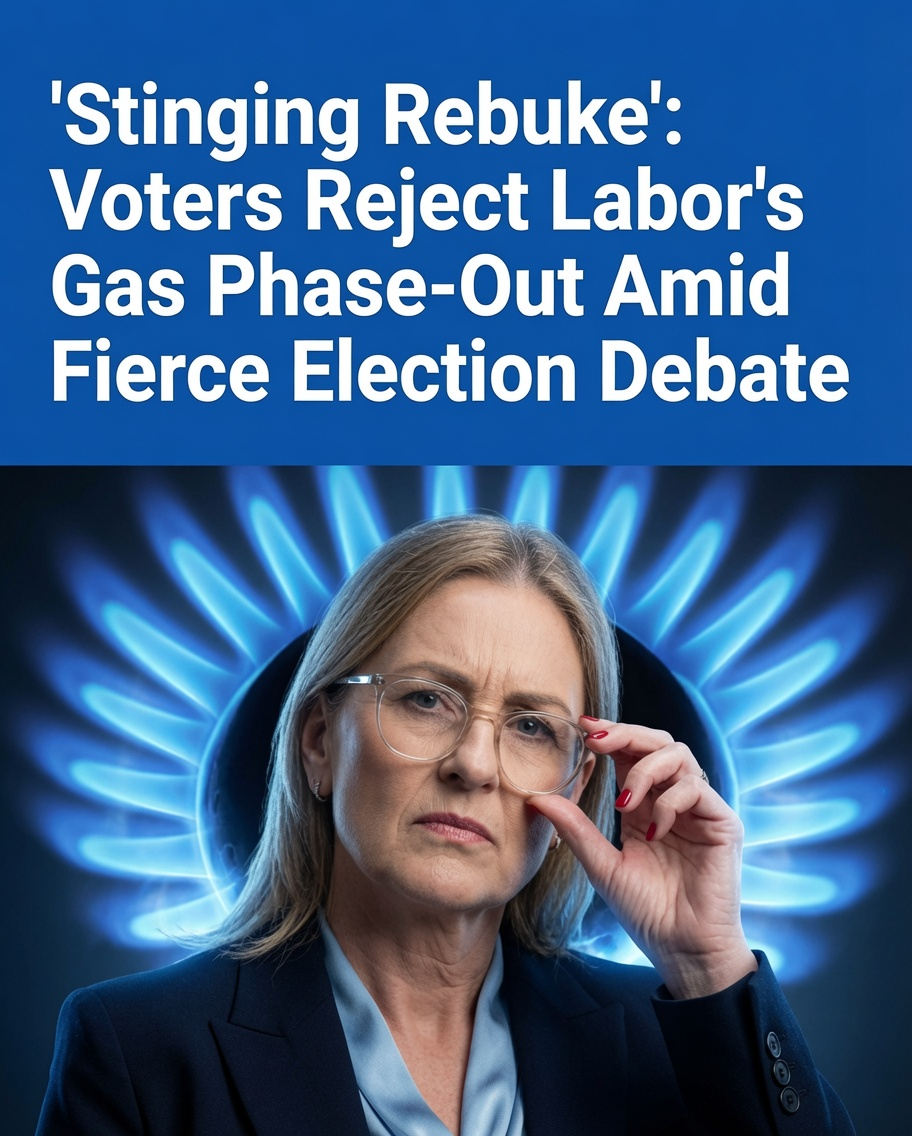
The findings arrive just months before Victoria heads to the polls, adding fresh momentum to what is rapidly becoming one of the defining policy debates of the state election campaign.
A JWS Research poll of 1,000 Victorian voters, commissioned by Australian Energy Producers, found strong support for retaining natural gas as part of the state’s long-term energy mix. According to the survey, 83 per cent of respondents supported keeping natural gas in Victoria’s future energy system, while 58 per cent opposed the government’s ban on new gas connections for new homes. Only 26 per cent backed the restriction.
The survey also found that 71 per cent of voters believed Victorians should continue to have the option of installing gas connections in newly built homes, while 80 per cent said consumers should be free to choose between gas and electric appliances when replacing existing equipment. More than half opposed the requirement for many gas hot water systems to be replaced with electric alternatives from March 2027.
The results represent a significant political challenge for Premier Jacinta Allan, whose government has made building electrification a central component of Victoria’s strategy to achieve net zero greenhouse gas emissions.
Under Victoria’s Gas Substitution Roadmap, the government is seeking to reduce reliance on fossil gas over coming decades by encouraging homes and businesses to transition towards electricity powered increasingly by renewable energy.
The roadmap includes ending new gas connections for most new residential developments, expanding energy-efficiency programs and promoting electric alternatives for heating, hot water and cooking.
The Allan Government argues that electrification will ultimately lower household emissions, improve energy efficiency and reduce long-term exposure to volatile gas prices while supporting Victoria’s broader climate commitments.
Ministers have repeatedly stated that buildings account for a substantial share of the state’s greenhouse gas emissions and that electrification is essential if Victoria is to meet its legislated emissions reduction targets.
Critics, however, contend the transition is occurring too quickly and risks limiting consumer choice.
Australian Energy Producers Victoria Director Peter Kos said the polling demonstrated that Victorians still regarded natural gas as an important source of reliable and affordable energy.
He noted that the Victorian gas industry contributes an estimated $22 billion in annual economic activity and supports around 40,000 jobs across the state. He argued gas remains critical not only for household cooking and heating but also for electricity generation and manufacturing.
“These polling results show Victorians recognise the important role natural gas plays in delivering reliable and affordable energy and they want to see that continue,” Kos said.
The survey also carried potential electoral implications.
More than half of respondents indicated they would be more likely to support candidates who defended consumer choice between gas and electricity, while a similar proportion said they favoured politicians committed to retaining natural gas as part of Victoria’s energy future.
Those findings suggest energy policy could become an increasingly influential issue as political parties seek to appeal to households concerned about living costs and rising energy bills.
The Victorian Coalition has strongly opposed mandatory restrictions on household gas use, arguing families should be free to decide which appliances best suit their needs and budgets.
Opposition MPs have accused the Allan Government of pursuing an ideological approach that places environmental objectives ahead of affordability and consumer choice.
Environmental organisations, meanwhile, maintain that reducing dependence on fossil gas is necessary if Australia is to meet long-term climate goals.
They argue that expanding renewable electricity generation, combined with increasingly efficient electric appliances such as heat pumps and induction cooktops, will reduce emissions while eventually lowering operating costs for households.
Energy experts note that the economics of electrification vary considerably depending on individual households.
Factors such as whether a property already has rooftop solar, battery storage, existing gas infrastructure or ageing appliances can significantly influence whether switching from gas to electricity results in financial savings.
For many Victorian households, replacing functioning gas appliances before the end of their useful life may involve substantial upfront costs, even if lower running costs are achieved over time.
Victoria’s energy transition is also occurring against the backdrop of broader challenges facing Australia’s east coast gas market.
Declining production from mature offshore gas fields, increasing domestic demand and uncertainty surrounding future investment have prompted ongoing debate over energy security and long-term supply.
Supporters of continued gas development argue additional local production is required to maintain reliable energy supplies during the transition to renewables.
Others contend that accelerating investment in renewable generation, electricity transmission and storage will reduce dependence on fossil fuels over the longer term.
The Allan Government has already adjusted aspects of its electrification agenda in response to community and industry feedback.
Earlier revisions clarified the scope of some proposed restrictions and provided additional transition periods for certain appliances, while maintaining the broader objective of reducing fossil gas consumption across Victoria.
Political analysts believe the debate reflects a broader tension confronting governments across Australia.
While there is widespread support for reducing emissions, disagreement remains over the pace of the transition, the technologies that should be prioritised and the balance between environmental objectives and household affordability.
Victoria has traditionally positioned itself as a national leader in climate policy, introducing ambitious renewable energy targets and major investments in offshore wind, transmission infrastructure and electrification initiatives.
Those policies have won support from climate advocates but have also become increasingly contentious as cost-of-living pressures remain a dominant concern for many voters.
With the state election approaching, energy policy is expected to feature prominently alongside housing affordability, healthcare, crime and infrastructure.
Whether the latest polling reflects a temporary reaction to rising household costs or signals a more durable shift in public sentiment will become clearer as campaigning intensifies.
For the Allan Government, the challenge will be convincing voters that electrification can deliver lower emissions without sacrificing affordability or reliability.
For the Opposition and industry groups, the focus is likely to remain on defending consumer choice and arguing that natural gas should continue playing a significant role in Victoria’s energy system during the transition to a lower-emissions economy.






