Victorian court’s non-custodial sentence for convicted sex offender sparks debate over sentencing principles

A sentencing decision by Victoria’s County Court has generated widespread public debate after a Melbourne chef convicted of sexual assault avoided imprisonment, with the presiding judge taking into account expert evidence that incarceration would be significantly more difficult because the offender now identifies as a transgender woman.
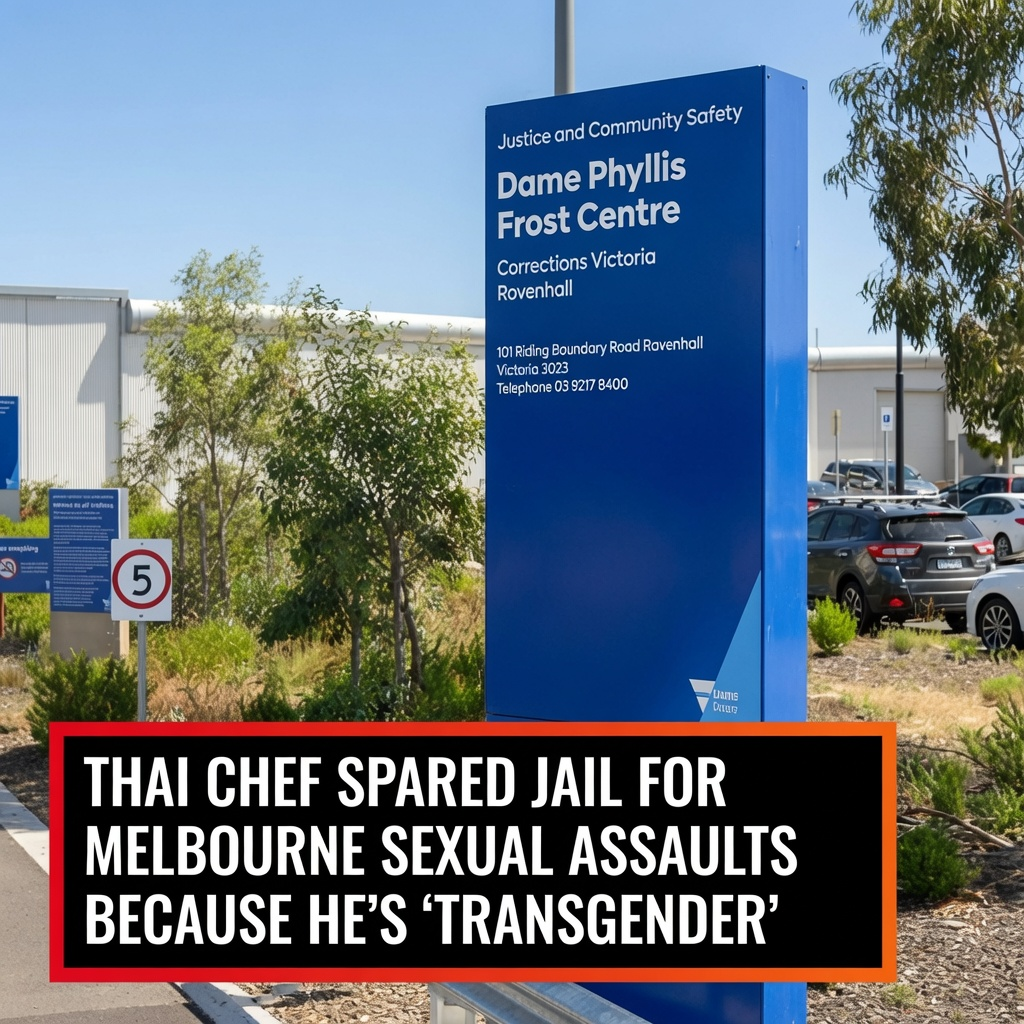
County Court of Victoria sentencing decision prompts public debate

Thawat Prommachan, 32, was convicted by a jury in December 2025 on two counts of sexual assault arising from an incident involving another man whom he met through the dating application Grindr in February 2024. The jury found him not guilty on two separate rape charges.

According to the sentencing remarks, the victim had agreed to what was intended to be a therapeutic, non-sexual massage. During the encounter, the complainant repeatedly withdrew consent and told Prommachan to stop. The prosecution argued that the assaults continued despite those repeated refusals.

Following the incident, police interviewed Prommachan, who acknowledged that he understood the complainant had not consented. During that interview he admitted that once someone says “no”, he should not continue, although he said he found it difficult to stop because he was already sexually aroused. Those admissions later formed part of the evidence considered during the proceedings.

The victim described profound and lasting consequences in a victim impact statement presented to the court. He said the assault resulted in post-traumatic stress, affected his sexual functioning, caused him to feel physically unsafe, left him temporarily unable to work and led to a significant loss of income.

Sexual assault offences of this nature carry a maximum penalty of 10 years’ imprisonment under Victorian law. However, sentencing judges are required to consider numerous statutory factors, including the seriousness of the offending, denunciation, deterrence, rehabilitation, protection of the community and the offender’s personal circumstances.

Judge Kate Hawkins ultimately imposed a two-year Community Corrections Order requiring Prommachan to complete 250 hours of unpaid community work rather than serve an immediate prison sentence.

During sentencing, the court noted that Prommachan had begun openly identifying as a transgender woman after criminal charges were laid and had commenced gender-affirming medical treatment.

The judge relied in part on evidence from forensic psychiatrist Professor Rajan Darjee, who assessed the offender as presenting a relatively low risk of future sexual offending. The psychiatrist also told the court that imprisonment could expose the offender to an elevated risk of harassment, violence, segregation and psychological deterioration because of her transgender status.

Judge Hawkins accepted that transgender prisoners can face particular risks within correctional environments and said those circumstances could properly be considered as one factor when determining an appropriate sentence. At the same time, she emphasised that the offending was serious and required punishment, concluding that the objectives of denunciation, rehabilitation and general deterrence could be achieved through a Community Corrections Order in this case.

The decision has generated considerable public reaction.

Critics argue that serious sexual offences ordinarily warrant custodial sentences and question whether personal vulnerabilities after conviction should substantially influence punishment. Some commentators have also raised concerns about public confidence in the justice system, particularly where victims may perceive that the sentence does not adequately reflect the seriousness of the offending.

Others note that Australian sentencing law requires judges to consider the individual circumstances of every offender rather than applying automatic penalties. Courts regularly receive psychiatric reports addressing mental health, rehabilitation prospects, medical conditions and prison vulnerability when determining an appropriate sentence.

Legal experts point out that sentencing decisions are rarely based on a single factor. Instead, judges weigh numerous considerations established by legislation and appellate court decisions before arriving at an appropriate outcome.

The case has also renewed discussion about how correctional systems accommodate transgender prisoners.

Correctional authorities across Australia have developed policies intended to balance the safety of transgender prisoners, other inmates and correctional staff. Those arrangements vary depending on individual risk assessments, medical circumstances and operational considerations.

The broader debate extends beyond this individual case.

Victim advocacy groups continue calling for stronger sentences in serious sexual assault matters, arguing that greater emphasis should be placed on community expectations and deterrence. At the same time, criminal justice experts caution that sentencing must remain consistent with established legal principles requiring courts to consider all relevant evidence before imposing punishment.

The Victorian case illustrates the difficult balance sentencing judges must strike between protecting the community, recognising the harm suffered by victims, encouraging rehabilitation and ensuring that punishment remains proportionate to both the offence and the offender’s circumstances.

Whether the sentence ultimately becomes the subject of an appeal or prompts wider discussion about sentencing policy remains to be seen. For now, the decision has become another high-profile example of how complex and closely scrutinised judicial sentencing can be in cases involving serious sexual offending and vulnerable offenders.


Related Posts

Editorial illustration of Steven Miles and David Crisafulli in Queensland politics

Steven Miles Challenges Crisafulli Over Child Safety After Amanda Camm Quits

Queensland Opposition Leader Steven Miles has challenged Premier David Crisafulli to appoint an experienced replacement for Amanda Camm after she announced her decision to step down from the child safety and domestic and family violence portfolios. Miles says the choice will reveal how seriously the government takes services for vulnerable children and families. Crisafulli has praised Camm’s record and defended the reforms initiated during her term. Camm says her decision was personal and followed major surgery and an incomplete recovery. She has also referred to the stress of her ministerial workload and the impact of public harassment. Her resignation should not be portrayed as an admission that the criticism of her administration was correct. The policy dispute and the reasons she has given for leaving office are separate facts.

Editorial illustration of Sharon Freund and Michael Allen with courthouse imagery, not a photograph of proceedings

Judge Sharon Freund Challenges Watchdog Referral Amid Dispute With Michael Allen

NSW Deputy Chief Judge Sharon Freund has taken her challenge to a watchdog referral before the Court of Appeal amid a prolonged dispute involving Local Court Chief Judge Michael Allen. The latest proceedings concern whether decisions and observations arising from a Judicial Commission process were reached and handled lawfully. The legal contest remains unresolved, and the allegations at its centre must not be treated as disciplinary findings against either judge. Published accounts of the Court of Appeal proceedings say Freund’s lawyers have challenged the Attorney-General’s referral of her conduct to the NSW Judicial Commission. The dispute has been linked to questions about the handling of a criminal case involving a judicial colleague’s adult child and to competing allegations about procedural propriety. Those accounts remain contested, and the Court of Appeal’s task is not identical to a final disciplinary inquiry.

Editorial illustration of Angie Bell and Anne Aly, Australian parliamentary debate

Angie Bell Calls Stoning Remarks ‘Regrettable’ After Anne Aly Criticism

Liberal frontbencher Angie Bell has described her earlier parliamentary remarks about Small Business Minister Anne Aly and Prime Minister Anthony Albanese as regrettable, calling them a poor choice of words after a furious public dispute over violent imagery in political debate. Bell says the comment was neither helpful nor planned, and that she withdrew it and tried to rectify the matter with Aly. The new statement follows criticism from Aly, who described the original language as racist and misogynistic. The exchange is significant not because the words have just been spoken, but because Bell has now publicly addressed them. Her expression of regret should be reported accurately without claiming that she accepted every criticism Aly made or that the parties have resolved their disagreement.

Editorial illustration of Nina Taylor and Fishermans Bend urban development

Nina Taylor Defends Fishermans Bend Plans as Rivals Demand Faster Transport

Labor MP Nina Taylor has defended the Victorian government’s approach to Fishermans Bend as rival candidates in the Albert Park electorate demanded faster public transport and better infrastructure for the growing inner-Melbourne precinct. The debate at a local election forum highlighted the gap between plans for a major urban renewal area and the transport connections residents and businesses can already use. Candidates questioned why promised tram and rail links remain distant prospects despite long-running plans to accommodate substantially more homes and jobs. Taylor pointed to recent planning steps, the Metro Tunnel and expanded bus services, while opponents pressed the government to deliver infrastructure earlier. The disagreement concerns priorities, funding and sequencing; a planning announcement should not be confused with a completed railway or tram service.

Editorial illustration of Angus Taylor and Chris Bowen with the Snowy 2.0 hydroelectric project

Angus Taylor Demands Chris Bowen Resign Over Snowy 2.0 Cost Blowout

Opposition Leader Angus Taylor has called for Energy Minister Chris Bowen to resign after Snowy Hydro revised the cost and completion forecast for Snowy 2.0, reviving a political argument over who is responsible for one of Australia’s most expensive energy projects. The company’s updated target is $22.2 billion, with an allowance for a cost of up to $25 billion, while commissioning is now expected in late 2029. The latest assessment is a major test for the Commonwealth-owned company and for governments of both political persuasions. Taylor was energy minister when the project was approved under the Coalition. Bowen, who oversees the project as a shareholder minister under Labor, says the early design and engineering assumptions left a lasting problem. Neither side’s political account changes the figures Australians now need to assess.

Editorial illustration of David Pocock and Anthony Albanese with parliamentary funding documents

David Pocock Challenges Albanese Over Helen Haines Funding Dossier

Independent senator David Pocock has challenged Prime Minister Anthony Albanese’s explanation of a document circulated from his office about fellow independent Helen Haines, drawing a sharp distinction between routine political briefing and material that can cast doubt on an MP’s integrity. Albanese says the file concerned Haines’s requests for funding for her electorate and was not intended as a personal attack. The row has taken on particular sensitivity after the alleged vehicle attack that left Haines critically injured. That incident is the subject of a separate criminal investigation. No established evidence links the circulation of the political document to the alleged attack or identifies political briefing as a motive. Treating the two events as causally connected would go beyond the facts.




