The Victorian Government has unveiled a new multi-million-dollar strategy designed to strengthen the state’s position as a leading global education destination, pledging almost $19 million over two years to attract more international students while insisting the sector supports jobs, economic growth and long-term prosperity.
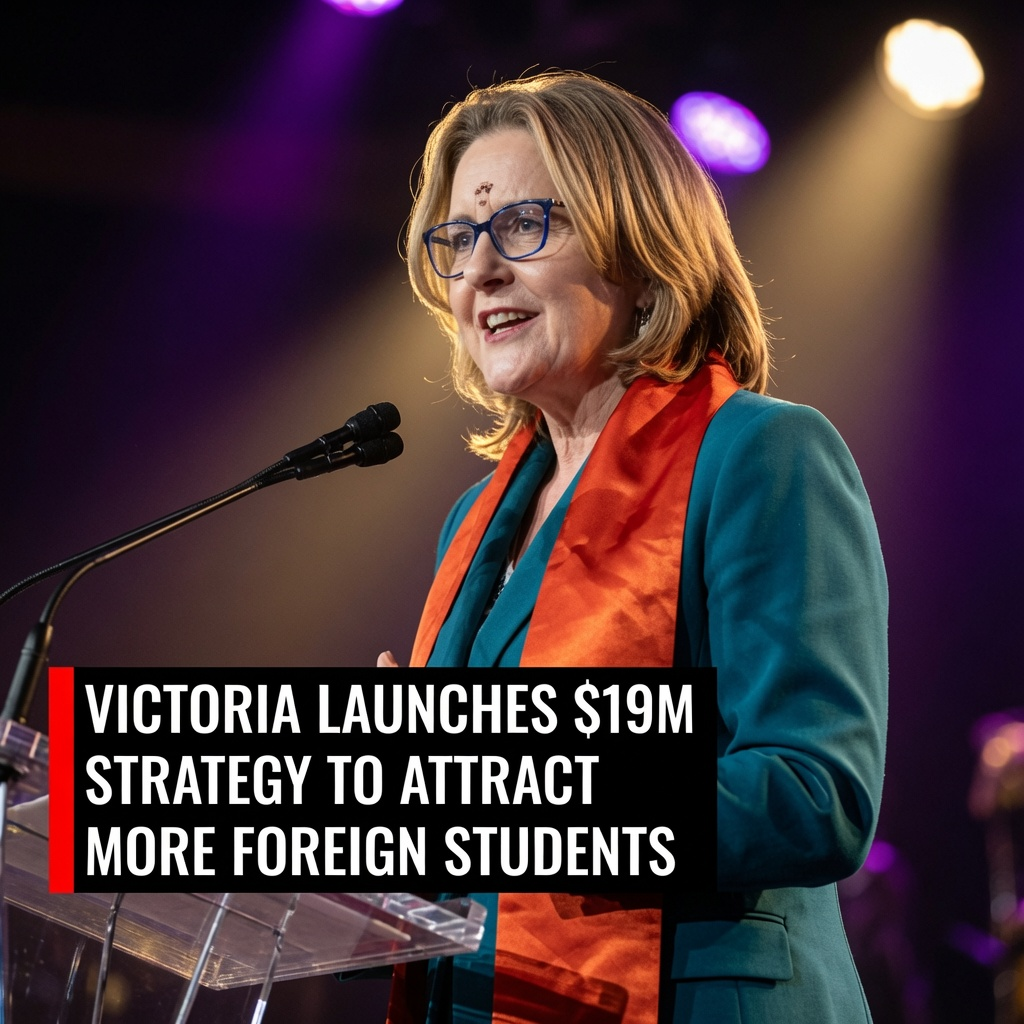
Premier Jacinta Allan and Minister for Economic Growth and Jobs Steve Dimopoulos officially launched the Study with Victoria strategy, which is backed by $18.6 million in the 2025–26 Victorian Budget. The initiative aims to improve the experience of international students, strengthen Victoria’s global education reputation and expand partnerships with overseas institutions.
The Victorian Government says international education remains one of the state’s most valuable economic sectors.
According to government figures, around 322,000 international students from approximately 170 countries studied in Victoria during 2025. The sector generated an estimated $17.9 billion in export revenue while supporting around 69,000 jobs across the state.
Launching the strategy, Mr Dimopoulos described international education as a major contributor to Victoria’s economy and argued continued investment would ensure the state remained internationally competitive.
“Victoria will remain a global education partner of choice and Labor makes sure all students benefit from a world-class education,” he said.
The minister also used the announcement to draw a sharp political contrast ahead of Victoria’s November state election, claiming an alternative government would jeopardise one of the state’s largest export industries.
He argued that reducing support for international education would threaten thousands of Victorian jobs linked directly and indirectly to universities, vocational education providers, accommodation, hospitality, retail and tourism.
The new strategy focuses on three broad priorities: enhancing the student experience, expanding transnational education opportunities and strengthening Victoria’s reputation as a world-class education destination.
Programs supporting those objectives include the Study Melbourne Hub, the Study Melbourne Inclusion Program and initiatives designed to improve graduate employability, community participation and student wellbeing. The government also plans to expand partnerships throughout the Asia-Pacific region and strengthen Victoria’s international education footprint.
Officials say international students contribute more than tuition fees alone.
According to the strategy, overseas students bring new skills, cultural diversity and international business connections that strengthen Victoria’s economy while helping universities maintain globally competitive research and teaching programs.
The government also argues that international graduates play an increasingly important role in addressing workforce shortages.
The strategy notes that 45 per cent of highly skilled migrants nominated through Victoria’s Skilled Migration Program during the 2024–25 financial year were graduates who had previously studied as international students, with 93 per cent completing their qualifications within Victoria.
Officials say this provides employers with workers already familiar with Australian qualifications, workplaces and regulatory standards while helping fill critical skills shortages across several industries.
One of the most closely watched claims within the strategy concerns housing.
The Victorian Government argues international students are not a primary driver of Australia’s rental affordability challenges.
It states overseas students account for roughly six per cent of Australia’s renter population on average, while approximately 40 per cent live either in university-owned accommodation or purpose-built student accommodation (PBSA), reducing pressure on the broader private rental market.
That position reflects research previously commissioned by the Property Council of Australia, which has argued purpose-built student accommodation helps separate student demand from the general housing market.
However, the relationship between international students and housing affordability remains the subject of ongoing debate among economists and policymakers.
The Reserve Bank of Australia has previously concluded that stronger growth in overseas student numbers increases demand for rental housing, particularly in suburbs where housing supply is constrained and vacancies are already limited.
While the RBA has not suggested international students are solely responsible for Australia’s rental pressures, it has identified population growth—including overseas migration—as one factor influencing rental markets when housing construction fails to keep pace with demand.
Housing researchers generally note that the overall impact varies considerably between locations.
Inner-city suburbs surrounding major universities often experience greater rental pressure because students tend to concentrate near campuses, while the effects may be less pronounced in areas with greater housing availability or substantial purpose-built student accommodation.
The economic value of international education has also attracted scrutiny from some academics and policy commentators.
Although governments routinely classify education as one of Australia’s largest export industries, some experts argue the description oversimplifies how the sector operates.
Critics point out that many international students finance their studies through family savings or loans before supporting themselves through part-time employment while studying in Australia.
Some economists argue that because many graduates later repay overseas debts or send earnings back to relatives in their home countries, the net economic contribution can differ from headline export revenue figures. Others counter that universities, local businesses and state economies still benefit significantly from tuition fees, accommodation spending and consumption while students remain in Australia.
The launch of the strategy follows Premier Jacinta Allan’s overseas visits to both India and China, where she promoted Victoria as a destination for education, investment and skilled migration.
Those visits formed part of the government’s broader efforts to strengthen international relationships and encourage greater participation in Victoria’s education sector.
The timing is also politically significant.
International migration, housing affordability and population growth are expected to feature prominently during Victoria’s upcoming state election campaign, with political parties offering sharply different approaches to student visas, skilled migration and higher education policy.
Supporters of international education argue universities rely heavily on overseas enrolments to fund research, teaching infrastructure and employment across multiple industries.
They also point to Melbourne’s continuing reputation as one of the world’s leading student cities, saying Victoria’s global competitiveness depends on remaining attractive to talented students from overseas. Melbourne was recently ranked Australia’s best student city and fifth globally in the QS Best Student Cities 2026 rankings.
Opponents, however, contend governments should place greater emphasis on housing supply, infrastructure and public services before encouraging additional population growth through international education.
Some also argue Australia should carefully balance the economic benefits generated by overseas students against pressures on transport networks, rental markets and urban infrastructure, particularly in Melbourne and Sydney.
The Victorian Government maintains the new strategy is intended to ensure all Victorians benefit from a stronger international education sector while providing better support for students choosing to study in the state.
Whether the initiative succeeds in attracting more overseas enrolments without intensifying concerns over housing and migration is likely to remain a central issue in Victoria’s political and economic debate over the months ahead.






